
Why Did One of My Outlets Suddenly Stop Working?
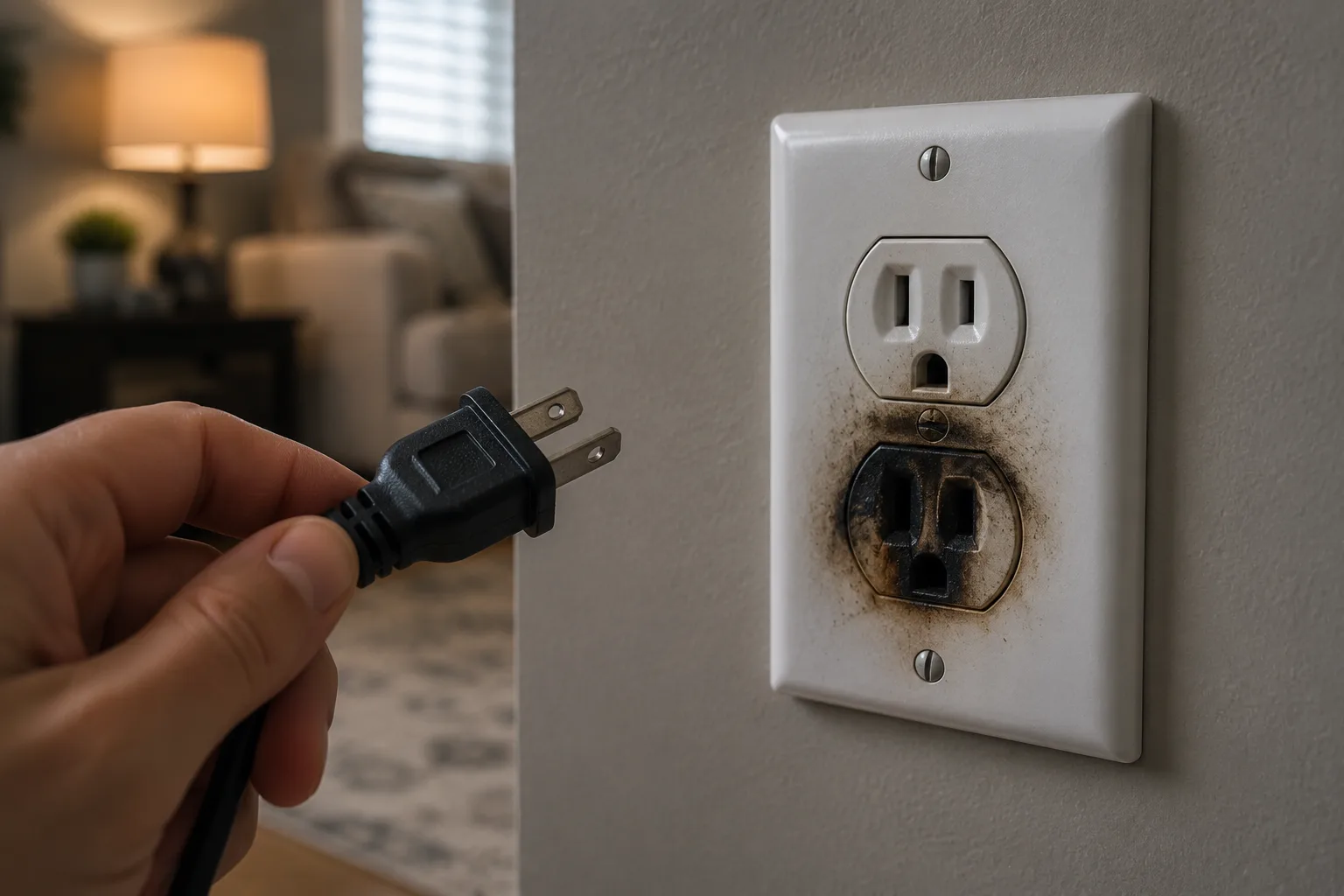
An outlet that suddenly stops working is most often caused by a tripped breaker, a GFCI outlet elsewhere on the same circuit that's tripped, or a loose connection inside the outlet itself. This usually isn't dangerous on its own, but if the outlet is hot, blackened, or smells burnt, that's a signal to take seriously. Check the panel and any GFCI buttons first before calling an electrician.
What's Happening?
A "dead" outlet simply means it's no longer receiving power. That can originate in three places: upstream, at the electrical panel (a tripped breaker cuts off the whole circuit); midway, at a GFCI outlet (the one with Test/Reset buttons, often near water) which protects several downstream outlets and, once tripped, cuts power to all of them; or directly inside the outlet itself, where a connection can loosen over time or with use.
The fact that it happened "suddenly" is actually somewhat reassuring: it often means a protective mechanism did exactly its job in response to an overload, short circuit, or moisture, rather than a slow, silent failure.
In older homes, a single GFCI outlet can protect a whole string of outlets in a bathroom, kitchen, or garage. Many people don't realize their "dead" outlet depends on another GFCI sometimes located at the other end of the room.
Is It Dangerous?
Generally, no — especially if the cause is a simple tripped breaker or GFCI, which is the most common scenario. That's the safety system doing exactly what it's supposed to.
However, some signs change the picture and deserve immediate attention:
- The outlet is warm to the touch or its plate is discolored
- You see black marks, melted plastic, or scorch marks around the outlet
- A burnt plastic smell is coming from the outlet or the surrounding wall
- The breaker trips again immediately after being reset
- Several outlets in different rooms stopped working at the same time
If any of these signs are present, don't keep resetting the breaker and don't try to force the outlet to work. Shut off the circuit and call an electrician.
Most Common Causes
| Cause | Explanation |
|---|---|
| Tripped breaker at the panel | A momentary overload (too many devices, a faulty appliance) triggered the protection |
| GFCI tripped elsewhere on the circuit | A single GFCI often protects several downstream outlets, especially in bathrooms and kitchens |
| Loose connection inside the outlet | Wires inside an outlet loosen over years of use and repeated plugging |
| Faulty plugged-in appliance | A short circuit in a device can trip the protection with no fault in the home's wiring |
| Wear inside the outlet itself | Internal contacts age and lose their ability to conduct current properly |
| Rodents or water damage inside the wall | Rarer, but can damage the wiring behind the outlet |
Why This Happens in Quebec
Quebec winters bring a wave of seasonal devices plugged in at once — space heaters, holiday lights, humidifiers — which loads circuits that weren't always designed for it, especially in the older housing stock common around Montreal.
Moisture seeping into outdoor or basement outlets during the spring thaw is also a frequent cause of GFCI tripping in Quebec, where freeze-thaw cycles create significant moisture swings around foundations and exterior walls.
How to Check It Yourself
Here's the safe, logical order to check:
- Go to the electrical panel and look for a breaker switch sitting in a middle position or flipped opposite the others; reset it by pushing it firmly to "off" then "on"
- Look around the room, kitchen, bathroom, or garage for an outlet with "Test" and "Reset" buttons (GFCI) and press "Reset"
- Check whether nearby outlets still work to gauge how widespread the problem is
- Test the outlet with a different device to rule out the plugged-in appliance being faulty
What you should never do: remove the outlet's plate to inspect the wiring inside, insert anything other than a plug into the outlet, or reset a breaker more than twice if it trips right back each time. If the problem persists after these basic checks, the cause is inside the wall and needs an electrician.
Can I Ignore It?
It depends on the cause. If a simple breaker or GFCI reset fixes it, there's nothing to ignore — the system worked as intended.
But if the outlet stays dead after these checks, or the breaker trips again quickly, ignoring it isn't a good idea. A loose connection that keeps being used can worsen, create a hot resistance point, and eventually damage the wiring inside the wall. What starts as "an outlet that stopped working" can become a fire risk if the real cause is never addressed.
How Much Does It Cost?
| Service | Estimated Price (CAD) |
|---|---|
| Basic electrical diagnostic | $100 - $175 |
| Replacing a standard outlet | $100 - $200 |
| Replacing a GFCI outlet | $150 - $275 |
| Repairing damaged wiring inside the wall | $250 - $600 |
If the issue is limited to a worn outlet or a faulty GFCI, the repair stays modest. Cost climbs only if the wiring behind the wall needs to be opened up and repaired.
When to Call a Professional
- The outlet stays dead after checking the panel and every GFCI in the house
- The breaker trips again immediately after being reset
- The outlet or its plate is warm, discolored, or smells burnt
- Several outlets in different rooms went dead at the same time
- The problem keeps coming back even after an apparent fix
An electrician can test the actual voltage inside the outlet, trace the circuit through the wall, and identify whether the problem is a connection, an appliance, or the wiring itself — a check that can't be done safely without opening the wall.
Related Questions
- A Warm Electrical Outlet to the Touch: Is It Dangerous?
- Can Old Aluminum Wiring in My House Actually Catch Fire?
- My Breaker Trips Every Time I Toast Bread and Make Coffee At the Same Time — Is That Normal?
- My Breaker Trips Every Time I Use the Microwave and Toaster Together
- Is It Dangerous That My Electrical Panel Still Uses Fuses?
- Are Uncovered Electrical Outlets Really Dangerous for a Baby Who's Starting to Crawl?
- Why Are My Light Switches Warm to the Touch When the Light's Been On For a While?
Frequently asked questions
Should I call an electrician right away if just one outlet stops working?+
Not necessarily. Check the panel and the home's GFCI buttons first — most cases are resolved in a few minutes without a professional.
Why does my bathroom outlet affect a kitchen outlet?+
A single GFCI outlet can protect several downstream outlets on the same circuit, even in different rooms. That's normal wiring, not a defect.
How many times can I reset a breaker that keeps tripping?+
No more than twice. If it trips right back immediately, stop and call an electrician, since that points to a short circuit or a persistent overload.
Is it normal for outdoor GFCIs to trip often in winter?+
It's common because of moisture and freeze-thaw cycles, but if it happens repeatedly, it's worth having the outlet's cover seal checked.
How much does it cost to replace a simple outlet?+
Expect $100 to $200 for a standard outlet, and up to $275 for a GFCI outlet, labor included.
Get a free quote
More to know before your project.
By Isabelle Roy — RBQ-licensed electrician, residential electrical safety specialist
Updated on July 23, 2026