
Can Old Aluminum Wiring in My House Actually Catch Fire?
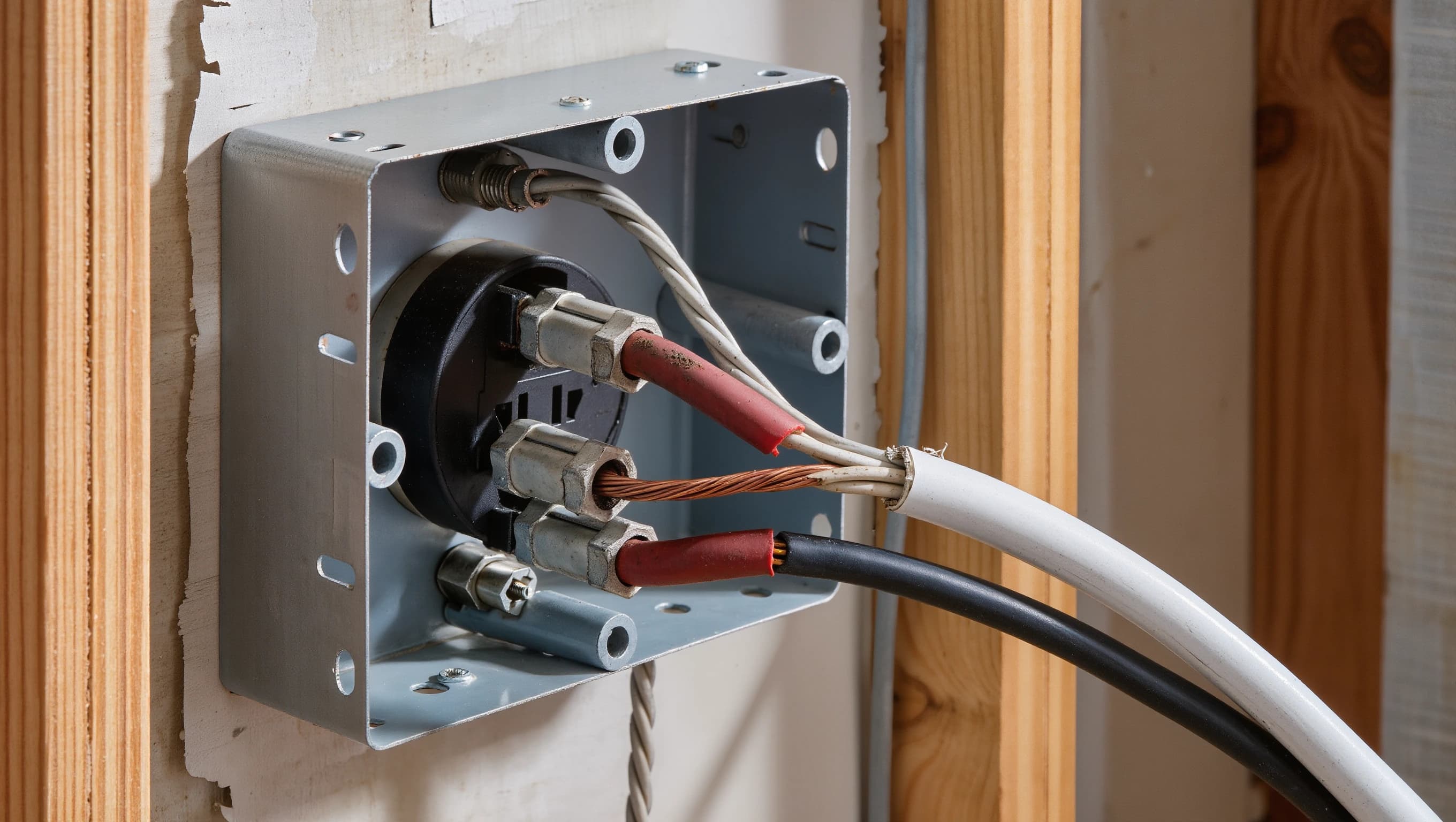
Yes, aluminum wiring carries a higher fire risk than copper if it's not properly maintained, but it isn't automatically dangerous if the connections have already been redone using approved methods. The problem lies at the connections (outlets, switches, panel), not in the wire itself. Get your system inspected if you don't know whether the connections have already been treated, and watch for signs of overheating in the meantime.
What's Happening?
Between roughly 1965 and 1975, copper prices spiked and many North American homes, including in Quebec, were wired with aluminum instead of copper for 15- and 20-amp circuits.
The issue isn't aluminum itself, which conducts electricity very well. The issue is that aluminum expands and contracts more than copper with temperature changes, and it oxidizes differently. As a result, at every connection point (an outlet, a switch, a terminal at the panel), the wire tends to loosen slightly over time, a phenomenon sometimes called "creep."
A loose connection creates a resistance point, which heats up. This isn't an automatic catastrophe, but it's precisely this mechanism that made original aluminum wiring more fire-prone than copper over the decades.
Is It Dangerous?
It depends directly on the condition of the connections, not on the mere presence of aluminum. An aluminum installation where every connection has been redone using approved methods (COPALUM or AlumiConn connectors, or copper "pigtailing") is considered safe by insurers and electricians.
However, an aluminum installation that's never been inspected or modified since the 1970s carries a real risk. Check right away if you notice:
- An outlet or switch that's warm to the touch
- A smell of hot plastic near an outlet, switch, or the panel
- Buzzing, crackling, or humming
- Discoloration or melting around an outlet
- Lights flickering unrelated to a large appliance starting up
If you have aluminum wiring and one of these signs shows up, it's not just uncomfortable — it's a signal to take seriously.
Most Common Causes
| Cause | Explanation |
|---|---|
| Connections never redone since construction | Original screws that gradually loosened as the metal expanded and contracted |
| Outlets and switches not rated for aluminum | Devices marked only "CU" (copper) aren't suitable and accelerate loosening |
| Oxidation on the wire's surface | Creates an insulating layer that increases resistance at the connection |
| Poorly executed partial renovations | Mixing aluminum and copper wire without a proper connector, which speeds up galvanic corrosion |
| Repeated circuit overload | Speeds up wear on connections already weakened by aluminum creep |
Why This Happens in Quebec
Residential aluminum wiring shows up mainly in homes and duplex/triplex buildings built between 1965 and 1975, a period of heavy residential construction in Quebec, particularly around Montreal and Quebec City. It's a common feature of suburban bungalows and buildings from that era that have never had electrical renovations.
The wide temperature swings between Quebec's summers and winters amplify the expansion-contraction cycle that loosens aluminum connections, more than in a more stable climate. This is also one of the reasons many insurers in Quebec require an aluminum wiring inspection, with proof of corrected connections, before renewing or issuing a homeowner's insurance policy.
How to Check It Yourself
You can safely:
- Look inside the electrical panel (just through the glass cover, without opening it) to see if the incoming wires are silvery-grey (aluminum) rather than reddish (copper)
- Check whether an outlet or switch's manufacturer label reads "CO/ALR" (rated for aluminum) or only "CU" (copper only)
- Touch outlet and switch faceplates to feel for unusual heat
- Check your renovation records or municipal property assessment for the home's year of construction
Never open an outlet or the electrical panel yourself to check the wire type inside. An electrician qualified in aluminum wiring can safely confirm the extent of the wiring and the condition of the connections.
Can I Ignore It?
It depends on the condition of the connections, but fully ignoring the question isn't recommended if you don't know whether your installation has already been treated. The aluminum wiring itself doesn't really "wear out" as such, but the connections keep loosening slightly year after year if nothing is done.
If you know the connections have already been redone with approved methods, you can be reassured. If you don't know, a one-time inspection is a much better option than waiting for a visible sign of overheating, which can appear suddenly after years with no apparent issue.
How Much Does It Cost?
| Service | Estimated Price |
|---|---|
| Full aluminum wiring inspection | $150 - $350 |
| Pigtailing (approved connectors) per connection point | $30 - $75 per outlet/switch |
| Full treatment of a typical home (20-40 points) | $1,200 - $3,000 |
| Complete rewiring with copper | $6,000 - $15,000+ |
Pigtailing is by far the most common and affordable option: it fixes the weak point (the connection) without having to pull all the wiring out of the walls.
When to Call a Professional
- You don't know if your home has aluminum wiring and it was built between 1965 and 1975
- You know you have aluminum wiring but don't know if the connections have already been redone
- Your insurer is requesting proof of an aluminum wiring inspection or correction
- You notice a warm outlet, a burning smell, or unusual flickering
- You're planning a renovation or sale and want to resolve this before the pre-purchase inspection
An electrician specialized in aluminum wiring can identify the exact extent of aluminum in your home, the condition of each connection, and propose a realistic correction plan — an assessment no homeowner can reliably make without opening up outlets and the panel.
Related Questions
- Is It Dangerous That My Electrical Panel Still Uses Fuses?
- A Warm Electrical Outlet to the Touch: Is It Dangerous?
- Why Are My Light Switches Warm to the Touch When the Light's Been On For a While?
- Should I Negotiate a Home's Price Because of Its Old Roof or Outdated Electrical System?
- Why Did One of My Outlets Suddenly Stop Working?
- My Breaker Trips Every Time I Use the Microwave and Toaster Together
- Why Does My Smoke Detector Chirp Occasionally Even With a Fresh Battery?
Frequently asked questions
How can I tell if my home has aluminum wiring without opening the panel?+
The most reliable clue is the year of construction: between 1965 and 1975, the odds are high. You can also look through the panel's glass cover if your home has one, without opening it, or request a formal inspection to confirm.
Does pigtailing fix the problem permanently?+
Yes, when done with approved connectors (COPALUM or AlumiConn) by a qualified electrician, pigtailing is considered a durable solution and is accepted by most insurers in Quebec.
Can my insurer really require an aluminum wiring inspection?+
Yes, this is common in Quebec. Many insurers request an inspection report, and sometimes proof of corrected connections, before renewing a policy for a home built during the years aluminum wiring was common.
Should I call a professional immediately?+
Not urgently if you notice no signs of overheating and simply want to know where you stand. However, call promptly if you notice a warm outlet, a burning smell, or unusual flickering.
Get a free quote
More to know before your project.
By Isabelle Roy — RBQ-licensed electrician, residential electrical safety specialist
Updated on July 23, 2026