
Is It Dangerous That My Electrical Panel Still Uses Fuses?
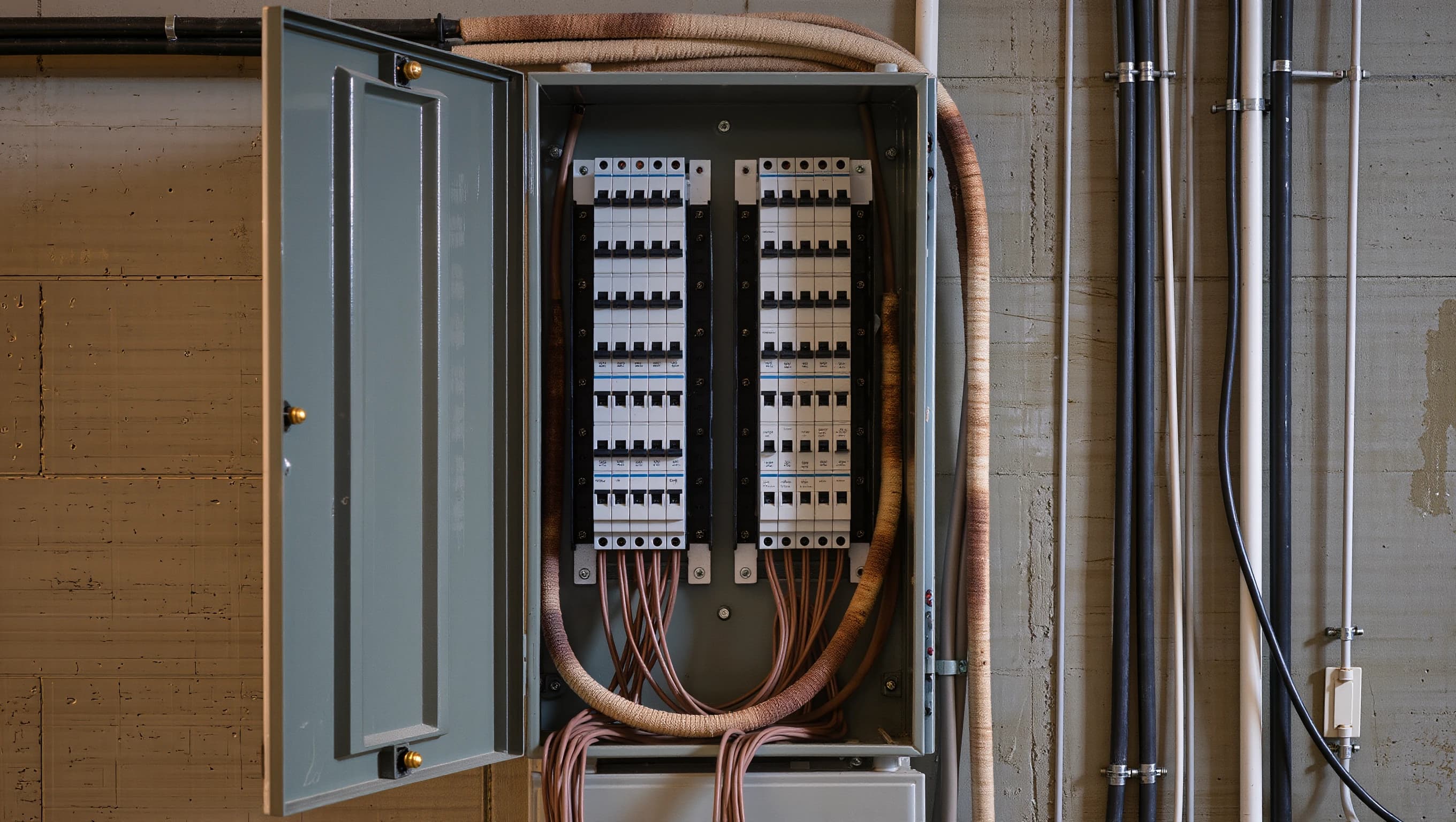
A fuse panel isn't inherently dangerous if it's well maintained and not overloaded, but it's outdated technology that grows riskier over time, especially if fuses have been swapped for oversized ones. The real danger rarely comes from the fuse itself but from the aging wiring around it and insufficient capacity for today's electrical needs. Have your panel inspected by an electrician if you've never had a recent evaluation.
What's Happening?
A fuse panel works on the same principle as a modern breaker panel: it protects each circuit from overloads. The difference is that a blown fuse must be physically replaced, while a breaker simply resets by flipping a switch.
This technology was standard in homes built before roughly 1965-1970. It worked fine for its era, when houses had far fewer electrical appliances. The issue isn't that fuses are inherently dangerous — it's that the panel's total capacity (often 60 amps, sometimes less) has become insufficient for a modern household's electrical use.
The real risk shows up when a homeowner, frustrated by fuses blowing often, installs an oversized fuse just to "make it stop tripping." That removes the very protection the fuse is meant to provide and leaves the wiring exposed to an overload with nothing to cut it off.
Is It Dangerous?
It depends directly on the panel's condition and how it's been used. A fuse panel in good shape, with correctly sized fuses and no signs of overheating, isn't an immediate danger. But several signs turn this into a priority:
- Fuses that are visibly oversized (for example, a 30A fuse in a socket meant for 15A)
- Burn marks, melted plastic, or discoloration around the fuse sockets
- A burning or hot-plastic smell near the panel
- Fuses that blow frequently, a sign the circuit is chronically overloaded
- A panel over 50-60 years old that's never been inspected
If any of these are present, cut the main power if you know how to do so safely, and call an electrician promptly. Otherwise, the panel deserves a scheduled evaluation, not immediate panic.
Most Common Causes
| Cause | Explanation |
|---|---|
| Oversized fuses installed by a previous owner | Removes overload protection and leaves the wiring vulnerable |
| Insufficient total capacity (60A or less) | No longer enough for a household with modern appliances |
| Worn or corroded fuse sockets | Create poor contact that heats up and speeds up panel wear |
| Aging original wiring connected to the panel | Insulation degraded over time, especially in homes built before 1970 |
| Missing or inadequate grounding | Common in very old installations, raises the risk of electric shock |
| No inspection since the home was purchased | The new owner inherits a panel never evaluated by a professional |
Why This Happens in Quebec
Quebec has a large housing stock built before the 1970s, especially in Montreal and the older central neighborhoods of other cities, where brick triplexes and duplexes often date from that era. Many of these buildings still have their original fuse panel, sometimes never upgraded despite several changes of ownership.
Quebec's building code doesn't require replacing a functional fuse panel at the time of a sale, so the issue often gets passed from one buyer to the next without being addressed. An RBQ-licensed electrician can assess whether your panel still meets current standards and, if not, what work is actually necessary — not just recommended out of caution.
How to Check It Yourself
You can safely observe:
- Check the amperage marked on each fuse and compare it to what's listed for that circuit (often shown inside the panel door)
- Look for burn marks, melted plastic, or rust around the sockets
- Note how often fuses blow in your home
- Check the approximate age of your home, and therefore likely of the panel
What you should never do: remove or replace a fuse without being certain of the correct rating, touch inside the panel while it's still live, or try to "fix" a corroded fuse socket. The electrical panel is one of the most dangerous parts of a home to handle without training — leave this part to an electrician.
Can I Ignore It?
It depends on the panel's actual condition, but never having it evaluated isn't a good long-term strategy. A fuse panel in good shape can still run for years without incident. However, every year that passes without an inspection increases the chance that aging wiring or a worn socket causes a silent problem.
Ignoring it also has a practical cost: many insurers in Quebec now require a breaker panel to cover a home, or apply a surcharge if a fuse panel has never been inspected. So you risk a coverage denial or a higher premium on top of the electrical risk itself.
How Much Does It Cost?
| Service | Estimated Price (CAD) |
|---|---|
| Full panel inspection | $150 - $300 |
| Replacing a faulty fuse/socket | $100 - $250 |
| Adding missing grounding | $300 - $700 |
| Full upgrade to a breaker panel (100-200A) | $1,500 - $4,000 |
The final cost mostly depends on the capacity chosen and how complex it is to reconnect all existing circuits. An upfront inspection gets you a real quote instead of a general estimate.
When to Call a Professional
- You see fuses that are clearly the wrong rating
- Fuses blow more than once a month
- You smell burning or hot plastic near the panel
- You've never had an electrical inspection since buying the home
- You're planning to add power-hungry appliances or an EV charger
- Your insurer is asking for proof the panel is up to code
An RBQ-licensed electrician can measure your home's actual load, check every connection inside the panel, and tell you honestly whether a targeted repair is enough or a full upgrade is needed — an assessment you can't safely do yourself.
Related Questions
- Why Do My Lights Flicker When I Use the Microwave or Toaster?
- Can Old Aluminum Wiring in My House Actually Catch Fire?
- A Warm Electrical Outlet to the Touch: Is It Dangerous?
- Should I Negotiate a Home's Price Because of Its Old Roof or Outdated Electrical System?
- Why Did One of My Outlets Suddenly Stop Working?
- Why Are My Light Switches Warm to the Touch When the Light's Been On For a While?
- How Do I Know If My Carbon Monoxide Detector Really Protects My Baby's Room?
Frequently asked questions
Can I keep using a fuse panel while I wait to upgrade?+
Yes, if the panel is in good condition, without oversized fuses or signs of overheating. A prior inspection confirms it's safe to wait.
Can my insurer refuse coverage because of a fuse panel?+
Yes, this is increasingly common in Quebec. Some insurers require a breaker panel or a recent inspection before insuring a property.
How long does a panel upgrade take?+
Usually one day for a standard panel, sometimes two if wiring needs to be reorganized. Power is shut off during the work, typically for a few hours.
Do I need to replace all my wiring at the same time as the panel?+
Not necessarily. The electrician assesses the existing wiring during the inspection and tells you whether it can be reused or needs partial replacement.
Does a fuse that blows often mean the panel is dangerous?+
Not necessarily the panel itself, but it almost always points to a chronically overloaded circuit that deserves evaluation before someone is tempted to install an oversized fuse.
Get a free quote
More to know before your project.
By Isabelle Roy — RBQ-licensed electrician, residential electrical safety specialist
Updated on July 23, 2026