
My Breaker Trips Every Time I Toast Bread and Make Coffee At the Same Time — Is That Normal?
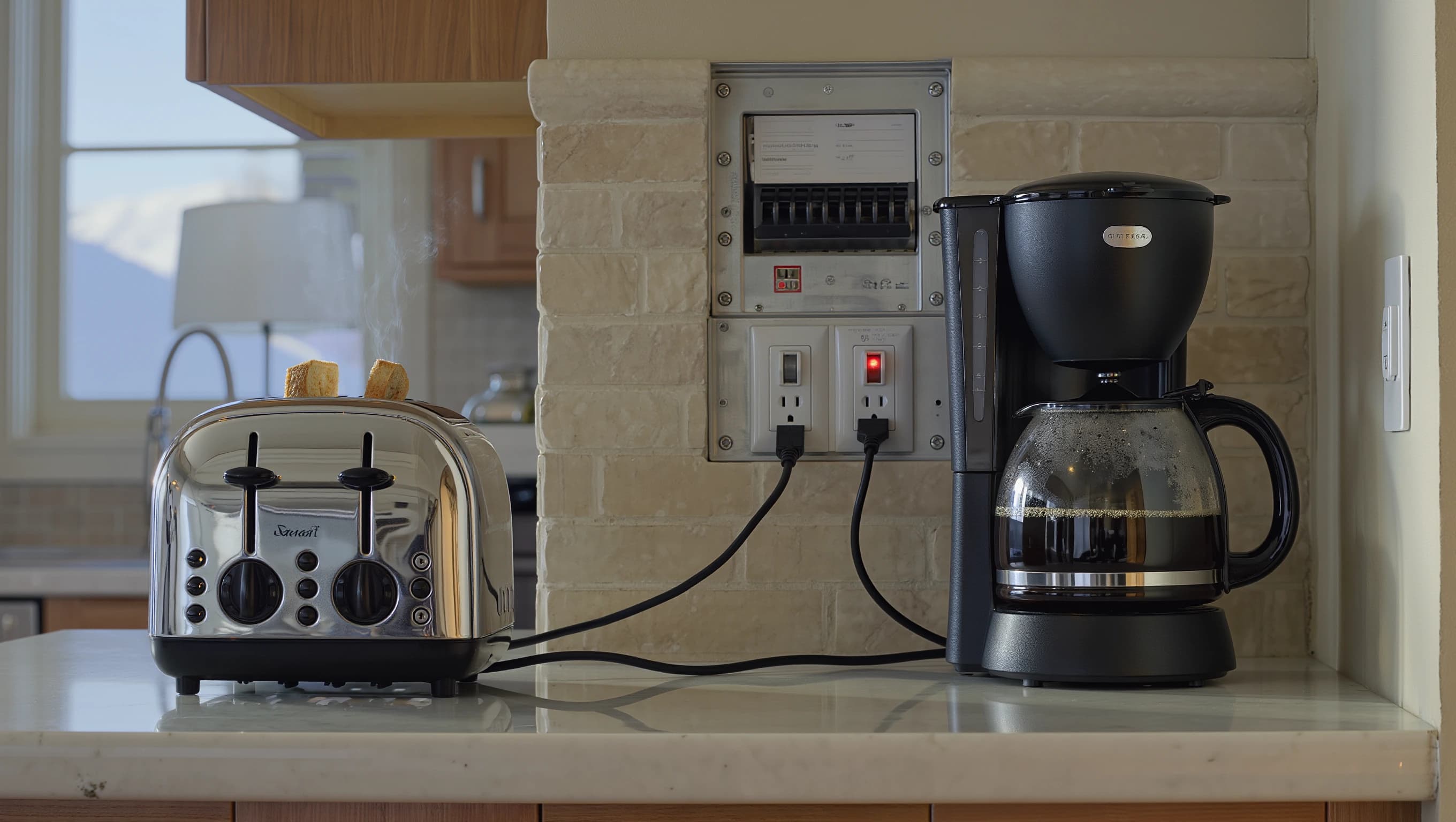
Yes, this is a common scenario and it's almost always normal: the toaster and coffee maker together draw more current than a single 15-amp circuit can supply, so the breaker cuts power to prevent the wiring from overheating. It's not dangerous on its own as long as the breaker is doing its job correctly, but it's a sign your kitchen would benefit from an additional dedicated circuit. If the breaker doesn't reset easily or trips even without both appliances running together, get it checked.
What's Happening?
A typical toaster draws between 800 and 1,500 watts, and a coffee maker between 900 and 1,500 watts depending on the model. Used together on the same 15-amp circuit (roughly 1,800 watts available at 120 volts), they easily exceed the circuit's capacity on their own, especially if another appliance like the microwave or fridge is already pulling current from it.
The breaker is designed for exactly this: it detects that the current being drawn exceeds what the wire can safely carry, and it cuts power before the wiring overheats. So this isn't a malfunction — it's protection working as intended.
The root cause is almost always that too many kitchen outlets share the same circuit — common in older kitchens, designed at a time when people didn't run this many appliances at once in the morning.
Is It Dangerous?
No, in this specific scenario, it's not dangerous. A breaker tripping from an overload is doing exactly what it's supposed to do to protect your home. It's an inconvenience, not a risk.
It becomes a concern only if certain signs accompany the trip:
- The breaker is hard to reset or won't stay in the "on" position
- It trips even when just one of the two appliances is plugged in
- The outlet or breaker feels hot to the touch
- You smell burning at the moment it trips
- The same breaker trips multiple times a day, not just at breakfast
If you notice any of these, it's no longer a simple normal overload — it can point to a faulty breaker or a wiring issue, and it deserves a check by an electrician.
Most Common Causes
| Cause | Explanation |
|---|---|
| Too many appliances on one 15A circuit | The toaster and coffee maker together often exceed the available capacity |
| Countertop outlets all wired to the same circuit | A common design in older kitchens, not built for today's usage |
| Aging breaker becoming more sensitive | An older breaker can trip at a slightly lower load than it originally did |
| Neutral or ground wire shared with another loaded circuit | Adds invisible load to the kitchen circuit |
| Internal fault in the toaster or coffee maker | A device drawing more than its rated power due to a fault |
Why This Happens in Quebec
Kitchens in homes and apartments built before the 1990s in Quebec — common across the triplexes and bungalows that make up much of the existing housing stock — often have only one or two circuits for all the countertop outlets, while the current electrical code recommends separate dedicated circuits for this kind of use.
The typical morning rush — coffee, toast, sometimes a blender or kettle, all at once before heading to work — hits this circuit at exactly the moment demand is highest. This isn't unique to Quebec, but the age of the housing stock makes the problem more common here than in newer builds.
How to Check It Yourself
You can safely check:
- Go to the panel and find the tripped breaker (switch sitting in a middle position)
- Unplug the toaster or coffee maker before resetting, then test one appliance at a time
- Note whether other kitchen appliances (microwave, blender) are plugged into the same row of outlets
- Check the panel labeling to see how many outlets share this circuit
What you should never do: install a higher-rated breaker yourself to "make it stop tripping" — that removes the protection without fixing the real problem and can create a genuine risk of the wiring overheating. Don't attempt to reroute the wiring between outlets yourself either.
Can I Ignore It?
Yes, to some extent. If the only consequence is having to plug the two appliances in at different times, you can simply live with that constraint without any risk to the house — plenty of people do this for years.
That said, if it's a daily frustration, the lasting fix is adding a dedicated circuit, not working around the breaker. Ignoring the problem by installing an oversized breaker, on the other hand, is never a good idea: it leaves the wiring exposed to an overload without adequate protection, which can lead to silent overheating inside the wall over time.
How Much Does It Cost?
| Service | Estimated Price (CAD) |
|---|---|
| Kitchen electrical diagnostic | $100 - $175 |
| Replacing a standard breaker | $125 - $250 |
| Adding a dedicated countertop circuit | $400 - $900 |
| Panel upgrade if overall capacity is lacking | $1,500 - $4,000 |
In the vast majority of cases, adding a dedicated circuit permanently fixes the problem without requiring a full panel upgrade.
When to Call a Professional
- The breaker trips even with only one of the two appliances plugged in
- It's hard to reset or won't stay closed
- The outlet or panel is hot to the touch when it trips
- You want to add a dedicated circuit to fix the problem permanently
- The same breaker trips for reasons other than an obvious overload
An electrician can confirm whether one more dedicated circuit is enough or whether the overall panel lacks capacity, and can add the wiring safely — work that touches the panel and should never be done without an RBQ license.
Related Questions
- My Breaker Trips Every Time I Use the Microwave and Toaster Together
- Why Do My Lights Flicker When I Use the Microwave or Toaster?
- Why Did One of My Outlets Suddenly Stop Working?
- Who Do I Call If My Breaker Trips Every Time My Heat Pump Starts: an Electrician or an HVAC Technician?
- Is It Dangerous That My Electrical Panel Still Uses Fuses?
- A Warm Electrical Outlet to the Touch: Is It Dangerous?
Frequently asked questions
Can I just install a higher-rated breaker?+
No, never do this yourself. An oversized breaker removes overload protection and can let the wiring overheat with nothing to cut the power.
How much does adding a dedicated kitchen circuit cost?+
Expect roughly $400 to $900, depending on the distance between the panel and the kitchen and how complex the existing wiring is.
Does this happen more often in winter?+
Somewhat, if you add a kettle or another seasonal appliance to the same circuit, which further increases demand at breakfast time.
Can I just use an extension cord plugged into another outlet?+
That's not a good permanent fix for big kitchen appliances — first check whether the other outlet is on a different circuit, otherwise the problem persists.
Should I call an electrician immediately?+
Not urgently if it's a simple occasional overload. Call promptly if the breaker becomes hard to reset or trips without an obvious reason.
Get a free quote
More to know before your project.
By Isabelle Roy — RBQ-licensed electrician, residential electrical safety specialist
Updated on July 23, 2026