
Why Are My Light Switches Warm to the Touch When the Light's Been On For a While?
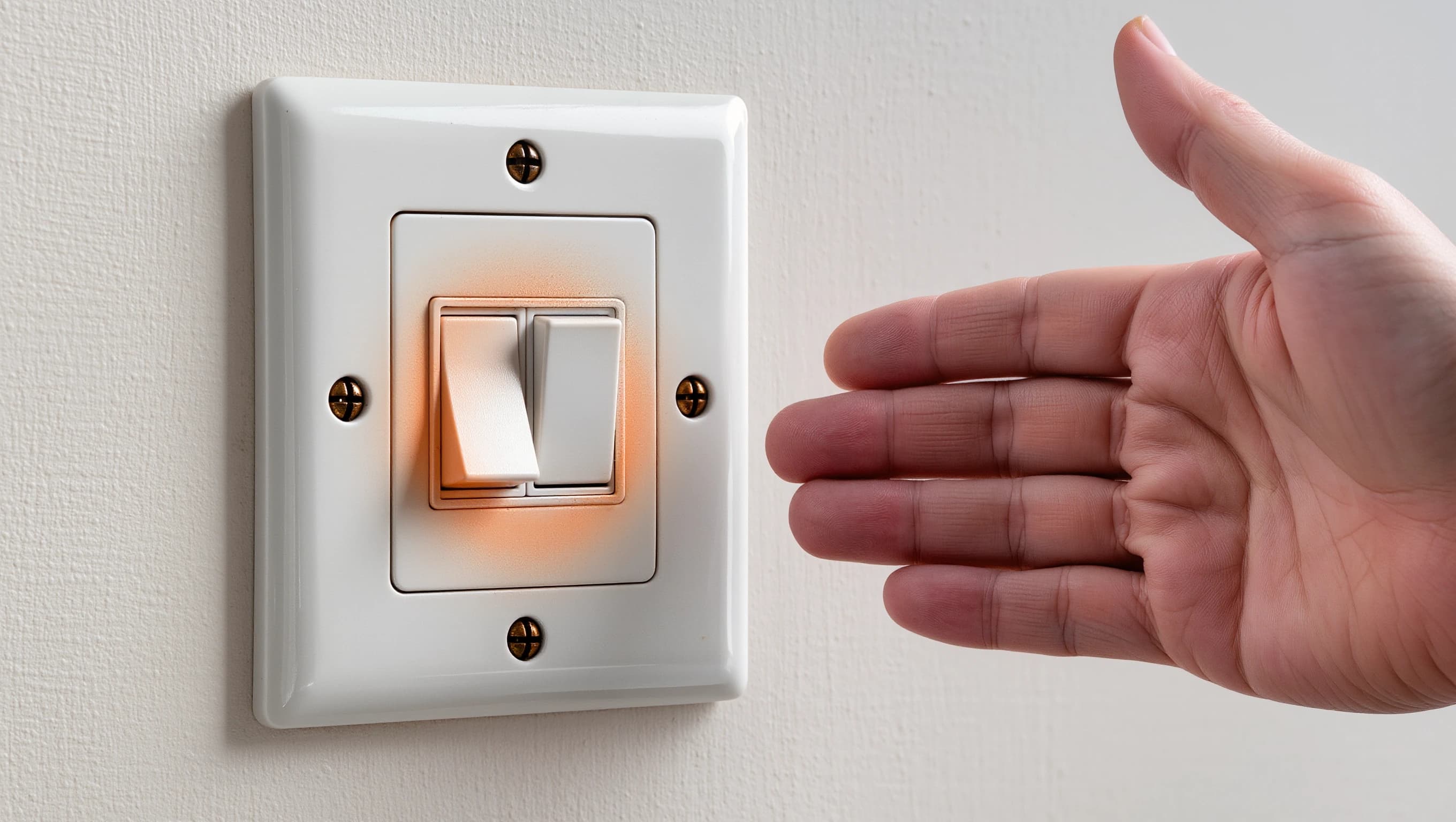
A switch that's slightly warm after several hours of use is usually normal, especially on a higher-load circuit. A switch that's genuinely hot to the touch, with a plastic smell or a discolored plate, almost always means a loose electrical connection overheating — a real fire risk. If that's what you're seeing, shut off the breaker for that circuit and call a licensed electrician soon rather than waiting.
What's Happening?
Every switch carries current through small screw or push-in connections inside the electrical box. Those connections always have a tiny amount of resistance, which generates a little heat — normally too small to notice, or at most slightly warm after hours of use on a circuit feeding several lights or a powerful fan.
The problem starts when one of those connections loosens. Resistance at that exact spot rises sharply, and heat concentrates locally instead of spreading through the whole circuit. That's the real difference between a switch that's evenly warm (normal) and one that's noticeably hot at a specific point (not normal).
A dimmer switch is the one exception: it regulates current continuously and naturally runs a bit warmer than a standard switch. But even a dimmer should never be uncomfortable to touch.
Is It Dangerous?
A switch that's only slightly warm, comparable to other switches carrying a similar load in the home, isn't dangerous. A switch that's noticeably hot is, because concentrated heat can melt wire insulation, char the internal contacts, and in the worst cases trigger an arc fault inside the wall.
Inspect or act immediately if you notice:
- The switch is too hot to comfortably keep a finger on for more than two or three seconds
- A burnt-plastic or metallic/ozone-like smell near the switch
- Visible discoloration, yellowing, or warping on the plate
- Crackling, sizzling, or buzzing sounds when you flip the switch
- The breaker for that circuit trips repeatedly
If even one of these is present, shut off the corresponding breaker, stop using the switch, and call an electrician the same day.
Most Common Causes
| Cause | Explanation |
|---|---|
| Loose screw-terminal connection | Tightness relaxes over time from normal heat cycling and house vibration |
| Backstab connection (push-in wire, not screwed) | A quick-install method common in many budget installs from the 1970s through 2000s, with a less reliable contact than a tightened screw |
| Circuit overloaded for the wire gauge | Too many devices on the same circuit push more current than the wire is rated to shed without heating up |
| Incompatible dimmer for the load | Some dimmers overheat when paired with LED bulbs they weren't designed for |
| Poorly treated aluminum wiring | Aluminum expands differently than copper and oxidizes at contact points, loosening faster over the years |
| Worn-out or low-quality switch | Internal contacts wear down after thousands of cycles, especially in cheaper switches |
Why This Happens in Quebec
Quebec has an unusually large number of homes built between 1965 and 1975, when aluminum wiring was widely used, especially in Montreal-area triplexes and duplexes. That wiring needs connections treated with an anti-oxidant compound and compatible devices — without that, connections loosen much faster than with standard copper wiring.
The province's extreme temperature swings, from -30°C in winter to over 30°C in summer, also work the metal at every connection through repeated expansion and contraction year after year, speeding up how fast screws loosen inside electrical boxes compared to more climate-stable regions.
A good share of the older housing stock has also gone through unpermitted renovations over the decades, often with quick backstab connections installed along the way. Any corrective work on the wiring itself needs to be done by an electrician holding an RBQ license.
How to Check It Yourself
You can safely:
- Compare how warm the suspect switch feels against other switches carrying a similar load elsewhere in the house
- Check for a plastic or burning smell near the plate
- Look for discoloration, yellowing, or any sign of melting on the plate or switch body
- Listen for buzzing or crackling when you flip it
- Note whether the problem showed up suddenly, after a renovation, or gradually as the house aged
What you should never do yourself: remove the switch plate, touch the wires inside the box, tighten a connection screw, or keep using the switch "to see if it gets worse." The wiring behind a switch stays live even when the light is off, and only a licensed electrician should work on it.
Can I Ignore It?
It depends on the heat level. If the switch is just warm and comparable to other similar-load switches, no, there's nothing to do — that's normal behavior. But if the switch is noticeably hot, no, you can't ignore it.
A loose connection never stabilizes on its own: the heat oxidizes the contact point further, which raises resistance even more, which generates even more heat. It's a cycle that worsens with every use, sometimes over months, sometimes much faster if the circuit sees heavy use. A significant share of residential electrical fires start exactly this way, inside a box behind a switch or an outlet.
How Much Does It Cost?
| Service | Estimated Price |
|---|---|
| Diagnostic visit / electrical emergency call | $150 - $250 |
| One-off repair (tightening a connection, replacing the switch and box) | $200 - $400 |
| Full circuit repair (several hot spots found, a wiring section redone) | $400 - $900 |
| Electrical panel upgrade (aluminum wiring issues found throughout the house) | $1,500 - $4,000 |
Most cases are resolved at the diagnostic-visit-plus-one-off-repair level. A full panel upgrade is only needed when the electrician finds multiple hot spots tied to untreated aluminum wiring throughout the house.
When to Call a Professional
- The switch is genuinely hot, not just warm, compared to similar switches elsewhere in the home
- You notice a burnt-plastic or metallic smell near the switch or plate
- The plate or switch body shows discoloration, yellowing, or signs of melting
- You hear crackling or buzzing when you flip the switch
- The breaker for that circuit trips repeatedly
- Your home has aluminum wiring that's never been inspected by an electrician
- Several switches or outlets in the house show the same kind of heat, pointing to a circuit or panel issue rather than one isolated switch
- The lights flicker or dim around the same time you notice the heat
A licensed RBQ electrician can safely open the box, measure the resistance at each connection, identify whether the issue is the switch, the wiring, or the panel, and fix the actual cause rather than just swapping the visible part.
Related Questions
- A Warm Electrical Outlet to the Touch: Is It Dangerous?
- Can Old Aluminum Wiring in My House Actually Catch Fire?
- Is It Dangerous That My Electrical Panel Still Uses Fuses?
- My Breaker Trips Every Time I Use the Microwave and Toaster Together
- Why Do My Lights Flicker When I Use the Microwave or Toaster?
- Why Did One of My Outlets Suddenly Stop Working?
- Why Does My Smoke Detector Chirp Occasionally Even With a Fresh Battery?
- Should I Negotiate a Home's Price Because of Its Old Roof or Outdated Electrical System?
Frequently asked questions
Can I keep using a switch that's only warm?+
Yes, as long as the heat stays mild and comparable to other similar-load switches in the home. Just keep an eye on it over time: if it gets noticeably hotter, that's no longer normal.
Is it normal for a dimmer switch to run hotter than other switches?+
Yes, a dimmer naturally runs a bit warmer because it regulates current continuously. But it should never be uncomfortable to touch — if it is, check its compatibility with your LED bulbs or have it inspected.
How much does an emergency call for a hot switch cost?+
Expect roughly $150 to $250 for the diagnostic visit, and up to $400 if the electrician fixes the connection and replaces the switch during that same visit.
Should I turn off the breaker myself before the electrician arrives?+
Yes, if the switch is hot, smells odd, or shows discoloration, flipping the corresponding breaker off is a safe action any homeowner can take. Just don't touch the switch itself or the wiring behind it.
Does replacing the switch myself fix the problem?+
Not necessarily. If the real cause is a loose connection in the wiring behind the switch, replacing only the visible part leaves the underlying problem intact and the overheating risk persists.
Get a free quote
More to know before your project.
By Isabelle Roy — RBQ-licensed electrician, residential electrical safety specialist
Updated on July 23, 2026