
A Warm Electrical Outlet to the Touch: Is It Dangerous?
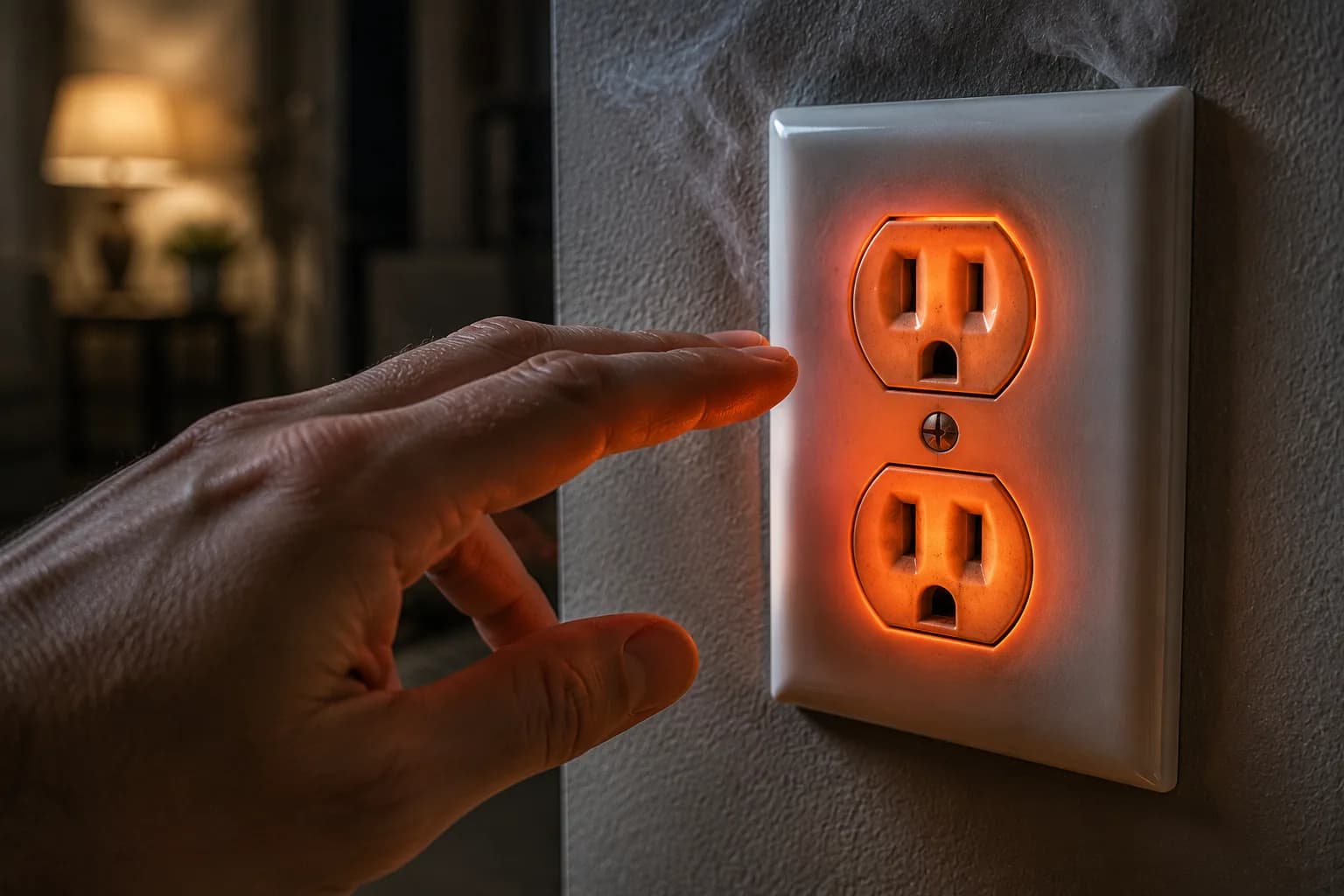
Yes, a warm outlet is a warning sign, even if it's not scorching hot. The most common cause is a loose connection or an overload, which creates resistance that heats the wire and surrounding plastic. This isn't normal, it should concern you, and you should stop using that outlet immediately and get an electrician in soon, especially if you smell hot plastic or see discoloration.
What's Happening?
An electrical outlet should never be warm to the touch, no matter what's plugged into it. When a connection inside the outlet (at the screws or terminals) isn't properly tightened, current flowing through it meets resistance right at that spot. That resistance turns part of the electricity into heat, the exact same way a toaster element works.
The same thing happens if too many devices are plugged into the same circuit: the wire heats up because it's carrying more current than it's designed to handle continuously.
The plastic outlet housing then starts heating up too, and over time it can discolor, soften, or even slightly melt around the slots.
Is It Dangerous?
Yes, potentially. A warm outlet is one of the most common early warning signs before a residential electrical fire. Constant heat wears down wire and housing insulation, which increases the risk of arcing.
Unplug everything from that outlet and stop using it right away if you notice:
- The outlet is warm or even lukewarm consistently, not just right after heavy use
- A smell of hot plastic or burning
- Brown or black discoloration around the slots or the faceplate
- A buzzing or crackling sound
- Visible sparks when plugging or unplugging
- The associated breaker tripping frequently
If you see smoke, a flame, or smell strong burning, shut off the breaker for that circuit immediately and call an emergency electrician, or 911 if the situation seems out of control.
Most Common Causes
| Cause | Explanation |
|---|---|
| Loose connection at the outlet | An improperly tightened wire creates a resistance point that heats up with use |
| Overloaded circuit | Too many devices on the same circuit heat the wire beyond its rated capacity |
| Worn or low-quality outlet | Internal contacts lose their tension over time and create resistance |
| Aluminum wiring | Expands and contracts differently than copper, loosens more easily at connections |
| Extension cord or power bar overloaded | Too high a load on an accessory not built for it transfers heat back to the outlet |
| Faulty appliance plugged in | A device drawing abnormal current can heat the outlet even if it's in good condition |
Why This Happens in Quebec
Many Quebec homes built between 1965 and 1975 were wired with aluminum instead of copper, a common practice at the time due to copper prices. Aluminum expands and contracts more with temperature swings, which loosens connections over the years — a phenomenon made worse by Quebec's large temperature swings between summer and winter.
On top of that, old ungrounded two-prong outlets, still found in many older homes in Montreal and Quebec City, are more prone to developing loose connections over time.
How to Check It Yourself
You can safely:
- Briefly touch the outlet faceplate (not the slots or anything inside) to feel if it's warm
- Look for discoloration, black marks, or melting around the slots
- Discreetly check for a hot plastic smell
- Unplug everything from that outlet and see if a different device plugged elsewhere causes the same problem
Never remove the outlet faceplate yourself, and never touch anything inside, even with the device unplugged. Current is still present until the breaker is shut off, and only an electrician should open an outlet to inspect or tighten connections.
Can I Ignore It?
No. A warm outlet is never something to leave alone. Unlike a noise or smell that can sometimes wait for a routine inspection, heat signals an active failure point that gets worse with every use.
The longer you keep using a warm outlet, the more the wire insulation degrades, bringing you closer to an arc fault or the start of a fire. This risk isn't theoretical: loose connections are one of the most well-documented causes of residential fires in Canada.
How Much Does It Cost?
| Service | Estimated Price |
|---|---|
| Emergency electrical call | $150 - $500 |
| Replacing a single faulty outlet | $150 - $300 |
| Repairing a loose in-wall connection | $200 - $450 |
| Replacing multiple outlets on an overloaded circuit | $500 - $1,200 |
| Adding a dedicated circuit to reduce overload | $400 - $900 |
The price mostly depends on whether the issue is limited to one outlet or points to a broader problem on the circuit.
When to Call a Professional
- The outlet is warm, even mildly, on a consistent basis
- You see discoloration, melting, or black marks
- There's a smell of hot plastic or burning, even faint
- You hear buzzing or see sparks
- The breaker trips often on that circuit
- You have aluminum wiring and aren't sure your outlets are properly rated for it
An electrician can measure the actual load on the circuit, check the tightness of every connection, and determine whether the issue is in the outlet itself or a broader problem inside the wall — something that can't be safely checked without cutting power and opening the electrical box.
Related Questions
- Can Old Aluminum Wiring in My House Actually Catch Fire?
- Why Are My Light Switches Warm to the Touch When the Light's Been On For a While?
- Why Did One of My Outlets Suddenly Stop Working?
- Is It Dangerous That My Electrical Panel Still Uses Fuses?
- My Breaker Trips Every Time I Use the Microwave and Toaster Together
- Are Uncovered Electrical Outlets Really Dangerous for a Baby Who's Starting to Crawl?
- Why Does My Smoke Detector Chirp Occasionally Even With a Fresh Battery?
Frequently asked questions
Can I still use other outlets in the same room?+
Yes, as long as they aren't warm themselves. But if several outlets on the same circuit are heating up, that suggests an overall circuit overload, not an isolated issue, and the whole circuit should be inspected.
Is it normal for an outlet to feel lukewarm if I have a toaster oven plugged in?+
A slight warmth right after prolonged use of a high-power appliance can happen, but it should return to cool within minutes of unplugging. If it stays warm, or is warm even with nothing plugged in, that's not normal.
How much does an emergency visit cost for a warm outlet?+
Generally between $150 and $500 depending on the time and urgency, which often includes diagnosis and a simple on-site repair. A more complex circuit replacement will be billed separately.
Should I call a professional immediately?+
Yes, if the outlet is consistently warm, smells like burning, or shows black marks. Unplug everything from it while you wait for the electrician, and shut off the circuit breaker if you have any doubt at all.
Can a warm outlet damage my electronics?+
Yes, a failing connection can cause voltage fluctuations that prematurely wear out sensitive electronics plugged into it, on top of the fire risk. That's one more reason not to wait to get it fixed.
Get a free quote
More to know before your project.
By Isabelle Roy — RBQ-licensed electrician, residential electrical safety specialist
Updated on July 25, 2026