
Why Does My Water Smell Like Sulfur or Rotten Eggs?
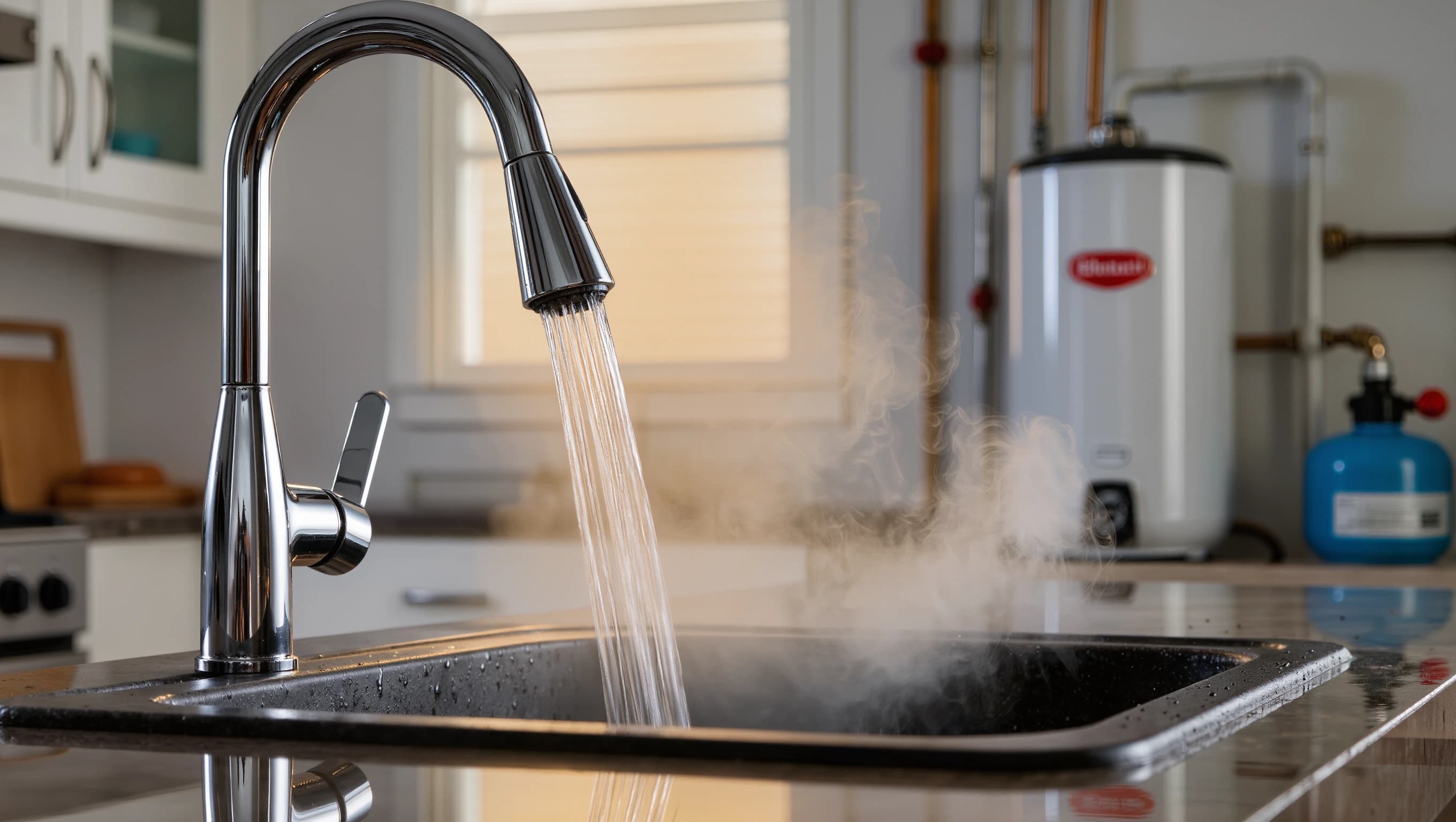
A sulfur or rotten-egg smell in your water usually isn't a health hazard, but it almost always points to a chemical reaction inside the water heater (the anode rod reacting with sulfate-reducing bacteria) or bacterial activity in a well. If the smell is only in the hot water, the water heater is suspect number one. If it's in the cold water too, get the well water tested promptly.
What's Happening?
The rotten-egg smell comes from a gas called hydrogen sulfide. It forms when bacteria naturally present in water or soil react with sulfur and metals — specifically the magnesium anode rod found inside almost every water heater.
These bacteria are generally not harmful to human health — they simply produce a gas that smells unpleasant. The problem is almost always stronger in hot water because the tank's heat speeds up the chemical reaction between the anode and the bacteria.
If the smell affects cold water too, the source is likely broader: a contaminated well or a groundwater supply with naturally high sulfur content.
Is It Dangerous?
In the vast majority of cases, no — it's unpleasant, not toxic. Hydrogen sulfide present in tap water at these low levels isn't a known health risk.
That said, act quickly if:
- The smell is very strong and accompanied by headaches or nausea after prolonged exposure in a poorly ventilated space (like a windowless bathroom)
- You have a private well and the water has never been tested for bacteriological quality
- The water also changes color (yellowish, cloudy) in addition to smelling bad
- You notice a sulfur smell near the gas water heater itself (not in the water) — this could indicate a gas leak and requires an immediate call to your energy provider
Most Common Causes
| Cause | Explanation |
|---|---|
| Worn magnesium anode rod | Reacts with natural bacteria in the water heater, the most common cause |
| Sulfate-reducing bacteria in a well | Naturally present in some soils, produce hydrogen sulfide |
| Water heater unused for a long time | Stagnant water in the tank encourages bacterial growth |
| Rarely used plumbing branch | A guest room or a cottage closed up for months can develop the same smell |
| Groundwater contamination | Rarer, but possible near agricultural or industrial areas |
Why This Happens in Quebec
Many rural and country homes in Quebec rely on private wells, where groundwater quality and composition vary widely from one property to the next. Soils rich in organic matter or natural sulfur promote this smell, especially in the Eastern Townships, Montérégie, and parts of the Lower St. Lawrence.
Cottages and secondary residences closed up for several months a year are especially affected: stagnant water in the water heater over winter gives bacteria plenty of time to grow before reopening in spring.
How to Check It Yourself
- Smell the hot and cold water separately, at different taps, to isolate the source
- If only the hot water smells bad, the water heater is likely the cause
- If both smell bad and you have a well, get the water tested at an accredited lab (often required annually for private wells in Quebec)
- Check when your water heater was installed — an anode rod typically lasts 3 to 5 years before needing replacement
What you shouldn't do yourself: open a gas water heater to inspect the inside, remove the anode rod without shutting off the water and electricity/gas supply, or ignore a sulfur smell that seems to come from the gas appliance itself rather than the water.
Can I Ignore It?
It depends. If the smell is only in the hot water and you're on a municipal supply, it's generally not urgent — but it won't resolve on its own and will likely persist or get stronger.
If you're on a private well, don't ignore it: a sudden smell warrants a water quality test, since it can also signal other changes in your water's composition (coliform bacteria, for example) that are a genuine health concern.
How Much Does It Cost?
| Service | Approximate Price |
|---|---|
| Water quality test (well) | $75 - $200 |
| Anode rod replacement | $150 - $350 |
| Chlorine shock disinfection of water heater | $100 - $250 |
| Full well disinfection | $300 - $800 |
| Water heater replacement | $1,200 - $3,000 |
When to Call a Professional
- The smell persists after running the hot water for several minutes on a few separate occasions
- You have a private well and the water hasn't been tested in over a year
- The water heater is over 8-10 years old and the anode rod has never been checked or replaced
- You detect a sulfur or gas smell near the unit itself, not just in the water — call immediately, this is no longer a water issue but possibly a gas one
Related Questions
- Why Does My Water Look Milky or White When I Turn On the Tap?
- Why Is There Rust In My Tap Water?
- Is It Normal for My Water to Have a Metallic Taste?
- How Much Longer Before My Water Heater Gives Out?
- Why Has My Hair Been So Dry Since I Moved Into This House?
- Is It Normal for My Hot Water to Run Out After 10 Minutes In the Shower?
- Should I Worry About Lead In My Drinking Water If My House Was Built Before 1990?
Frequently asked questions
Can I keep using the hot water while I wait to fix this?+
Yes, you can generally keep using it normally for dishes and showers — the smell isn't a sign of immediate danger. It's simply unpleasant and worth fixing.
Does running the water longer fix the problem?+
It can temporarily reduce the smell by flushing out stagnant water, but if the cause is the anode rod or an established bacterial colony, the smell comes back. It's not a lasting fix.
Is this normal after being away for a while, like at a cottage?+
Yes, that's very common. Water sitting in a water heater closed up for weeks or months gives bacteria time to grow. Running the hot water for a few minutes when reopening often resolves it on its own.
Do I need to call a professional immediately?+
Not urgently if the smell is only in hot water from a municipal supply. But if you're on a well, schedule a water quality test soon — within days, not hours.
Get a free quote
More to know before your project.
By Julien Fortin — RBQ-licensed plumber, 10 years of experience in residential plumbing
Updated on July 23, 2026