
Why Is There Rust In My Tap Water?
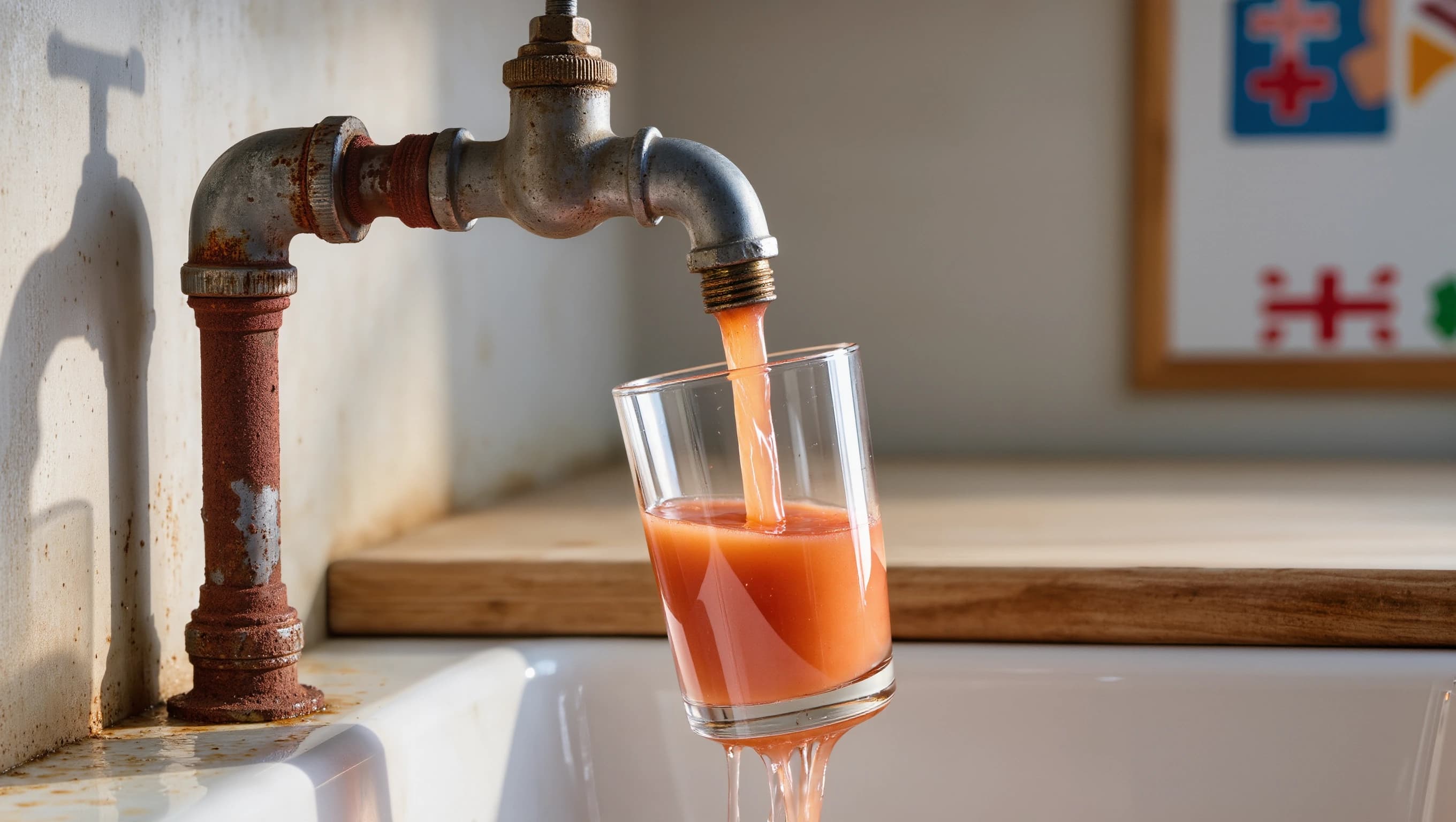
Rusty tap water isn't usually dangerous in the short term, but it's a clear sign of corrosion somewhere in your plumbing or water heater. The most common cause is an aging water heater or old galvanized steel pipes rusting from the inside. Avoid drinking it until you've traced the source, and if it lasts more than a day or only affects hot water, get your water heater checked soon.
What's Happening?
Rusty water — brown, orange, or yellowish — almost always comes from iron or rust particles breaking loose from a corroding metal surface somewhere in your water system. The water itself isn't "turning rusty"; it's simply carrying oxidized metal debris.
Two common scenarios: the corrosion is happening inside your home (water heater, aging galvanized pipes), or it's coming from the municipal network (a corroding water main, or one recently disturbed by city work or a nearby pipe break).
Iron is generally not toxic at the levels seen in these cases, but the water becomes unpleasant to taste, stains clothes and fixtures, and signals an underlying issue worth addressing.
Is It Dangerous?
In most cases, no — it's not a short-term health hazard. Dissolved iron isn't a toxic contaminant at typical levels. But it's not something to shrug off either: it points to active corrosion that can eventually lead to a leak or water heater failure.
Inspect or act quickly if:
- Rusty water only comes from the hot side (likely water heater corrosion, which can leak soon).
- You also notice a metallic or rotten-egg smell.
- Rusty water suddenly appears after street work or a neighborhood water shutoff.
- You see rust stains building up quickly in the toilet, tub, or washing machine.
- You have young children or a pregnant person at home and the water stays discolored for more than 24-48 hours — in that case, avoid drinking it and have the water tested as a precaution.
Most Common Causes
| Cause | Explanation |
|---|---|
| Aging water heater | The steel tank corrodes with age (typically 10-15 years), releasing rust especially on the hot side. |
| Aging galvanized pipes | Homes built before the 1960s-70s often have galvanized steel pipes that rust from the inside over time. |
| Municipal main work or breaks | A water main repair or high demand (fire hydrant use) can stir up iron sediment in the network. |
| Sudden pressure drop or restoration | Water being shut off and back on (city work, maintenance) dislodges rust built up in pipes. |
| Worn sacrificial anode in the water heater | Once the anode protecting the tank is used up, tank corrosion speeds up. |
| Private well with high iron content | For homes off the municipal grid, groundwater can naturally contain dissolved iron. |
Why This Happens in Quebec
Many older Montreal neighborhoods and older Quebec towns still have municipal mains and service lines made of iron or steel installed before the 1970s, before copper and later PEX became standard. This aging infrastructure corrodes over the decades and is particularly prone to releasing rust during work or pressure changes.
Quebec's freeze-thaw cycle also drives its share of pipe breaks in spring and fall, which stirs up sediment built up in the network. If your rusty water coincides with roadwork or a municipal notice, it's probably temporary and network-related rather than a problem inside your home.
How to Check It Yourself
Run the cold water in the kitchen for 1-2 minutes: if the color clears quickly, it's likely tied to the municipal network or a temporary deposit in your pipes. If it stays colored continuously, the source is more likely internal.
Compare cold and hot water separately. If only the hot water is rusty, the water heater is the top suspect. You can also check your water heater's age (manufacturer label on the tank) — past 10-12 years, internal corrosion becomes more likely.
Never take apart the water heater yourself and don't touch the pressurized drain valve without knowing what you're doing — hot pressurized water can cause serious burns. Contact your municipality to find out if recent work explains the issue before assuming it's a fault in your home.
Can I Ignore It?
It depends on the source. If it's a one-time event tied to municipal work, the water usually clears within hours to a few days and there's nothing more to do than wait and flush your pipes.
If it's recurring or limited to hot water, ignoring it isn't a good idea: a water heater rusting from the inside eventually leaks, often without warning, which can cause costly water damage in the basement. The longer you wait, the higher the risk of sudden failure.
How Much Does It Cost?
| Service | Estimated cost |
|---|---|
| Plumbing inspection and source test | $100 - $200 |
| Replacing a section of galvanized pipe | $300 - $900 |
| Water heater sacrificial anode replacement | $150 - $300 |
| Full water heater replacement | $1,200 - $3,000 |
| Lab water quality test | $50 - $150 |
When to Call a Professional
- Rusty water comes only from the hot side, a likely sign of water heater corrosion that could leak soon.
- The problem persists more than 2-3 days after flushing the pipes and checking with the city.
- You see visible rust around fittings or on the water heater tank itself.
- Rusty water is paired with a pressure drop, a possible sign of galvanized pipes clogged by corrosion.
- You're not sure if your home still has galvanized plumbing — an RBQ-licensed plumber can identify it quickly and tell you if a partial replacement is needed.
Related Questions
- Why Does My Water Look Milky or White When I Turn On the Tap?
- How Much Longer Before My Water Heater Gives Out?
- Why Did My Water Pressure Suddenly Drop?
- Brown Water Is Coming Out of the Tap: Is It Dangerous?
- Why Does My Water Smell Like Sulfur or Rotten Eggs?
- Is It Normal for My Water to Have a Metallic Taste?
- Should I Worry About Lead In My Drinking Water If My House Was Built Before 1990?
Frequently asked questions
Can I still drink the water if it's only slightly rusty?+
It's best to avoid drinking or cooking with it until the color clears, even though the immediate risk is low. Use bottled water in the meantime as a precaution, especially for children.
Is it normal after a water shutoff or street work?+
Yes, that's one of the most common causes. Work stirs up sediment built up in municipal mains. Water usually clears after a few hours of running the taps.
How do I know if it's my water heater and not the pipes?+
Compare cold and hot water at the same tap. If only the hot water is discolored, the water heater is almost always the cause; if both are, it's more likely the pipes or municipal network.
Do I need to call a professional immediately?+
Not urgently if it's a one-time event tied to municipal work. But if it's recurring, limited to hot water, or lasts more than a few days, get your water heater or pipes inspected soon to avoid a leak.
Will a water softener fix the rust problem?+
No, a softener treats water hardness, not pipe or water heater corrosion. A sediment filter can reduce visible particles, but it doesn't fix the root cause — the corrosion itself needs to be addressed at the source.
Get a free quote
More to know before your project.
By Julien Fortin — RBQ-licensed plumber, 10 years of experience in residential plumbing
Updated on July 23, 2026