
Should I Worry About Lead In My Drinking Water If My House Was Built Before 1990?
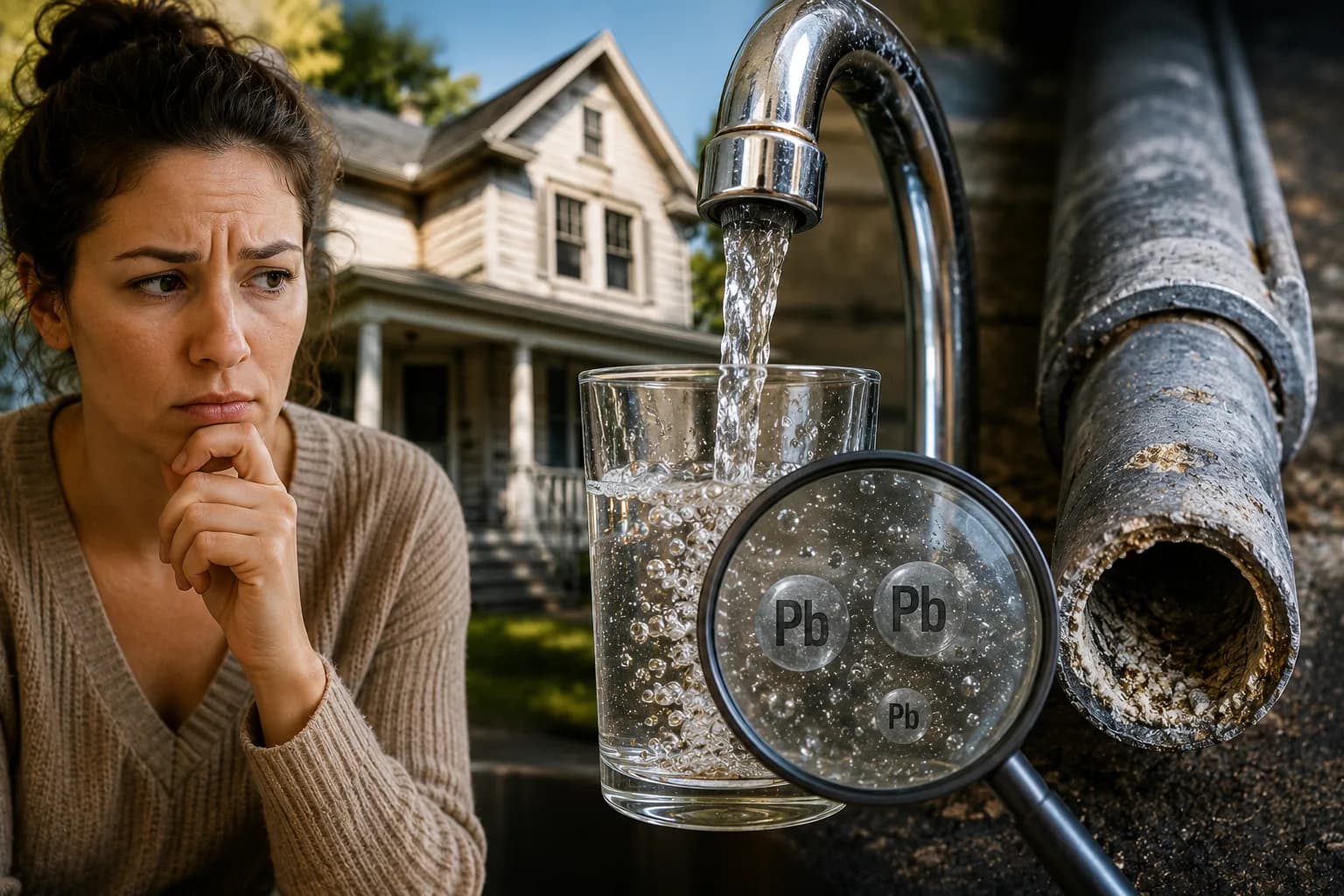
Yes, it's worth checking, without panicking. Quebec homes built before 1990, and especially before 1970, are more likely to have a lead service line or lead solder in the plumbing. Lead in drinking water is a real health risk, particularly for children and pregnant women, but it causes no visible symptom in the water itself — you need a test to know. The good news: it's an identifiable and fixable problem.
What's Happening?
Before plumbing codes progressively banned it, lead was commonly used for water service lines (the pipe connecting the municipal main to your house) and for soldering copper pipe joints. Quebec tightened these rules over the decades, with a stricter ban on lead solder starting in the 1990s.
The problem isn't the water itself as it leaves the municipal treatment plant — it's generally lead-free. It's the water's prolonged contact with lead in YOUR plumbing, between the street and your tap, that can leach small amounts of lead into the water you drink, especially after the water has sat still in the pipes for a while (overnight, or after being away).
Unlike other plumbing issues, lead doesn't change the taste, color, or smell of water — which is exactly what makes it more insidious than other contaminants.
Is It Dangerous?
Yes, potentially, which is why it isn't treated lightly. Lead builds up in the body over time and can affect the neurological development of young children and fetuses, even at low, repeated doses. It's not an immediate-effect poison like carbon monoxide — it's a chronic exposure risk.
Inspect or act quickly if:
- Your home was built before 1970 in a municipality that hasn't yet replaced all its lead service lines
- There's a pregnant person or a child under 6 in the household and you've never had the water tested
- You know your service line is lead (visible, dull gray, scratches easily with a coin) and don't yet have a filtration solution in place
- Water regularly sits still in your pipes for more than 6 hours (overnight, during a workday)
This isn't an emergency requiring you to stop using the water immediately in the vast majority of cases, but it's a situation to clarify quickly rather than put off indefinitely.
Most Common Causes
| Cause | Explanation |
|---|---|
| Lead municipal service line | The pipe connecting the street water main to your meter is lead, a common practice before the 1970s-1980s |
| Lead solder on copper piping | Copper pipe joints installed before the 1990s were often soldered with a lead-containing alloy |
| Older brass fixtures or fittings | Some old brass faucets and fittings contain a small proportion of lead that can leach into the water |
| Water sitting still in pipes for a long time | The longer water sits stagnant in contact with lead, the higher the concentration when you first turn on the tap |
| Corrosive water (low pH, low hardness) | More acidic or soft water dissolves lead more readily than neutral or hard water |
| Renovation or repair that disturbed an existing lead line | Recent work near the water entry point can temporarily increase the release of lead particles |
Why This Happens in Quebec
Several major Quebec cities, including Montreal and Quebec City, have a large housing stock built before 1970, with thousands of lead service lines still in place in some older neighborhoods. Montreal has launched an active lead service line replacement program, but replacing the whole network happens over several years, sector by sector.
Quebec's regulations followed the same trajectory as the rest of Canada: lead solder for residential plumbing has been banned since the 1990s, but nothing requires a homeowner to remove existing piping already in place as long as it isn't leaking — which is why so many older homes still have it.
How to Check It Yourself
Locate where the water service enters your home, usually near the water meter in the basement. A lead pipe is recognizable by its dull, matte gray color, a surface that scratches easily to reveal shiny silver metal underneath (test with a coin, never a knife or cutting tool), and the fact that it's not magnetic. Copper is brownish-orange and galvanized steel is a lighter gray and magnetic.
The only reliable way to know if your water actually contains lead is an accredited lab test — visually, you can only confirm the pipe material, not the real concentration in the water. Several Quebec municipalities offer free or low-cost test kits for residents.
Do not cut or handle a suspected lead service line yourself — this pipe is under pressure and its replacement requires a permit and an RBQ-licensed plumber, often coordinated with the municipality for the public portion of the connection.
Can I Ignore It?
It depends on your situation, but when in doubt, checking is better than ignoring. If your home was built after 1990, the risk of lead in the plumbing itself is low — you can be more reassured. If it was built before that, especially before 1970, ignoring the question isn't recommended, particularly if there are young children or a pregnant person in the home.
Lead doesn't cause sudden damage to your home the way a leak does, but chronic exposure has a cumulative health cost that's hard to reverse once established, especially in children. This is one of the rare plumbing issues where "wait and see" isn't a good strategy, because there's nothing to see until you've tested.
How Much Does It Cost?
| Service | Estimated Price (CAD) |
|---|---|
| Lab water test for lead | $30 - $100 (often free through the municipality) |
| Service line inspection by a plumber | $150 - $300 |
| Certified lead-removal filter (under-sink or certified pitcher) | $50 - $400 |
| Full replacement of a lead service line | $3,000 - $8,000 (private portion; cost often shared with the municipality depending on local programs) |
The cost of replacing the service line varies widely depending on the distance between the street and the house, and on whether your municipality has a subsidy or coordinated replacement program — some cities replace their portion for free when the homeowner replaces theirs.
When to Call a Professional
- You've visually confirmed that your service line is lead
- A lab test shows a lead level above the Health Canada guideline
- Your home was built before 1970 and you've never checked the material of the water service line
- You're planning a renovation that touches the plumbing and want to evaluate a replacement while you're at it
- You want help interpreting a test result and choosing between filtration and full replacement
An RBQ-licensed plumber can confirm the exact material of your service line, point you to a reliable lab test, and assess whether a full replacement or a filtration solution is enough for your situation and budget.
Related Questions
Frequently asked questions
Does boiling water remove lead?+
No, quite the opposite — boiling lead-contaminated water actually concentrates the lead as some of the water evaporates. Only certified filtration or reverse osmosis effectively reduces lead in drinking water.
How do I know if my municipality has a lead service line replacement program?+
Contact your city's water utility department — several major Quebec municipalities, including Montreal, publish online maps showing sectors with known lead service lines and available replacement programs.
Is an ordinary pitcher filter enough to remove lead?+
No, only filters specifically certified NSF/ANSI 53 for lead reduction are effective — a standard pitcher filter not certified for lead generally won't remove it reliably.
Can I keep using the water while waiting for test results?+
Yes, but run the cold water for 1 to 2 minutes before drinking or cooking if the water has been sitting for several hours, and avoid using hot tap water for baby formula or drinking, since hot water dissolves more lead.
Do all homes built before 1990 have lead in their plumbing?+
No, not necessarily — some have already been renovated with lead-free soldered copper or PEX piping. The construction year is a clue, not confirmation; only an inspection or a test can confirm it.
Get a free quote
More to know before your project.
By Julien Fortin — RBQ-licensed plumber, 10 years of experience in residential plumbing
Updated on July 23, 2026