
Why Does My Water Look Milky or White When I Turn On the Tap?
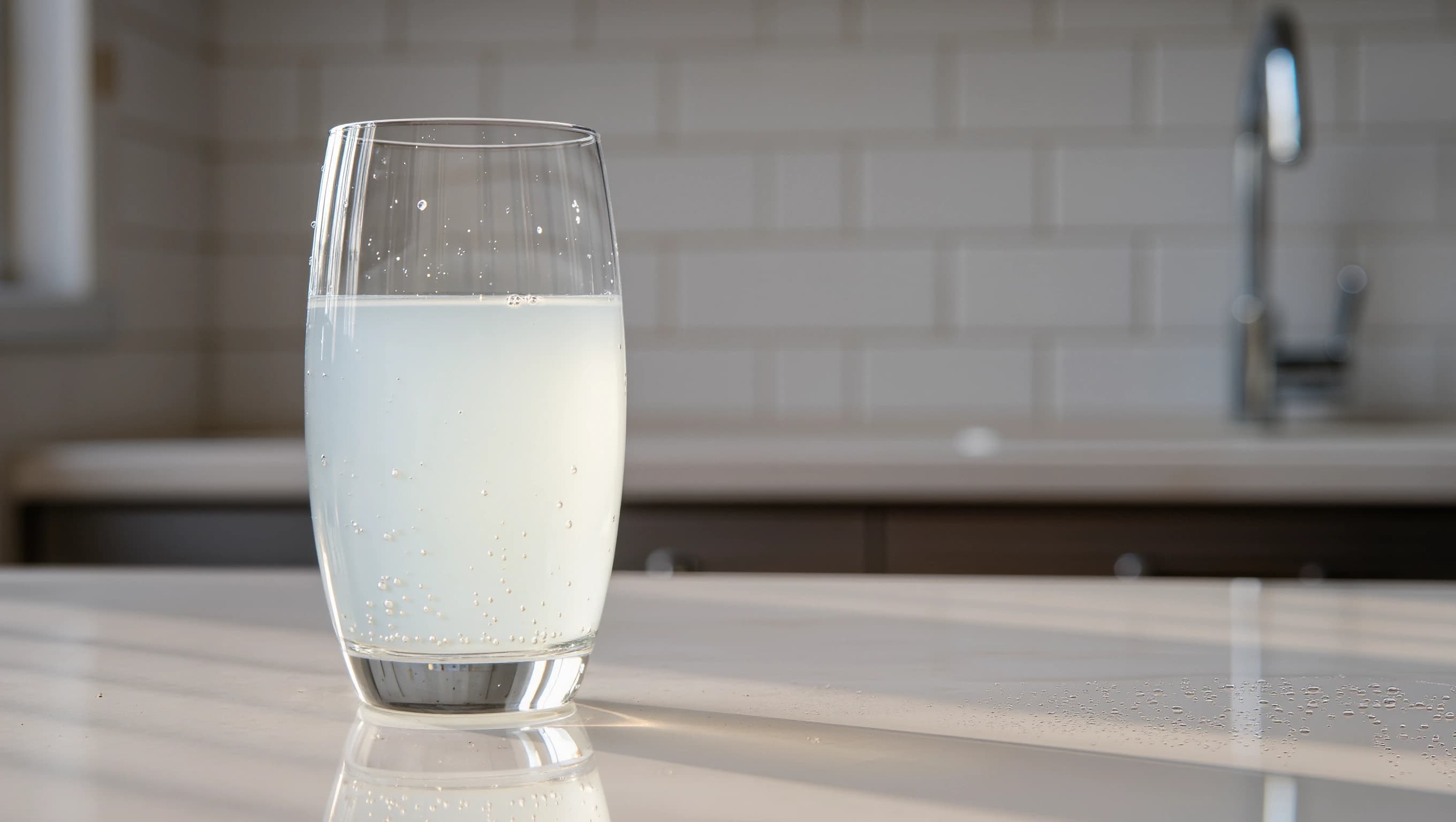
Milky or cloudy tap water is almost always caused by tiny bubbles of dissolved air in the water, not contamination. It's generally not dangerous and clears up on its own: fill a glass and watch it for 1-2 minutes — if it goes clear from the bottom up, that's air, plain and simple. If the water stays cloudy or opaque after that, or has an unusual smell or taste, that's a different issue worth checking.
What's Happening?
Milky or cloudy water almost always comes from the same phenomenon: tiny microscopic air bubbles suspended in the water, making it look opaque, similar to foam in a glass of soda. It's not a foreign substance — it's ordinary air trapped under pressure.
This typically happens when water pressure suddenly changes — after plumbing work, a municipal repair, or simply in winter when cold water (which holds more dissolved air) gets warmed or decompressed as it leaves the tap.
In rare cases, persistent white coloring can also point to a high concentration of dissolved minerals (calcium, magnesium) typical of hard water, but that usually produces a cloudy look rather than a distinct milky white, and doesn't clear the same way in a glass.
Is It Dangerous?
No, in the vast majority of cases, it's not dangerous at all. Dissolved air has no health effect and doesn't indicate contamination. It's a purely cosmetic, temporary phenomenon.
Inspect or act if:
- The water stays cloudy or opaque after several minutes in a clear glass, not clearing from the bottom up.
- You notice a chemical, sewage, or unusual smell along with the white color.
- The phenomenon persists for several days at every tap, which could indicate a broader pressure issue in the network.
- The water leaves a powdery white residue that doesn't go away, a possible sign of high hardness rather than air.
Most Common Causes
| Cause | Explanation |
|---|---|
| Dissolved air released by a pressure change | The most common cause, completely harmless, dissipates in 1-2 minutes. |
| Cold winter water holding more air | Cold water dissolves more air than warm water; as it exits the tap, that air is released as small bubbles. |
| Recent work on the municipal network or home plumbing | Temporarily introduces more air into the pipes. |
| A newly installed fixture or piping | Air trapped during installation takes a while to fully purge. |
| Hard water with high mineral content | Can cause persistent cloudiness or a milky look, especially in some rural areas. |
| A faucet aerator mixing water with air | Amplifies the visual effect even if the air was already present in small amounts. |
Why This Happens in Quebec
Quebec's cold water, especially in winter when the network's water temperature drops sharply, naturally holds more dissolved air than warmer water. That's why this phenomenon is particularly common between November and March.
Frequent work on the municipal water network — often tied to post freeze-thaw repairs in spring — also temporarily disrupts pressure and introduces air into the pipes, which can cause milky water episodes across an entire neighborhood for a few days.
How to Check It Yourself
Fill a clear glass with tap water and set it on the counter without touching it. Watch it for 1-2 minutes: if the water clears starting from the bottom of the glass upward, that's air rising and escaping — confirmation there's nothing to worry about.
Compare cold and hot water: if only the cold water is milky, it's almost always air. Also test at several taps to see if it's widespread or limited to one fixture (in which case, check the aerator).
There's nothing risky about checking this yourself, but if you suspect a broader water quality issue (smell, taste), avoid continuing to consume the water without testing it, and contact your municipality to see if other residents are reporting the same thing.
Can I Ignore It?
Yes, in the vast majority of cases, you can completely ignore it if the water clears in a glass within 1-2 minutes. It's a purely visual non-issue.
If the phenomenon persists without clearing, or comes with a taste or smell, that's no longer something to ignore: it can indicate a water hardness issue that, over time, prematurely wears out your appliances (dishwasher, water heater) and leaves scale deposits in the plumbing.
How Much Does It Cost?
| Service | Estimated cost |
|---|---|
| Lab water quality test | $50 - $150 |
| Plumbing inspection if the issue persists | $100 - $200 |
| Water softener installation (if hardness confirmed) | $1,200 - $2,500 |
| Aerator cleaning or replacement | $20 - $100 |
When to Call a Professional
- The water stays cloudy after several minutes in a glass, not clearing from the bottom up.
- An unusual smell or taste accompanies the white color.
- The phenomenon lasts more than a week at every tap with no known link to recent work.
- You suspect hard water (white deposits on fixtures, soap that doesn't lather well) and want confirmation before investing in a softener.
- You just moved in and don't know the home's plumbing history — an RBQ-licensed plumber can quickly assess whether it's structural or temporary.
Related Questions
Frequently asked questions
Can I still drink the water if it's milky?+
Yes, if it clears within 1-2 minutes in a glass, it's dissolved air and the water is perfectly safe to drink even while cloudy.
Is this normal only in winter?+
It happens more often in winter because cold water holds more air, but it can also occur after plumbing or municipal work at any time of year.
How much does a test cost if I want to confirm it's not hardness?+
A lab water quality test typically costs between $50 and $150 and can confirm whether the cloudiness comes from dissolved minerals rather than air.
Do I need to call a professional immediately?+
No, almost never right away. Check first with the glass test; call only if the water stays cloudy after several minutes or an unusual taste or smell appears.
Can milky water damage my appliances?+
No, dissolved air doesn't damage anything. However, if the real cause is very hard water, it's the minerals — not the air — that can prematurely wear out your appliances over time.
Get a free quote
More to know before your project.
By Julien Fortin — RBQ-licensed plumber, 10 years of experience in residential plumbing
Updated on July 23, 2026