
Is It Normal for My Water to Have a Metallic Taste?
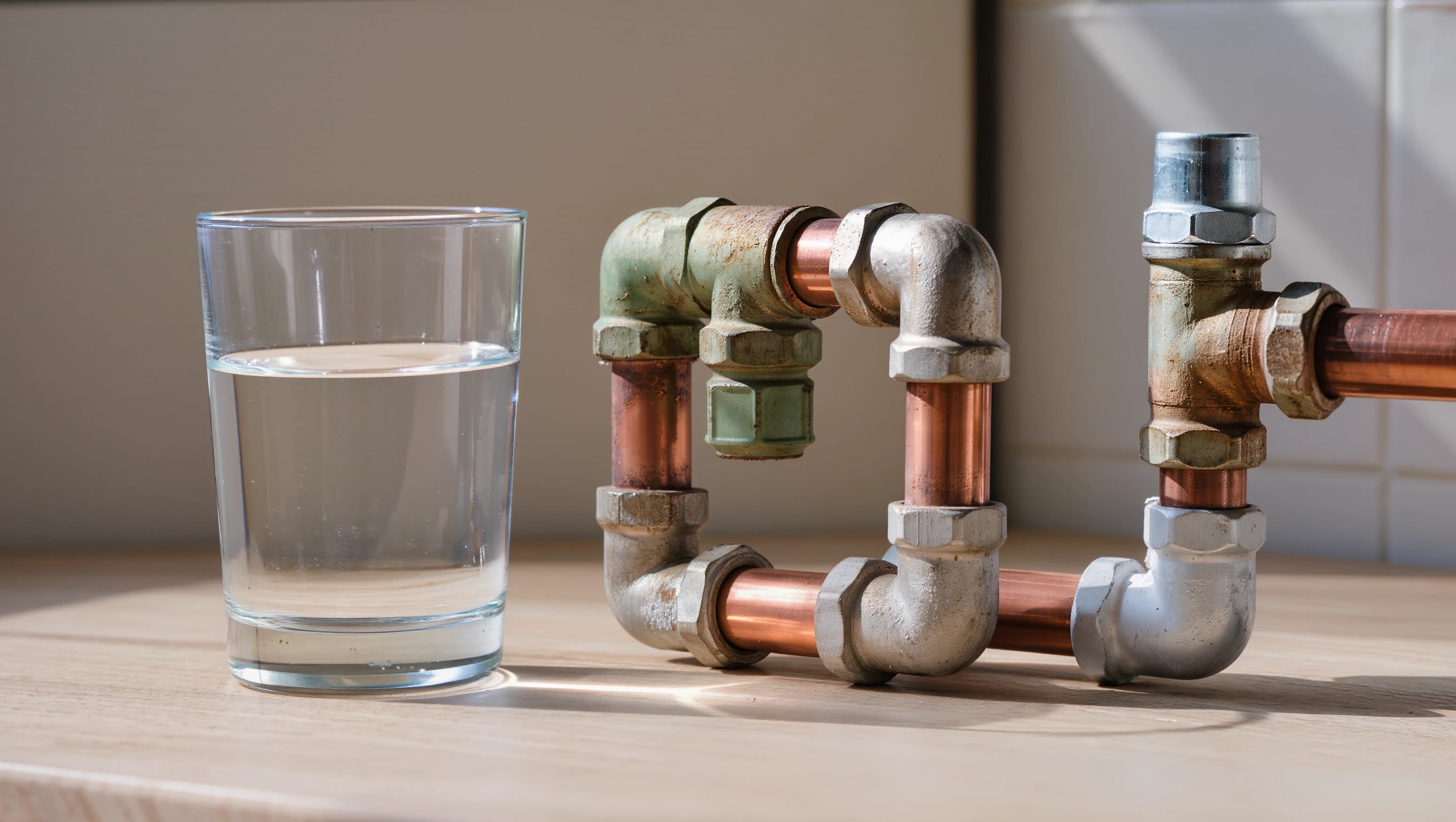
A metallic taste is rarely dangerous and usually comes from your pipes (copper, galvanized steel) or your water heater's anode rod, which corrodes normally over time. It's more of a concern if you're on well water, your home was built before 1990, or the taste appeared suddenly along with cloudy or discolored water. When in doubt, get your water tested — it costs between $50 and $150 and gives you a clear answer within days.
What's Happening?
Water picks up a metallic taste when it contacts metal somewhere in your system — the pipes, the water heater, or the source itself. Iron, copper, manganese and zinc each leave a distinct taste, often described as "bloody" or "like a coin."
The most common cause: water that sits overnight in your pipes or water heater tank has more time to dissolve small amounts of metal before it reaches your tap. That's why the taste is often stronger first thing in the morning.
In homes on well water, a metallic taste more often comes directly from the natural iron or manganese content of the groundwater — a common and mostly harmless phenomenon in many parts of Quebec.
Is It Dangerous?
In most cases, no. A metallic taste caused by normal pipe corrosion or the water heater's anode rod isn't a health risk — it's a taste issue, not a safety one.
That said, take it more seriously if:
- Your home was built before 1990 and could have lead solder or lead fittings
- You're on a private well (iron and manganese are common, but should be confirmed by a test)
- The taste appeared suddenly along with cloudy, yellowish water or blue-green stains in the sink or tub (a sign of active copper corrosion)
- The taste is accompanied by stomach upset or other symptoms in the household
In those cases, get your water tested rather than guessing.
Most Common Causes
| Cause | Explanation |
|---|---|
| Water heater sacrificial anode | The magnesium or aluminum rod corrodes to protect the tank and can leave a metallic taste, especially in hot water |
| Corroded galvanized steel pipes | Common in homes built before the 1960s, rusting from the inside over time |
| Acidic water (low pH) | Slightly acidic water dissolves copper and zinc from pipes and fittings more easily |
| Iron or manganese in well water | Naturally present in many groundwater sources across Quebec |
| New copper plumbing | Freshly installed copper can give a mild metallic taste for a few weeks |
| Old lead solder joints | In pre-1990 homes, lead can also contribute to a metallic taste |
Why This Happens in Quebec
A large share of Quebec's housing stock is over 50 years old, with galvanized pipes or, in some cases, lead fittings dating to before 1990. That aging infrastructure makes a metallic taste a common complaint, especially in Montreal and older city cores.
In rural areas, a large share of homes rely on a drilled or dug well rather than a treated municipal supply. That groundwater naturally contains more iron and manganese, which is why a metallic taste is often simply a feature of the local water, unrelated to the home's plumbing.
How to Check It Yourself
- Compare hot and cold water: if only the hot water tastes metallic, the water heater anode is the prime suspect
- Run the cold tap for 30 seconds before tasting: if the taste disappears, it's likely just stagnant water in the pipes, not an underlying problem
- Check for blue-green stains in the sink, tub, or around drains — a sign of active copper corrosion
- If you're on a well, note whether the taste changes seasonally or after heavy rain
- Don't take apart the water heater yourself to inspect the anode — the tank is pressurized and connected to gas or electricity
Can I Ignore It?
It depends. If the taste is mild, has been stable for a long time, and your water comes from a municipal supply, you can generally live with it safely — it's a taste issue, not a danger. But if you're on well water or in a pre-1990 home, ignoring it without ever getting the water tested isn't advisable, since you can't visually tell a harmless iron issue apart from lead contamination.
If the taste comes from the water heater's anode and you ignore it too long, the anode eventually dissolves completely, which speeds up corrosion of the tank itself and shortens its lifespan.
How Much Does It Cost?
| Service | Estimated Price |
|---|---|
| Water quality test (lab or home kit) | $50 - $150 |
| Water heater anode rod replacement | $150 - $300 |
| Filtration or water softener system | $800 - $2,500 |
| Partial galvanized pipe replacement | $1,000 - $3,000 |
| Full water heater replacement (if heavily corroded) | $1,200 - $3,000 |
When to Call a Professional
- The metallic taste appeared suddenly with no recent change in the home
- You see blue-green stains or visible corrosion on the pipes
- Your home was built before 1990 and you've never had the water tested for lead
- You're on well water and haven't done an annual water quality test
- The metallic taste only affects hot water, pointing to the water heater
An RBQ-licensed plumber can pinpoint the exact source (pipes, anode, or water source) and recommend the right fix instead of guessing.
Related Questions
- Why Is There Rust In My Tap Water?
- Should I Worry About Lead In My Drinking Water If My House Was Built Before 1990?
- Why Does My Water Look Milky or White When I Turn On the Tap?
- Brown Water Is Coming Out of the Tap: Is It Dangerous?
- Why Does My Water Smell Like Sulfur or Rotten Eggs?
- How Much Longer Before My Water Heater Gives Out?
- Why Has My Hair Been So Dry Since I Moved Into This House?
Frequently asked questions
Can I keep drinking the water if it has a metallic taste?+
In most cases yes, especially on municipal water — it's a taste issue, not a safety one. But if you're on a well or in a home built before 1990, get the water tested before assuming it's fine to keep drinking.
Is it normal for the taste to be worse in the morning?+
Yes, that's very common. Water that sat in the pipes overnight has more time to pick up small amounts of metal. Run the cold tap for 20-30 seconds before drinking or cooking with it.
How much does a water quality test cost?+
A basic test (metals, hardness, pH) costs between $50 and $150 depending on the lab. For a private well, a full test including bacteria is recommended at least once a year.
Should I call a professional right away?+
Not urgently if the taste is mild and stable. But if it appeared suddenly, comes with discolored water, or your home predates 1990, call a plumber soon to identify the cause.
Will a water softener fix the problem?+
Sometimes, but not always. A softener mainly targets hardness (calcium, magnesium), not necessarily iron, copper, or lead. A water test helps you pick the right treatment instead of guessing.
Get a free quote
More to know before your project.
By Julien Fortin — RBQ-licensed plumber, 10 years of experience in residential plumbing
Updated on July 23, 2026