
Is It Normal for My Hot Water to Run Out After 10 Minutes In the Shower?
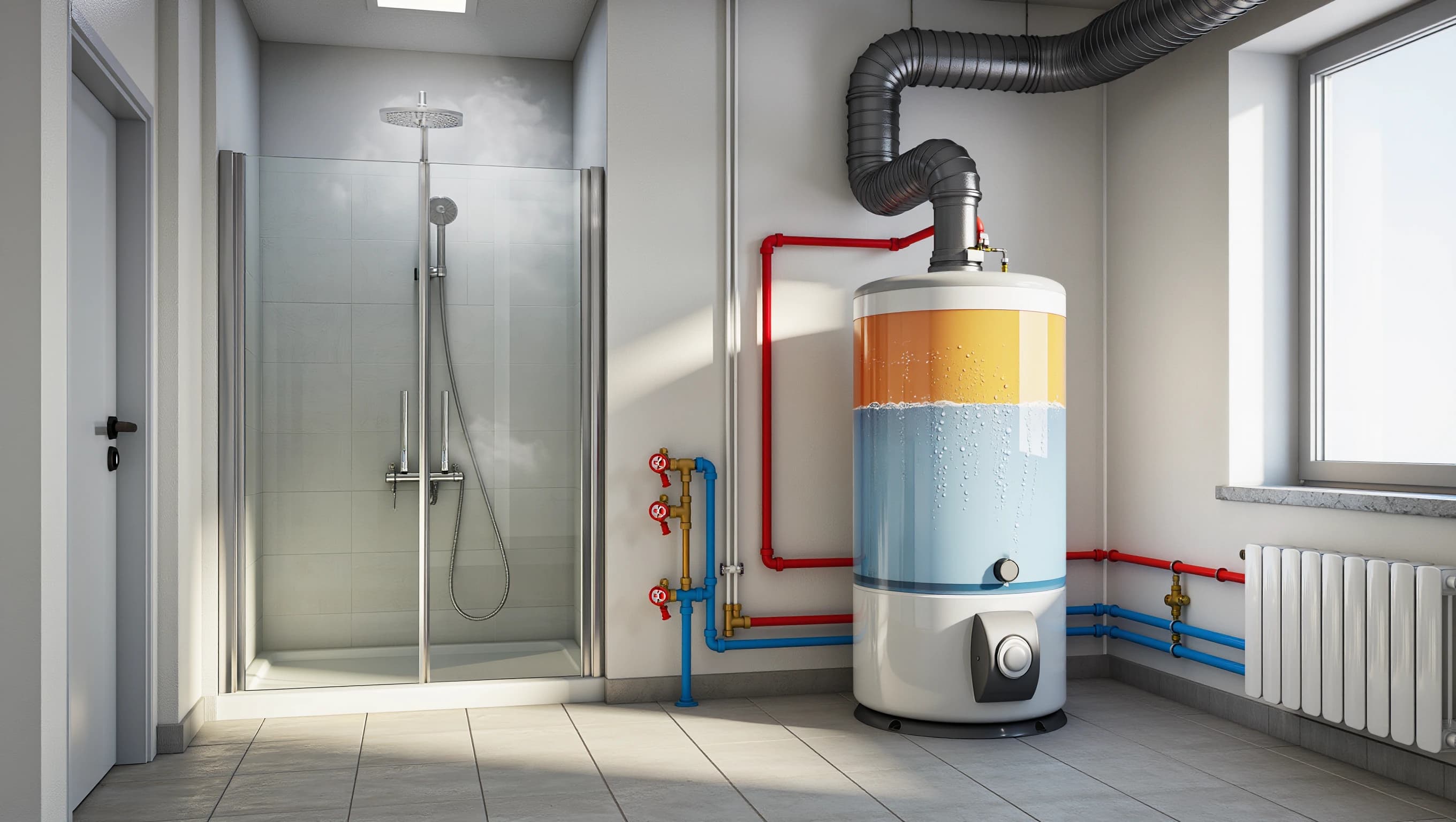
No, it's not normal — a standard residential water heater (40 to 60 gallons) should generally provide 15 to 25 minutes of continuous hot water for an average household. Running out after just 10 minutes usually points to a water heater that's too small for your needs, a failing heating element, or heavy sediment buildup at the bottom of the tank. Nothing dangerous, but worth diagnosing quickly before it gets worse.
What's Happening?
A water heater keeps a supply of hot water in an insulated tank. As you use hot water, cold water enters from the bottom to replace what's leaving, and the unit has to heat that new water to keep up with demand.
If the unit lacks capacity, heating power, or its actual capacity has declined over time, the incoming cold water ends up mixing with the remaining hot water before the system can reheat it — and you feel the water go lukewarm, then cold, mid-shower.
This kind of gradual decline is often a sign the unit is aging or was never properly sized for the number of people in the household.
Is It Dangerous?
No, running out of hot water isn't dangerous on its own. It's a comfort and efficiency issue, not a safety one.
That said, pay attention if you also notice:
- Hot water coming out intermittently with sudden temperature swings (a possible sign of a failing heating element, which can also cause local overheating)
- Rumbling or popping sounds coming from the water heater (often sediment overheating at the bottom of the tank)
- The water heater is over 10-12 years old and shows visible corrosion or rust
- A burning smell near the electric unit — cut the power and call a professional immediately
Most Common Causes
| Cause | Explanation |
|---|---|
| Undersized water heater | Too small for the number of occupants or actual household usage |
| Sediment buildup | Reduces the tank's actual capacity and heating efficiency |
| Faulty heating element (electric) | One of the two elements can stop working, cutting heating capacity in half |
| Misadjusted or faulty thermostat | Heats water to a lower temperature than intended |
| Internal or external leak | Continuously loses hot water, shrinking the available supply |
| Misadjusted thermostatic mixing valve | Blends in too much cold water at the outlet, creating a false sense of shortage |
| Water heater near end of life | After 10-15 years, overall efficiency naturally declines |
Why This Happens in Quebec
Water entering water heaters in Quebec often comes from a municipal supply or a well that's already cold, especially in winter when incoming water temperature can drop well below 10°C. The unit therefore has to cover a bigger temperature gap than elsewhere in the country, putting more strain on its capacity during cold periods.
Quebec households also often grow (a new child, roommates, an addition) without the water heater being upsized accordingly — a 40-gallon unit installed for a couple quickly becomes insufficient for a family of four.
How to Check It Yourself
- Note how many people and how many back-to-back showers happen in the morning — is it worse when several people shower in a row?
- Check the age of the water heater (manufacturer's label, often on the side of the unit)
- Listen for rumbling or popping sounds while it's heating
- For an electric water heater, check whether the associated breaker has tripped recently
What you shouldn't do yourself: open the water heater's electrical panel to test heating elements, adjust the internal thermostat without cutting power, or fully drain an old water heater without knowing how to properly close the valves afterward — a bad drain can cause a leak or damage the unit.
Can I Ignore It?
It depends on the cause. If it's simply a sizing issue, you can keep living with it by adjusting habits (shorter, staggered showers), but it stays a daily irritant that won't fix itself.
If the cause is a failing heating element or heavy sediment buildup, waiting makes it worse: electricity use rises to compensate for the inefficiency, and an overworked tank with thick sediment can develop leaks or fail prematurely.
How Much Does It Cost?
| Service | Approximate Price |
|---|---|
| Professional diagnosis | $100 - $200 |
| Tank flush/descaling | $150 - $350 |
| Heating element replacement | $200 - $400 |
| Thermostat replacement | $150 - $300 |
| Full replacement with a larger unit | $1,200 - $3,000 |
When to Call a Professional
- The problem appeared suddenly, not gradually over several months
- You hear rumbling or popping sounds while the water is heating
- The unit is over 10 years old and you're weighing replacement versus repair
- You suspect a faulty heating element on an electric water heater — this is electrical work that requires safely cutting power first
- You notice water on the floor around the base of the water heater, even a small amount
Related Questions
Frequently asked questions
How much hot water should I normally have?+
A standard 40-60 gallon residential water heater in good condition should provide 15 to 25 minutes of continuous hot water, depending on tank size and your showerhead's flow rate.
Would a tankless water heater solve the problem?+
Often yes, since it heats water on demand rather than relying on a limited reserve. It's a bigger upfront investment, though, and needs to be properly sized for your simultaneous water flow needs.
Will turning up the thermostat help?+
A little, but with caution: above 60°C (140°F), scald risk rises significantly. It's not a lasting fix if the real problem is an undersized tank or a faulty heating element.
Do I need to call a professional immediately?+
Not urgently if the hot water is just running out earlier than usual with no other symptoms. But rumbling noises, a burning smell, or water on the floor deserve a prompt call.
Get a free quote
More to know before your project.
By Julien Fortin — RBQ-licensed plumber, 10 years of experience in residential plumbing
Updated on July 23, 2026