
Why Has My Hair Been So Dry Since I Moved Into This House?
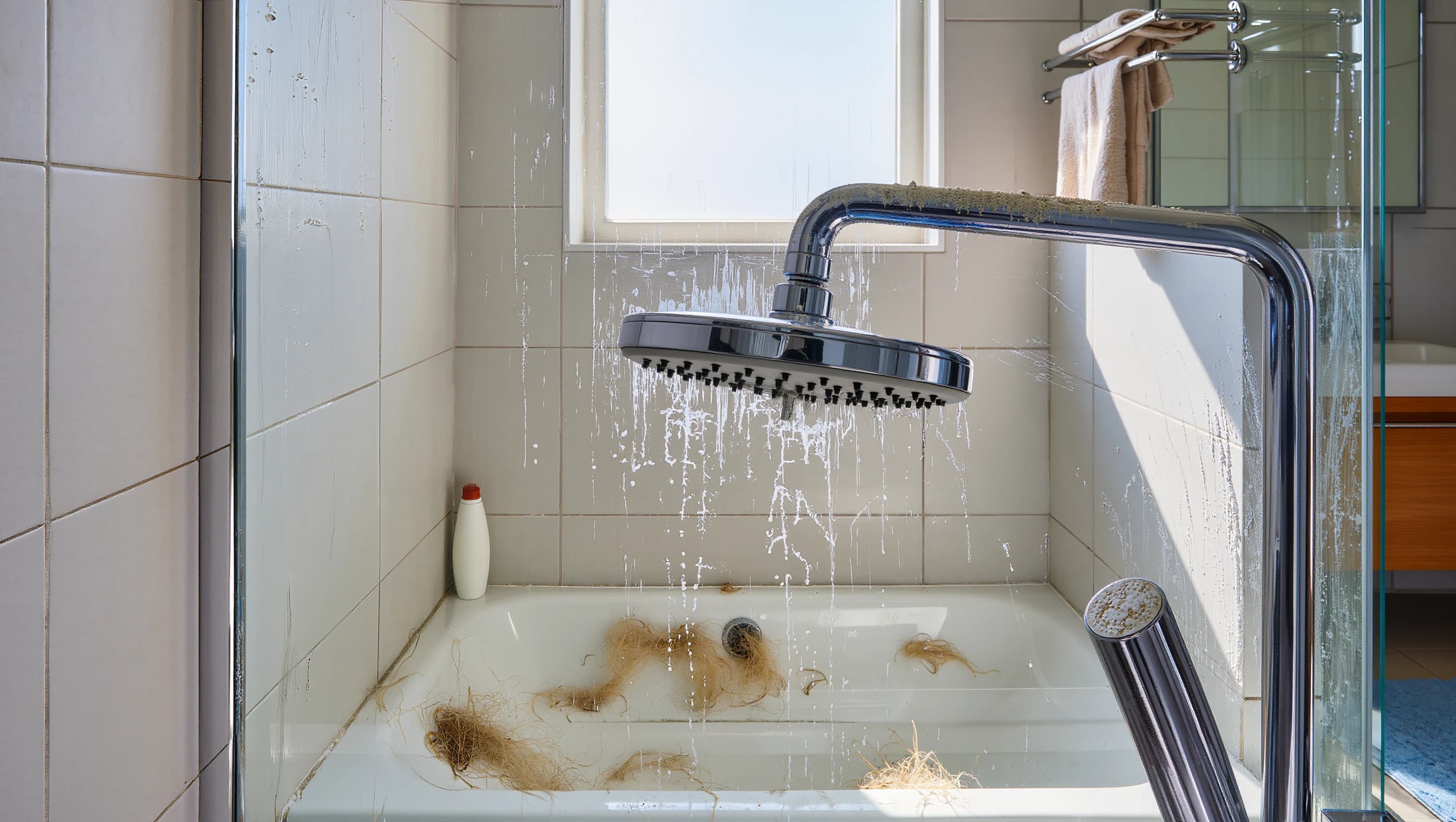
This is almost never your shampoo — it's very likely hard water, loaded with calcium and magnesium, which stops soap from rinsing out fully and leaves a residue on your hair and skin. It's not a health hazard, but it does damage hair, skin, appliances, and plumbing over time. A water hardness test (often free from a specialist) confirms it in minutes.
What's Happening?
Hard water contains a lot of dissolved minerals, mainly calcium and magnesium. When this water mixes with soap or shampoo, it forms a sticky residue (a kind of "soap scum") that doesn't rinse away completely.
That residue stays on the hair shaft and on your skin. The result: dull, dry-feeling hair that tangles or frizzes more than before, and a tight, filmy feeling on your skin even after a thorough rinse.
If the problem started right after you moved into a new house — especially one on a well or with older plumbing — that's a fairly clear sign the water source or the building's plumbing is the cause, not your hair products.
Is It Dangerous?
No, hard water isn't dangerous to your health. It's nothing like bacterial contamination or lead in the water. It's a comfort and wear-and-tear issue, not a safety one.
That said, it does have a real impact on your home over the medium term:
- Visible mineral buildup on the shower head, faucets, and kettle
- Scale buildup inside the water heater, which reduces its efficiency
- Laundry that starts to feel scratchy
- Appliances (dishwasher, washing machine) losing efficiency faster
Nothing urgent to do tonight, but it's not something to ignore indefinitely either.
Most Common Causes
| Cause | Explanation |
|---|---|
| Hard water (high calcium/magnesium) | The most common cause, especially with a well or in rural Quebec |
| Scaled-up water heater | Mineral buildup in the tank changes the makeup of the hot water |
| No water softener installed | Some homes never had a treatment system added |
| Aging galvanized piping | Can release particles that dry out hair and skin further |
| High chlorine (municipal supply) | Less common, but can also dry out sensitive hair and skin |
| Water pressure too high | Forces soap to rinse poorly, worsening the residue effect |
Why This Happens in Quebec
Much of Quebec's territory, especially outside major municipal networks, relies on artesian or surface wells where water passes through limestone-rich soil. This is especially common in Montérégie, the Eastern Townships, and many rural municipalities.
Older homes (postwar bungalows, renovated country houses) were often built before water softening became standard practice. If nobody has added a softener since, the problem stays fully intact even after cosmetic renovations.
How to Check It Yourself
You can confirm the problem without any special tools:
- Look for chalky white deposits around faucets, the shower head, or inside the kettle
- Notice whether soap lathers poorly or leaves a film on your hands
- Check for mineral streaks on dishes that air-dry
- Ask for a water hardness test strip (often free from water treatment companies) or buy one at a hardware store
What you shouldn't do yourself: take apart the water heater, open the main water shutoff without knowing how to close it again, or try to install a softener without understanding how it ties into the existing plumbing — a bad connection can cause a leak or contaminate drinking water.
Can I Ignore It?
Yes, in the short term, ignoring hard water isn't dangerous. But the problem doesn't fix itself — it slowly gets worse as scale builds up.
The longer you wait, the more scale accumulates inside the water heater (shortening its lifespan and raising your electricity bill), in the pipes, and in your appliances. A heavily scaled water heater can see its useful life cut short by several years.
How Much Does It Cost?
| Service | Approximate Price |
|---|---|
| Professional water hardness test | Often free to $75 |
| Water softener (entry-level) | $900 - $1,800 installed |
| Water softener (higher-end) | $1,800 - $3,500 installed |
| Descaling an existing water heater | $150 - $350 |
| Replacing a scaled-up water heater | $1,200 - $3,000 |
When to Call a Professional
- You see significant white buildup on fixtures and want to confirm your exact water hardness level
- Your water heater is over 8-10 years old and you suspect internal scaling
- You're considering a softener and want it properly sized for your home
- The hot water also smells bad or changes color in addition to drying out your skin — that can point to a separate water heater issue
Related Questions
- Why Is There Rust In My Tap Water?
- Why Does My Water Look Milky or White When I Turn On the Tap?
- Is It Normal for My Water to Have a Metallic Taste?
- Why Does My Water Smell Like Sulfur or Rotten Eggs?
- How Much Longer Before My Water Heater Gives Out?
- Is It Normal for My Hot Water to Run Out After 10 Minutes In the Shower?
- Should I Worry About Lead In My Drinking Water If My House Was Built Before 1990?
Frequently asked questions
Will a water softener actually fix the problem?+
In most cases, yes, once hard water is confirmed as the cause. It removes the minerals responsible for the residue before it reaches your taps, which improves soap lather and hair condition within days.
Can I just switch shampoo instead of installing a softener?+
A clarifying or chelating shampoo can temporarily ease the symptom, but it doesn't fix the cause. Hard water will keep wearing out your appliances and water heater even if your hair improves.
How can I tell if my water is hard without paying for a test?+
Persistent white deposits around faucets, a kettle that scales up quickly, and soap that lathers poorly are good clues. For a precise grains-per-gallon number, a test strip that costs a few dollars is still the most reliable way.
Is it worth it if I'm renting and won't stay long?+
If you're renting, it's not up to you to install a softener — flag it to your landlord, especially if the water heater already shows signs of scaling. A portable softener unit or a shower filter can offer temporary relief in the meantime.
Get a free quote
More to know before your project.
By Julien Fortin — RBQ-licensed plumber, 10 years of experience in residential plumbing
Updated on July 23, 2026