
Brown Water Is Coming Out of the Tap: Is It Dangerous?
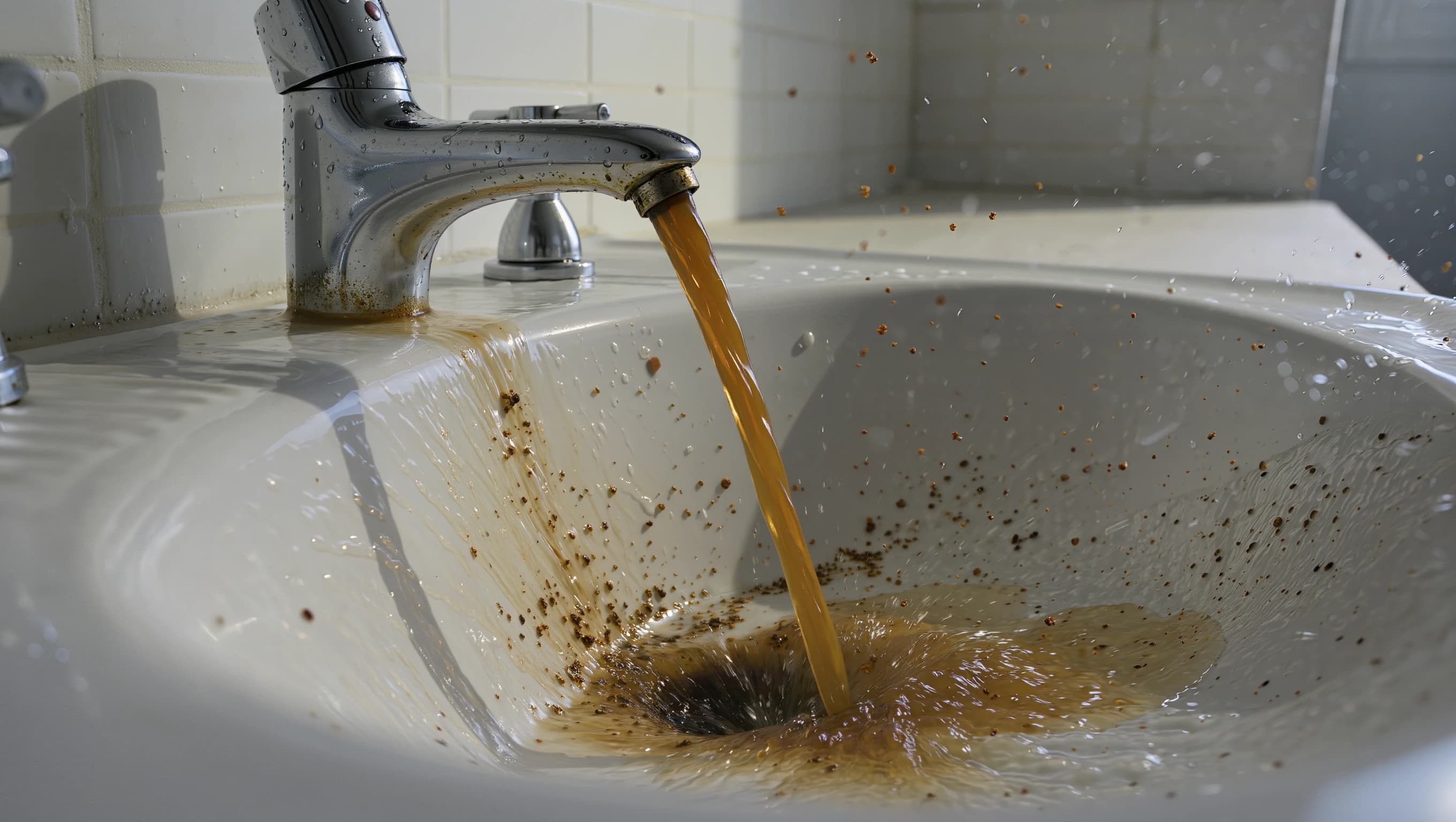
Brown water is most often caused by rust dislodged in the pipes (yours or the city's), not bacterial contamination. It's usually not dangerous to drink short-term, but avoid drinking it until it runs clear, and watch whether it's coming from the water heater. If brown water persists more than a few hours, call a plumber.
What's Happening?
Brown or rust-colored water comes from oxidized iron particles that break loose from the inside of pipes or the water heater tank and mix into the flowing water. This can happen in your own home's pipes, or in the municipal distribution network just before it reaches your house.
When pressure changes suddenly — city construction work, a fire hydrant being opened, heavy pumping during a nearby fire, or even just a restart after an outage — deposits accumulated over the years break loose and circulate in the water for a while.
Is It Dangerous?
In the vast majority of cases, brown water caused by rust is not a short-term health hazard, though it tastes unpleasant and can stain laundry. It's not the same as bacterial contamination, which would be announced through an official boil-water advisory.
Inspect or act immediately if:
- The brown water persists more than 24 hours with no improvement
- You receive a boil-water advisory from your municipality
- The water has an unusual smell in addition to the color
- Only hot water is brown, which points to the water heater itself
Most Common Causes
| Cause | Explanation |
|---|---|
| Municipal work or a broken water main | The city disturbs the network, dislodging iron deposits built up in old pipes |
| End-of-life water heater | Rust accumulates at the bottom of the tank and comes out when hot water runs |
| Aging galvanized pipes | Galvanized steel pipes rust from the inside over time, especially after 40-50 years |
| Restart after a water shutoff | Repressurizing stirs up sediment settled in stagnant pipes |
| Nearby fire hydrant use | Sudden pumping temporarily reverses flow and dislodges deposits |
| Private well with high iron content | For homes off the municipal network, naturally iron-rich water causes the same effect |
Why This Happens in Quebec
Several Quebec municipalities, especially in older parts of Montreal, Quebec City, and Trois-Rivières, still have water mains installed 60 to 100 years ago. This aging infrastructure is more prone to breaks and emergency work that stirs up sediment.
Freeze-thaw cycles also affect the network: ground movement around buried pipes creates micro-cracks and accelerated corrosion points, particularly noticeable in spring when network pressure fluctuates more.
How to Check It Yourself
Run cold water from a tap for 5 to 10 minutes and see if it gradually clears up — that points to a temporary network issue. Then test the hot water separately: if only the hot water is brown, the problem likely comes from your water heater.
Check your municipality's website to see if work is scheduled in your area. Never attempt to drain or open your water heater yourself if you're not familiar with the procedure — pressurized hot water can cause serious burns.
Can I Ignore It?
It depends on how long it lasts. If the water clears up within a few hours after running, it's likely an isolated network incident and can be ignored once resolved. But if it repeats often or persists, it's a sign your pipes or water heater are deteriorating from the inside.
Waiting too long when the cause is the water heater can lead to a sudden leak from the corroded tank, causing water damage far more costly than a planned replacement.
How Much Does It Cost?
| Service | Estimated Price |
|---|---|
| Water testing (iron, bacteria) | $80 - $200 |
| Water heater flush/drain | $150 - $300 |
| Galvanized pipe section replacement | $400 - $1,500 |
| Full water heater replacement | $1,200 - $3,000 |
When to Call a Professional
- Brown water persists beyond 24 hours despite flushing the taps
- Only the hot water is affected, pointing to the water heater
- You notice visible rust around fittings or the tank
- Brown water keeps coming back over several weeks
- You have galvanized pipes older than 30-40 years
A plumber can test the exact source (municipal vs. residential) and inspect the internal condition of the water heater, an assessment a homeowner can't safely do without opening the pressurized unit.
Related Questions
- Why Is There Rust In My Tap Water?
- How Much Longer Before My Water Heater Gives Out?
- Why Does My Water Look Milky or White When I Turn On the Tap?
- Should I Worry About Lead In My Drinking Water If My House Was Built Before 1990?
- Is It Normal for My Water to Have a Metallic Taste?
- Why Did My Water Pressure Suddenly Drop?
- Why Does My Water Smell Like Sulfur or Rotten Eggs?
Frequently asked questions
Can I drink brown water if I boil it?+
Boiling doesn't remove rust particles, it actually concentrates them. Just avoid drinking or cooking with brown water until it runs clear again.
Is this normal after a scheduled water shutoff?+
Yes, this is very common. Repressurizing stirs up settled sediment and the water usually clears up after a few minutes of flushing.
How do I know if it's my water heater instead of the municipal network?+
Compare the cold and hot water at the same tap. If only the hot water is brown while cold stays clear, the water heater is almost certainly the cause.
Will this stain my laundry or appliances?+
Yes, rust can stain light fabrics and leave deposits in appliances. Avoid running loads of white laundry until the water runs clear.
Get a free quote
More to know before your project.
By Julien Fortin — RBQ-licensed plumber, 10 years of experience in residential plumbing
Updated on July 23, 2026