
Why Did My Water Pressure Suddenly Drop?
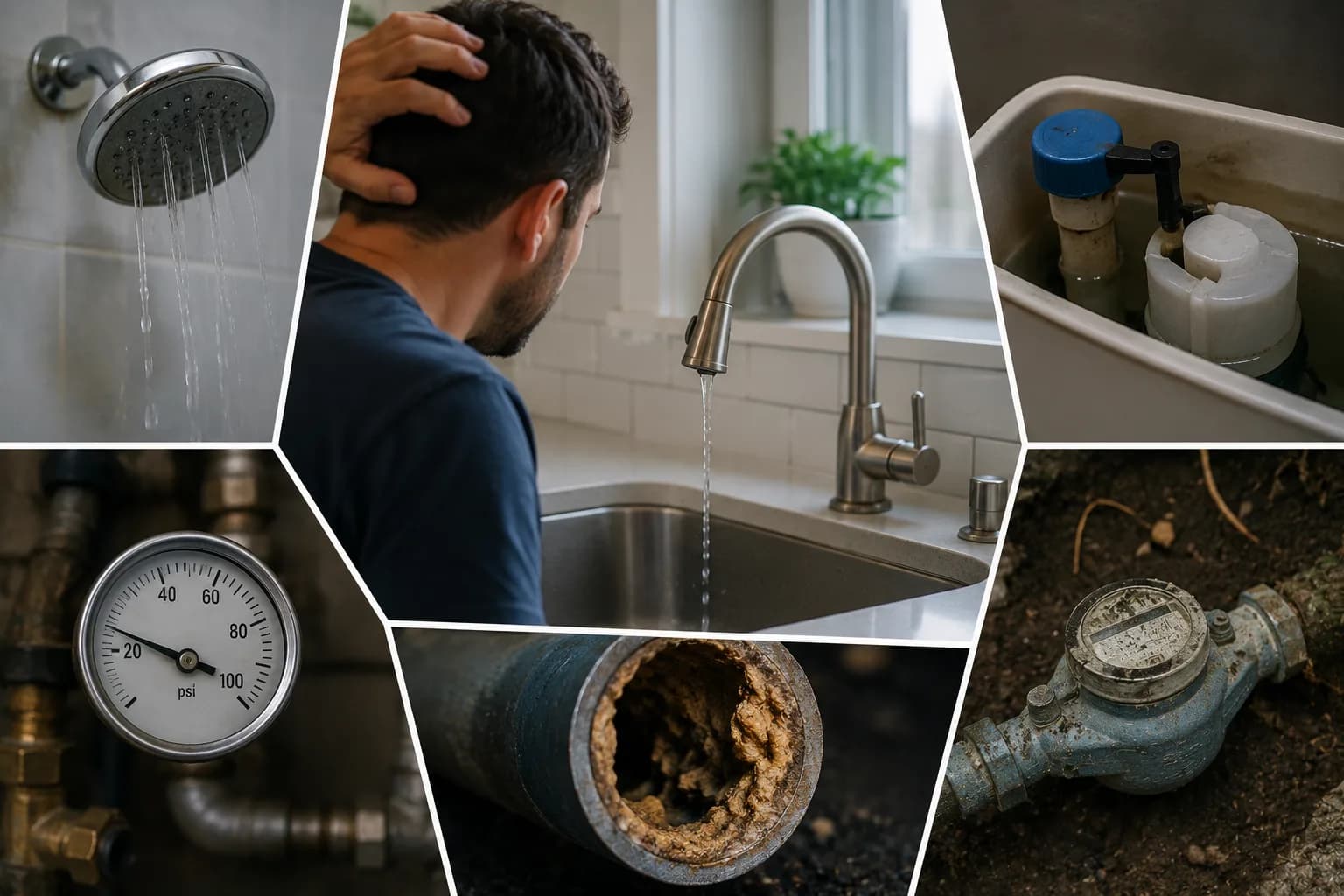
A sudden drop in water pressure isn't always serious, but it's worth checking quickly, since possible causes range from a temporary municipal issue to an active leak damaging your home. If the drop affects the whole house and came without warning, first check whether neighbors have the same problem before suspecting your own plumbing. If it only affects one tap, it's more likely a local blockage, not an emergency.
What's Happening?
Water pressure depends on a balance between the pressure supplied by the municipal network (or your well pump) and the resistance created by your pipes, faucets, and fittings. When that balance suddenly shifts, pressure drops.
A house-wide drop usually suggests an upstream issue: the municipal network, your main service line, or a partially closed main valve. A drop limited to a single tap or room points more toward a local blockage, like built-up corrosion or a clogged aerator.
A sudden, significant drop can also signal a leak: water that should be coming out under pressure at the tap is instead escaping somewhere along the way, often invisibly behind a wall or under the floor.
Is It Dangerous?
It entirely depends on the cause. A drop tied to municipal work isn't dangerous. An active leak, on the other hand, can cause significant water damage if not found quickly.
Inspect or act immediately if:
- You hear water running somewhere in the walls or floor with no tap open.
- You see damp stains, floor swelling, or a musty smell appearing at the same time as the pressure drop.
- Your water meter keeps turning even with every tap closed, confirming an active leak somewhere in the system.
- The drop happens in the dead of winter with unusual noises — a possible sign of frozen pipes at risk of bursting.
Most Common Causes
| Cause | Explanation |
|---|---|
| Municipal network work or breaks | Pipe repair, scheduled maintenance, or high local demand (nearby fire hydrant use). |
| Leak in the home's plumbing | Water escapes before reaching the tap, reducing the pressure available. |
| Partially closed main valve | Often left that way after recent work or maintenance. |
| Sediment or corrosion buildup in pipes | Gradually reduces usable diameter, especially in old galvanized pipes. |
| Clogged aerator or showerhead | A local cause limited to one fixture, easy to check and usually easy to fix. |
| Faulty pressure regulator | If one is installed, a bad setting or failure can reduce pressure house-wide. |
| Partially frozen pipes in winter | Ice reduces the pipe's inner diameter and slows the flow. |
Why This Happens in Quebec
Quebec's winter freeze-thaw cycle is a major cause of municipal main breaks and residential pipe breaks, particularly in spring when the ground shifts and puts pressure on buried infrastructure. Sudden pressure drops are therefore more common in March-April than at other times of year.
Neighborhoods with aging galvanized piping, common in Montreal triplexes and duplexes built before the 1960s-70s, are also more prone to gradual or sudden drops tied to corrosion buildup inside the pipes.
How to Check It Yourself
Ask a neighbor if they have the same problem: if so, it's almost certainly the municipal network, and you can contact your municipality to confirm.
Check that the main shutoff valve (usually near the meter, in the basement) is fully open — it sometimes gets partially closed after work. Test pressure at several taps around the house to see if the problem is general or localized.
Check your water meter: close every tap and water-using appliance, then watch whether the meter keeps moving. If it does, there's an active leak somewhere. Never force the main valve with a tool if it's hard to turn by hand — forcing it can break it and cause a major leak. Also don't try to thaw a pipe yourself with an open flame.
Can I Ignore It?
It depends. If confirmed to be tied to the municipal network, yes, you can wait for the city to resolve it, usually within hours to a few days.
If the meter keeps turning with all taps closed, no, don't ignore that: an active leak can worsen quickly and cause structural water damage, mold, and a spiking water bill. The longer you wait, the more the damage and repair costs grow.
How Much Does It Cost?
| Service | Estimated cost |
|---|---|
| Plumbing inspection and pressure diagnosis | $100 - $250 |
| Non-invasive leak detection | $200 - $500 |
| Localized leak repair | $250 - $800 |
| Aerator/showerhead cleaning or replacement | $20 - $100 |
| Pressure regulator replacement | $300 - $600 |
When to Call a Professional
- The water meter keeps turning while every tap is closed.
- You see or suspect water damage (stains, musty smell, swelling floor).
- The pressure drop affects the whole house and isn't tied to a confirmed municipal issue.
- You suspect frozen pipes in winter — a professional can thaw them safely without risking a burst.
- The problem persists after cleaning aerators and checking the main valve.
Related Questions
- Why Is There Rust In My Tap Water?
- How Do I Know If There's a Water Leak Behind My Wall?
- Why Do My Pipes Bang When I Shut the Water Off?
- Why Are There Always More Plumbing Emergencies During the Spring Thaw?
- Is It Normal for My Hot Water to Run Out After 10 Minutes In the Shower?
- Should I Insulate My Water Pipes In the Unheated Basement?
Frequently asked questions
How do I know if the problem is in my home or the municipal network?+
Ask a neighbor if they have the same problem. If so, it's the municipal network; if not, check your main valve and water meter to narrow down an internal cause.
The drop only affects my shower — should I be worried?+
Generally no. A problem limited to a single fixture is almost always a showerhead or aerator clogged with sediment, easy to clean yourself.
How long before an unrepaired leak causes serious damage?+
It varies, but a hidden leak behind a wall can cause mold in as little as 24-48 hours of continuous dampness, and structural damage within a few weeks.
Do I need to call a professional immediately?+
Only if you confirm an active leak (meter turning) or suspect frozen pipes. Otherwise, check the main valve and with your neighbors first.
Can a pressure regulator permanently fix the problem?+
A regulator stabilizes pressure if it fluctuates a lot, but it doesn't fix a leak or blockage. Those causes need to be ruled out first before installing or replacing a regulator.
Get a free quote
More to know before your project.
By Julien Fortin — RBQ-licensed plumber, 10 years of experience in residential plumbing
Updated on July 23, 2026