
Why Are There Purple or Iridescent Marks On My Shingles?
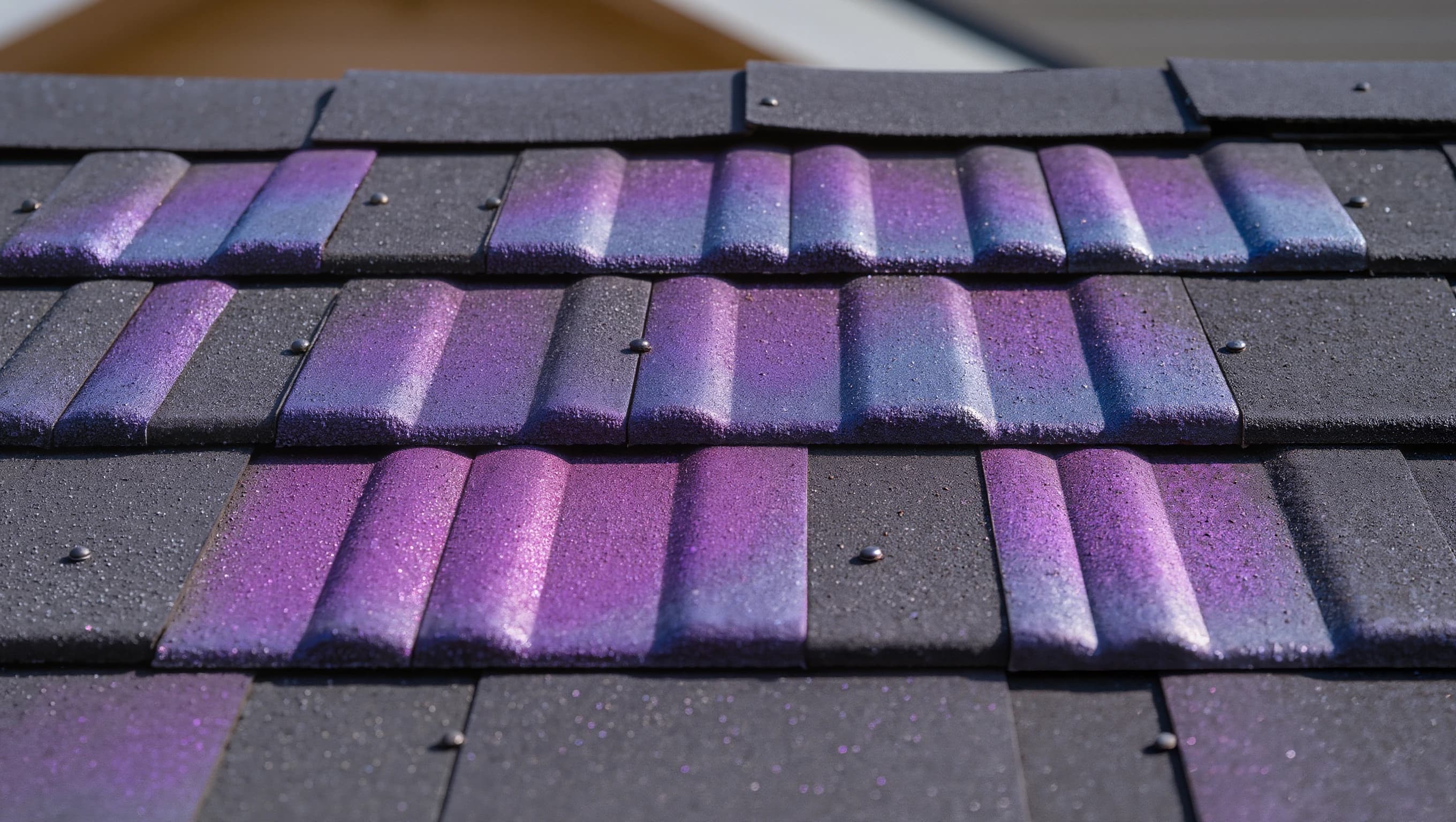
That purple or "rainbow" sheen you're seeing on your shingles, especially after rain or at sunset, is almost always granule loss exposing the asphalt layer underneath. It's not dangerous in the short term, but it's a sign your shingles are aging or, more rarely, that a batch was defective. If the roof is over 12-15 years old or the marks cover large areas, get it inspected this season rather than waiting for a leak.
What's Happening?
Asphalt shingles are coated with small colored mineral granules that protect the asphalt layer underneath from UV rays and general wear. When those granules come off, the bare asphalt underneath becomes visible. Under certain light angles, especially when the surface is wet, the exposed asphalt creates a purple, bluish, or "oil slick" reflection known as iridescence.
It's the same effect as an oil puddle in a driveway: light refracts differently off smooth asphalt than off rough granules. The sheen itself doesn't cause damage, but it means the protective layer of the shingle is thinning at that spot.
On an aging roof, this is normal and gradual. On a newer roof (under 5 years old), purple marks that appear early and unevenly can instead point to a manufacturing issue or a poor installation batch.
Is It Dangerous?
Not immediately. Iridescence on its own isn't an emergency and doesn't cause a leak overnight. But it signals that the shingle's waterproofing at that spot will keep degrading faster than the rest of the roof.
Inspect or act quickly if you also notice:
- Shingles curling or lifting at the corners near the marked areas
- Granules piling up in gutters or at the base of downspouts
- A water stain appearing on the ceiling below
- Purple marks concentrated on a roof less than 5 years old (possible manufacturing defect)
Most Common Causes
| Cause | Explanation |
|---|---|
| Normal UV wear | Sun exposure and freeze-thaw cycles gradually break down granules as the roof ages |
| Recent hailstorm | A hail impact can strip granules off in one spot, creating a localized iridescent patch |
| Foot traffic on the roof | Walking on shingles (antenna install, cleaning) dislodges granules |
| Manufacturing defect | On a newer roof, a shingle batch with an improper asphalt mix can shed granules prematurely |
| Poor attic ventilation | Excess heat under the roof deck accelerates asphalt aging and granule shedding |
| Aggressive cleaning | Overly harsh pressure washing strips granules off in patches |
Why This Happens in Quebec
Quebec's freeze-thaw cycles are particularly hard on asphalt shingles. Water that seeps into microscopic cracks freezes, expands, then thaws dozens of times per winter — this cycle speeds up granule loss far more than in a temperate climate.
The January-February thaws combined with overnight freezes typical of Quebec put extra stress on south- and west-facing shingles, where sun exposure is strongest. If your attic is poorly ventilated, the heat trapped year-round makes the problem worse — a common issue in Quebec's postwar bungalows and duplexes.
How to Check It Yourself
From the ground, binoculars help: check whether the purple marks are concentrated in one specific area (hail impact, foot-traffic zone) or spread evenly across the roof (general aging). Also check your gutters after a good rain — a buildup of black or colored granules at the bottom confirms active loss.
Never climb onto the roof yourself to inspect up close, especially in wet weather or on a steep slope — a shingle that's lost its granules becomes slippery. Leave the close-up inspection to a roofer with the right equipment.
Can I Ignore It?
It depends on the extent. A few isolated spots on an otherwise healthy roof: you can monitor without acting right away, reassessing each spring. But if the marks are spreading or the roof is approaching 15-20 years old, ignoring the sign means letting the roof's UV protection wear down without a replacement plan — leak risk then climbs faster than expected, especially heading into a harsh winter.
How Much Does It Cost?
| Service | Estimated Price (CAD) |
|---|---|
| Professional roof inspection | $150 - $300 |
| Replacing a few damaged shingles | $300 - $800 |
| Emergency repair (active leak) | $300 - $1,500 |
| Full roof replacement | $6,000 - $18,000 |
When to Call a Professional
- The roof is over 12-15 years old and purple marks cover several sections
- You see granules piling up in your gutters after every rain
- The marks appear on a roof installed less than 5 years ago (check the manufacturer's warranty)
- A water stain appears on the ceiling, even a small one
- You want an assessment before selling or buying the house
Related Questions
- My Shingles Look Like They're Curling at the Edges: Replace Now or Wait?
- How Many Missing Shingles Before It Becomes a Serious Problem?
- My Roof Has Black Streaks — Is That Dangerous or Just Ugly?
- Why Is Green Moss Growing On My Roof On the Shaded Side?
- Can I Wait Through One More Winter Before Replacing My Roof?
- A Water Stain on the Ceiling But No Visible Leak on the Roof: Where's It Coming From?
- How Much Does a Heat Pump or a New Roof Actually Add to My Home's Resale Value?
Frequently asked questions
Can I clean the purple marks off myself?+
No, it's not dirt — it's exposed asphalt from granule loss, so scrubbing won't remove it. Pressure washing can actually strip more granules off elsewhere on the roof.
Is this covered under the manufacturer's warranty if the roof is new?+
Possibly. If the roof is under 5 years old and marks appear early and unevenly, ask a roofer to assess whether it's a batch defect — most shingle warranties run 20-30 years with specific clauses for premature granule loss.
Does this affect my home's resale value?+
Isolated marks often go unnoticed during a pre-purchase inspection, but widespread granule loss will be flagged and can lower an offer or trigger a request to replace the roof before the sale.
How long can a roof last once the marks appear?+
It varies a lot depending on extent and roof age — anywhere from a few years on an already-old roof to over 10 years if the marks are isolated and the rest of the roof is in good shape. Only an on-site inspection can give a reliable estimate.
Should I call a professional right away when I see these marks?+
Not urgently if the roof is otherwise in good shape and leak-free. But schedule an inspection within the next few months, especially if the roof is approaching 12-15 years old, to avoid being caught off guard before winter.
Get a free quote
More to know before your project.
By Éric Gagné — RBQ-licensed roofer, roofing and roof snow removal specialist
Updated on July 23, 2026