
How Many Shingles Can Be Missing From My Roof Before It's a Serious Problem?
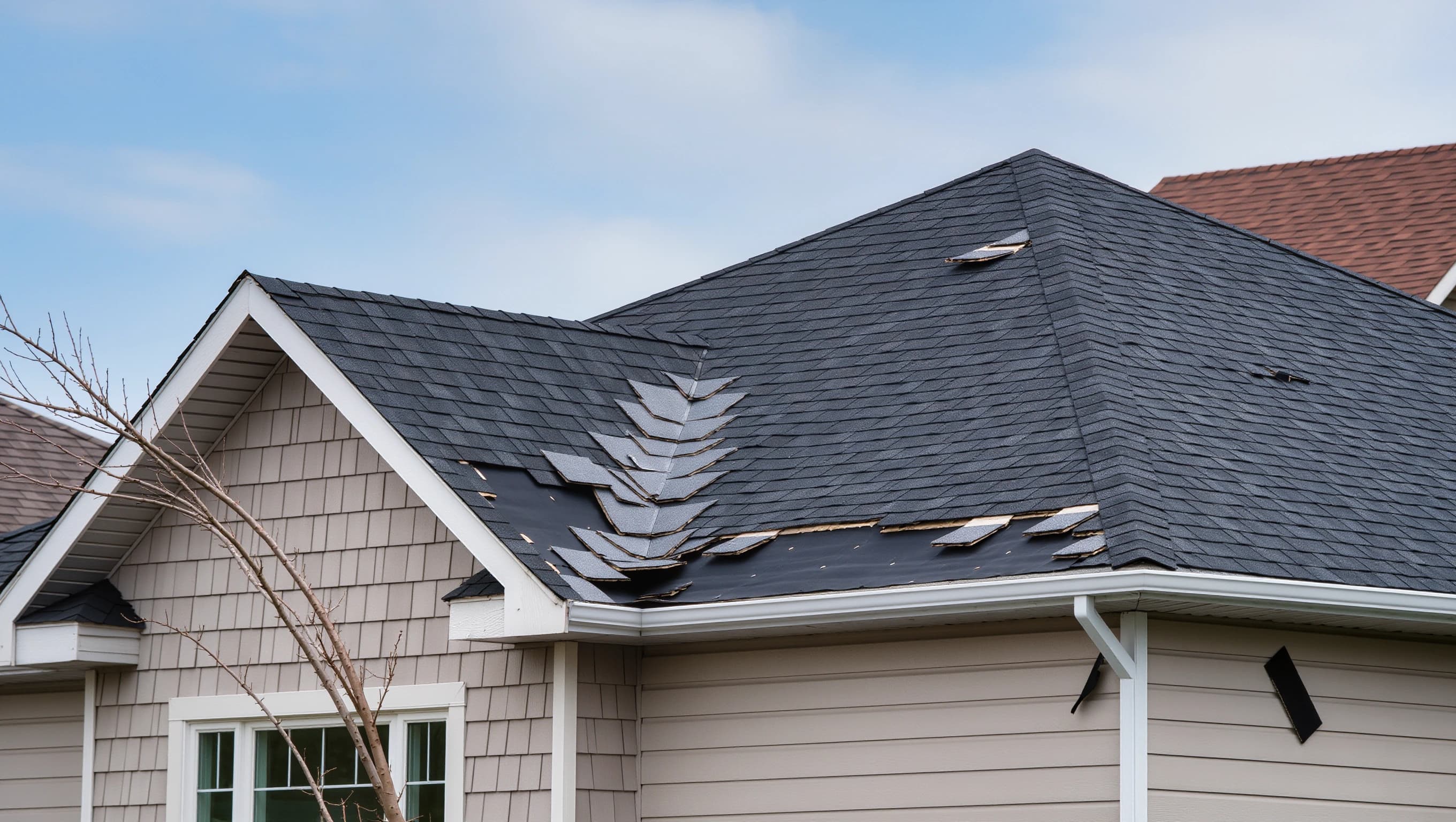
One or two shingles missing after a windstorm aren't automatically an emergency, but they're never a "non-issue" either: every missing shingle directly exposes the underlayment to the weather. The real severity depends mostly on location (near a valley or chimney is worse), the weather coming up, and the overall condition of the rest of the roof. If rain or snow is forecast in the next few days, don't put off checking it.
What's Happening?
A shingle is held to the roof with nails and sealed to its neighbors by an adhesive strip that activates with the sun's heat. When wind lifts a corner, that seal can give way and the shingle eventually tears off completely, often during the same storm or the next one.
Once the shingle is gone, the underlayment (the paper or membrane laid directly on the roof's plywood) is left exposed. It offers some water resistance, but it isn't built to stay uncovered for long: UV rays, repeated rain, and freeze-thaw cycles gradually weaken it.
So the number of missing shingles is only part of the equation. A single shingle missing at the bottom of a roof valley (where water concentrates) can be riskier than five missing shingles on a flat, sun-exposed section.
Is It Dangerous?
Yes, potentially, though it isn't always an immediate emergency. The real danger isn't to the people inside the home, but to the structure: an exposed spot that lets water in can lead to rotting plywood, mold in the insulation, and, over time, damage to the roof framing.
Inspect or act quickly if:
- The missing shingles are near a valley, chimney, skylight, or roof vent
- Rain or snow is forecast in the next few days
- The roof's plywood is visible to the naked eye from the ground or an attic window
- Nearby shingles are also lifting, cracking, or losing granules
- A moisture stain is already visible on a ceiling or on the attic sheathing
If none of these signs are present and clear weather is forecast for a few days, the situation can generally wait for a planned visit rather than an emergency call.
Most Common Causes
| Cause | Explanation |
|---|---|
| Strong wind or sudden gusts | The most common cause; lifts an already poorly sealed corner until the shingle tears off entirely |
| Shingles reaching end of life | The adhesive strips dry out and lose their sealing power with age |
| Insufficient or misplaced nailing | An installation defect that leaves certain shingles vulnerable even without a major storm |
| Repeated freeze-thaw cycles | Weaken the shingle and its seal, especially at the joints |
| Ice buildup at the roof edge | Ice can lift and dislodge shingles at the bottom of the slope |
| Animals (squirrels, raccoons) | Can tear or lift shingles while trying to reach the attic |
| Hail | Can crack or dislodge shingles, especially ones already weakened |
Why This Happens in Quebec
Quebec's climate is particularly hard on a roof. Freeze-thaw cycles, common from November through April, repeatedly stress shingles and their seals, which speeds up wear well before the shingles reach their theoretical lifespan.
Fall windstorms and sudden winter thaws are also critical moments: it's often right after these episodes that homeowners notice shingles on the ground. Quebec's older housing stock (postwar bungalows, Montreal triplexes) doesn't help either, since a lot of these roofs haven't been redone in 15 to 25 years.
Worth noting too: RBQ-licensed roofers get particularly busy in the fall, when everyone wants repairs done before winter. It's better to act as soon as a shingle goes missing rather than wait for peak season.
How to Check It Yourself
You can do a first check without getting on the roof:
- Look at the roof from the ground or an upstairs window, ideally with binoculars
- Check the gutters and the ground around the house for shingle granules or whole pieces
- Go into the attic (if accessible) and look for daylight coming through, wet insulation, or stains on the sheathing
- Note the approximate location of the affected area (which slope, proximity to a chimney or valley)
Never climb onto the roof yourself to inspect or repair it, especially in wet, windy, or icy conditions, or if the slope is steep. A roofer has the safety equipment and experience to assess the real extent of the damage, including damage that isn't visible from the ground.
Can I Ignore It?
It depends, but rarely indefinitely. If the affected area is small, far from a valley or chimney, and no rain is forecast in the short term, you can usually wait a few days to schedule a repair.
That said, the longer you wait, the higher the risk: each additional bout of weather further degrades the exposed underlayment, and infiltrating water can travel sideways under neighboring shingles before any sign shows up inside the home. A problem that looked minor at first may already have caused hidden damage by the time a stain appears on the ceiling, turning a few-hundred-dollar repair into a job worth several thousand.
How Much Does It Cost?
| Service | Estimated Price |
|---|---|
| Inspection only (diagnosis, no repair) | $100 - $200 |
| Spot repair (1 to 5 shingles) | $300 - $600 |
| Extended repair (several distinct areas) | $600 - $1,500 |
| Full replacement (roof at end of life) | $6,000 - $18,000 |
A spot repair is enough in the vast majority of isolated missing-shingle cases. Full replacement only becomes worth discussing if the missing shingles come alongside other signs of widespread wear (granules loosening everywhere, curling shingles, a roof over 20 years old).
When to Call a Professional
- Shingles have come off and rain or snow is forecast in the coming days
- The exposed area is near a valley, chimney, or skylight
- You can see bare plywood or a moisture stain on a ceiling or in the attic
- Several distinct areas of the roof show signs of damage, not just one
- The roof is over 15-20 years old and you don't know its maintenance history
- You aren't comfortable or equipped to safely inspect the roof yourself
An RBQ-licensed roofer can confirm in a single visit whether a localized repair is enough or whether the roof's overall condition warrants a conversation about replacement — something a ground-level inspection can't tell you with certainty.
Related Questions
- My Shingles Look Like They're Curling at the Edges: Replace Now or Wait?
- My Roof Has Black Streaks — Is That Dangerous or Just Ugly?
- Why Are There Purple or Iridescent Marks On My Shingles?
- A Water Stain on the Ceiling But No Visible Leak on the Roof: Where's It Coming From?
- Can I Wait Through One More Winter Before Replacing My Roof?
- Why Are Roofers All Slammed At the Same Time Every Fall, and How Do I Avoid the Wait?
- Are the Icicles Hanging From My Roof Actually Dangerous?
- How Much Snow on a Roof Is Actually Dangerous?
Frequently asked questions
Can I replace one or two shingles myself?+
It's technically possible for someone comfortable with heights and the right tools, but poor alignment or sealing often creates a new weak spot. Given the fall risk and the modest cost of a spot repair, most homeowners leave it to a roofer.
How long does it take for water to infiltrate through a missing shingle?+
It varies with rain intensity and the underlayment's condition, but heavy rain can cause infiltration in just a few hours. An underlayment that's already old or cracked shortens that window even more.
Does home insurance cover shingles lost in a storm?+
Often yes for damage tied to a sudden weather event like a windstorm, but check the terms of your specific policy and document the damage with photos as soon as possible after the event.
How long does a spot shingle repair take?+
Usually a few hours for a localized repair in one or two spots, though the time varies based on the roof's accessibility, its slope, and the actual extent of damage once the roofer is on site.
Should I call a professional right away if I find a shingle on the ground after a storm?+
Not necessarily within the hour, but within the next few days, especially if rain or snow is in the forecast. In the meantime, avoid getting on the roof yourself and watch the ceiling below the affected area for any sign of moisture.
Get a free quote
More to know before your project.
By Éric Gagné — RBQ-licensed roofer, roofing and roof snow removal specialist
Updated on July 23, 2026