
Can I Wait Through One More Winter Before Replacing My Roof?
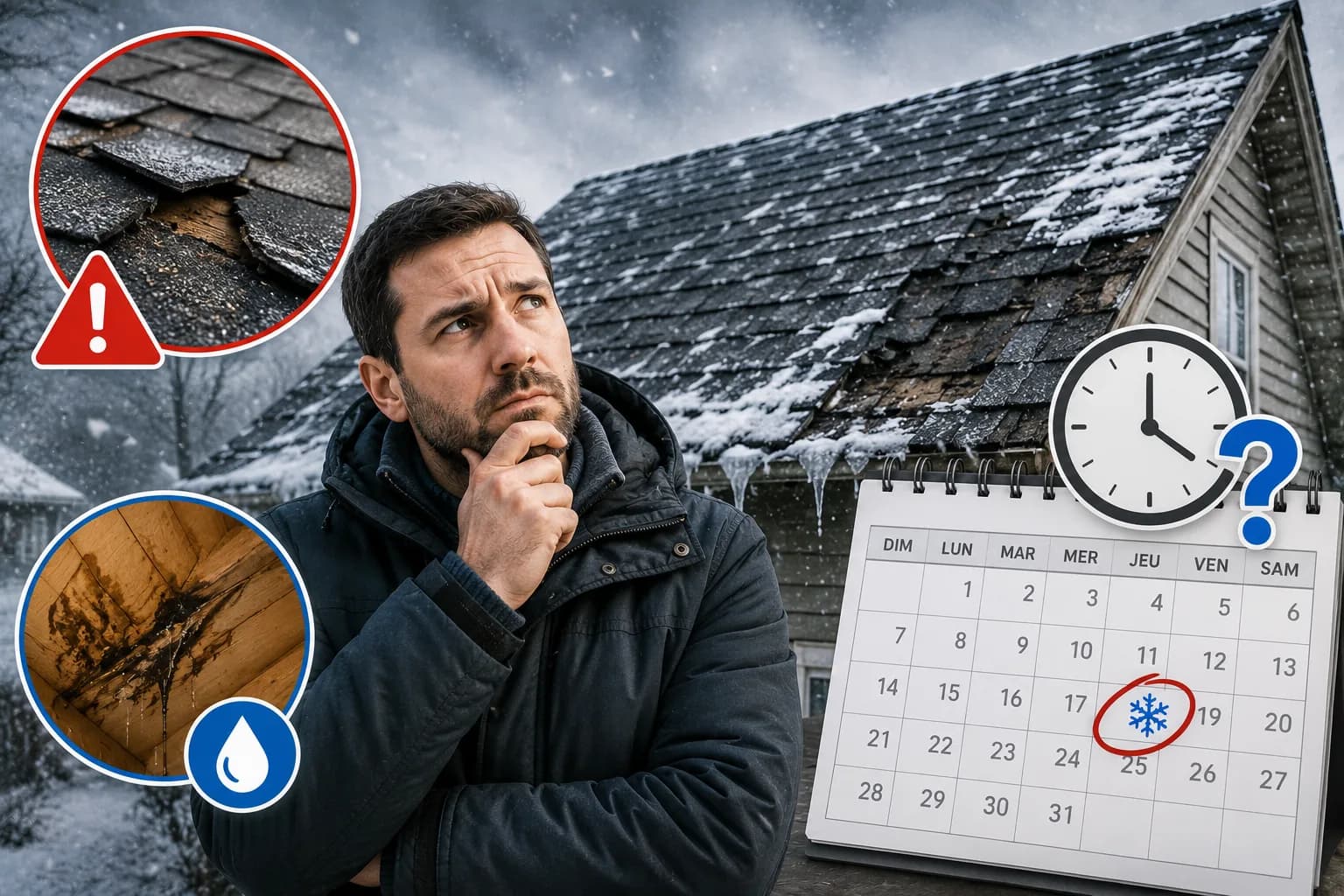
Stretching the current roof through one more season is tempting, especially on a tight budget. The right answer isn't a guess — it's confirmed by a few specific signs that make the difference between "yes, it can wait" and "no, the risk is too high."
What actually determines whether it can wait
| Sign to check | What it indicates |
|---|---|
| Shingles lifting or missing in spots | Likely infiltration points during snowmelt |
| Moisture stains already visible on the ceiling or in the attic | The roof is already leaking — waiting makes it worse |
| Roof age near or past 20-25 years | Failure risk that climbs quickly each year past that threshold |
| Shingle granules accumulating in the gutters | Advanced wear of the shingles' protective layer |
| Visible sagging in a section of the roof | A serious sign that should never wait, regardless of budget |
Why winter is the worst time to discover a problem
A roof that starts leaking in the middle of a Quebec winter combines the worst of every scenario: an expensive emergency repair in the coldest season, potential water damage that worsens with freeze-thaw cycles, and reduced roofer availability during peak winter-emergency season. A roof already showing advanced wear signs before winter is more likely to develop an active problem during the toughest months.
How to assess this objectively, without relying on hope
Have the roof inspected by a professional before the first snowfall rather than guessing from the ground — a roofer can confirm whether the current condition reasonably allows for one more season or whether the risk has become too high. This assessment generally costs little compared to the risk of major water damage in the middle of winter.
If the inspection confirms it can wait
A roof that can reasonably wait one more season still deserves closer monitoring: clearing accumulated snow after big storms, watching the inside for any early infiltration sign, and planning the replacement for the following spring rather than pushing it back indefinitely.
If the inspection reveals too high a risk
In that case, replacing it before winter, even during roofers' busier season, is generally still less costly than an emergency repair in January accompanied by interior water damage that wouldn't exist if the problem had been fixed in time.
Frequently asked questions
How much does a pre-winter roof inspection cost?+
Generally a modest cost, often offered free as part of a quote for an eventual replacement.
Can a roof really collapse under the weight of snow?+
It's rare but possible, especially on a roof already structurally weakened — visible sagging before winter deserves immediate attention, not waiting.
Do roofers still work in winter in Quebec?+
Yes for emergency repairs, but availability is reduced and tougher conditions make a full replacement more complex than in the fall.
What should I do if I discover an active leak in the dead of winter?+
Contact a roofer for a temporary emergency repair that limits the damage, pending a full replacement once spring allows it.
Get a free quote
More to know before your project.
By Éric Gagné — RBQ-licensed roofer, roofing and roof snow removal specialist
Updated on July 23, 2026