
My Roof Has Black Streaks — Is That Dangerous or Just Ugly?
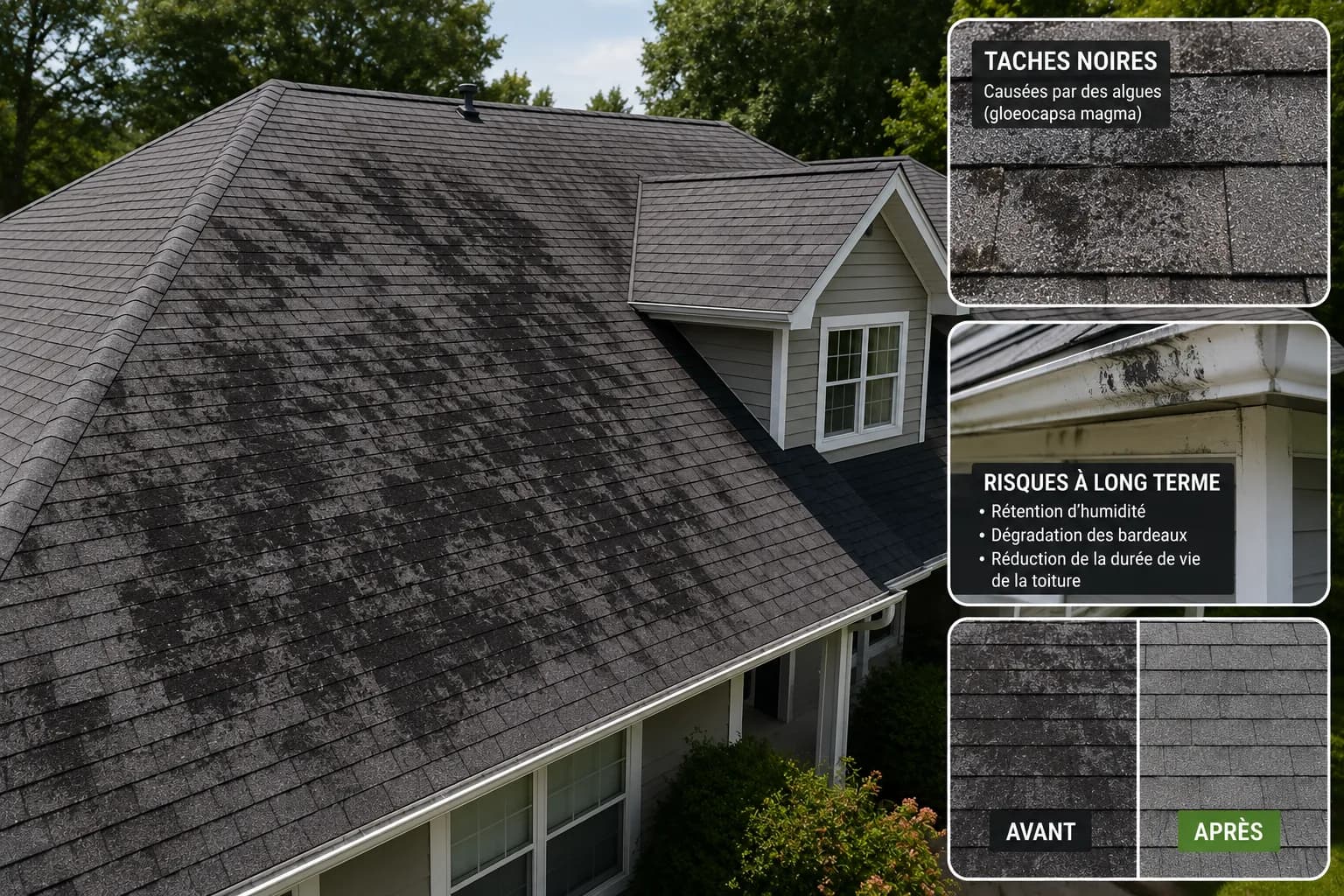
In the vast majority of cases, black stains or streaks on an asphalt shingle roof are caused by an algae called Gloeocapsa magma, not rot or structural damage. It isn't dangerous or urgent — it's mostly cosmetic. But left alone too long, that algae traps moisture and heat, which can shave a few years off your shingles' lifespan. You can wait to deal with it, but a cleaning or preventive treatment is worth doing before it spreads further.
What's Happening?
What you're seeing as "black streaks" is actually a colony of cyanobacteria (commonly called algae, even though that's not quite the correct biological term) feeding on the calcium carbonate in your asphalt shingle granules. It starts as small dark spots and gradually forms streaks running down the roof slope, pushed along by rain and runoff.
This algae spreads through spores carried by wind, birds, and squirrels. Once it takes hold on one roof in a neighborhood, it often shows up on nearby roofs too, especially those facing north or shaded by trees, where the shingle stays wet longer after rain.
It isn't mold in the sense you'd worry about indoors, and it isn't moss either (moss is green, raised, and grows mainly in shaded corners). The two can, however, show up together on an older roof.
Is It Dangerous?
No, black streaks aren't dangerous on their own. They don't indicate a leak, a structural issue, or a health risk to the people living in the house. It's primarily a cosmetic problem and, over the long run, a factor that speeds up shingle wear.
That said, a few situations deserve a closer look:
- The streaks are accompanied by thick moss that's visibly lifting shingles
- The roof is 15-20+ years old and the shingles are also curling or losing granules
- You notice a moisture stain on the ceiling below, in addition to the marks on the roof
- Large sections of the roof are covered, not just a few streaks
In those cases, it's no longer just algae — it's a sign the roof is aging and deserves a full inspection, not just a cleaning.
Most Common Causes
| Cause | Explanation |
|---|---|
| Algae (Gloeocapsa magma) | By far the most common cause; feeds on the calcium carbonate in shingle granules |
| Shaded or poorly ventilated roof | Dries more slowly after rain, which favors growth |
| Moss and organic debris | Trap moisture and act as a growing medium for the algae |
| Aging shingles | Protective coating wears down over time, making shingles more vulnerable |
| Spread from a neighboring roof | Spores travel by wind and animals between nearby roofs |
Why This Happens in Quebec
Quebec's humid summers, combined with long winters that keep roofs covered in snow or melting slush for months, create ideal conditions for this algae: lots of moisture, little quick drying. Neighborhoods with mature trees, common across Montreal and its suburbs, shade part of the roof all day, which extends the wet period even more.
The age of the housing stock matters too: many postwar bungalows and duplex/triplex buildings have roofs that never received a zinc or copper algae-resistant strip, a feature that's become standard on newer shingles. As a result, roofs 15 years and older are statistically far more affected than recent installations.
How to Check It Yourself
From the ground or with binoculars, look at the roof early in the morning when the light is low — black streaks show up more clearly. They typically start at the ridge (the top) and run down in vertical streaks, mostly on the north-facing or shaded side.
Tell algae stains (black, flat, streaky) apart from moss (green, tufted, raised) and from mold on the attic sheathing you might see from inside (a different sign, usually tied to ventilation).
Never climb onto the roof yourself to inspect it up close, especially if the shingles are wet or slippery — algae stains actually make the surface more slippery than usual. Don't attempt a DIY pressure wash either: a jet that's too strong strips off the protective granules and wears out the shingle faster than the algae ever would.
Can I Ignore It?
Partly, yes. It isn't an emergency, and you're not putting anything at risk by waiting a few months to plan a cleaning. But ignoring it for years has a real cost: the algae traps moisture and heat at the shingle surface, speeding up its breakdown and potentially cutting a few years off its lifespan compared to a clean roof.
There's also a resale angle: visible black streaks from the street give the impression of a neglected roof, even when the structure is perfectly sound, which can color a buyer's first impression.
How Much Does It Cost?
| Service | Estimated price |
|---|---|
| Professional cleaning (soft wash) | $400 - $800 |
| Preventive algae treatment (zinc/copper strips) | $200 - $500 |
| Replacing a damaged section | $1,500 - $4,000 |
| Full roof replacement | $6,000 - $18,000 |
Professional cleaning uses a soft wash (low pressure with a treatment solution), not a standard pressure wash that would damage the shingles. A preventive treatment combined with cleaning keeps regrowth away for several years. Full replacement is only needed if the roof is already nearing the end of its useful life for other reasons.
When to Call a Professional
- The streaks cover a large portion of the roof, not just a few lines
- The roof is 15+ years old and you've never had its overall condition inspected
- You see thick moss along with the black streaks, a sign the shingles have been holding moisture for a long time
- A moisture stain shows up on the ceiling or in the attic, suggesting a different issue than algae
- You want a lasting preventive treatment rather than a one-time cleaning that will come back in a year or two
An RBQ-licensed roofer can do both at once: clean the roof safely without damaging the shingles, and assess the actual condition of the roof underneath the stains to tell you whether it has several years of life left or not.
Related Questions
- Why Is Green Moss Growing On My Roof On the Shaded Side?
- Why Are There Purple or Iridescent Marks On My Shingles?
- My Shingles Look Like They're Curling at the Edges: Replace Now or Wait?
- Can I Wait Through One More Winter Before Replacing My Roof?
- How Many Missing Shingles Before It Becomes a Serious Problem?
- How Much Does a Heat Pump or a New Roof Actually Add to My Home's Resale Value?
- Why Are Roofers All Slammed At the Same Time Every Fall, and How Do I Avoid the Wait?
Frequently asked questions
Will the black streaks go away on their own?+
No, they don't go away on their own and tend to spread over time, especially in shaded areas of the roof. A cleaning or treatment is needed to remove them.
Can I wash my roof myself with a pressure washer?+
It isn't recommended. A high-pressure jet strips off the protective granules on shingles and can shorten their lifespan more than the algae itself would. Professionals use a low-pressure soft wash with a proper cleaning solution.
Does it affect my shingle warranty?+
It depends on the shingle type. Newer shingles with algae-resistant strips (zinc or copper) often carry a specific warranty against algae staining, while older shingles usually don't.
Do I need to call a professional right away?+
No, it isn't urgent. You can schedule a cleaning within the next few months. However, if the streaks are accompanied by thick moss or a moisture stain on the ceiling, a faster inspection is warranted.
Can a new roof also develop black streaks?+
Yes, even a fairly new roof can be affected if the shingles lack an algae-resistant strip, or if a neighboring, already-affected roof spreads spores through the wind. The risk is simply lower and slower to show up.
Get a free quote
More to know before your project.
By Éric Gagné — RBQ-licensed roofer, roofing and roof snow removal specialist
Updated on July 23, 2026