
Why Is Green Moss Growing On My Roof On the Shaded Side?
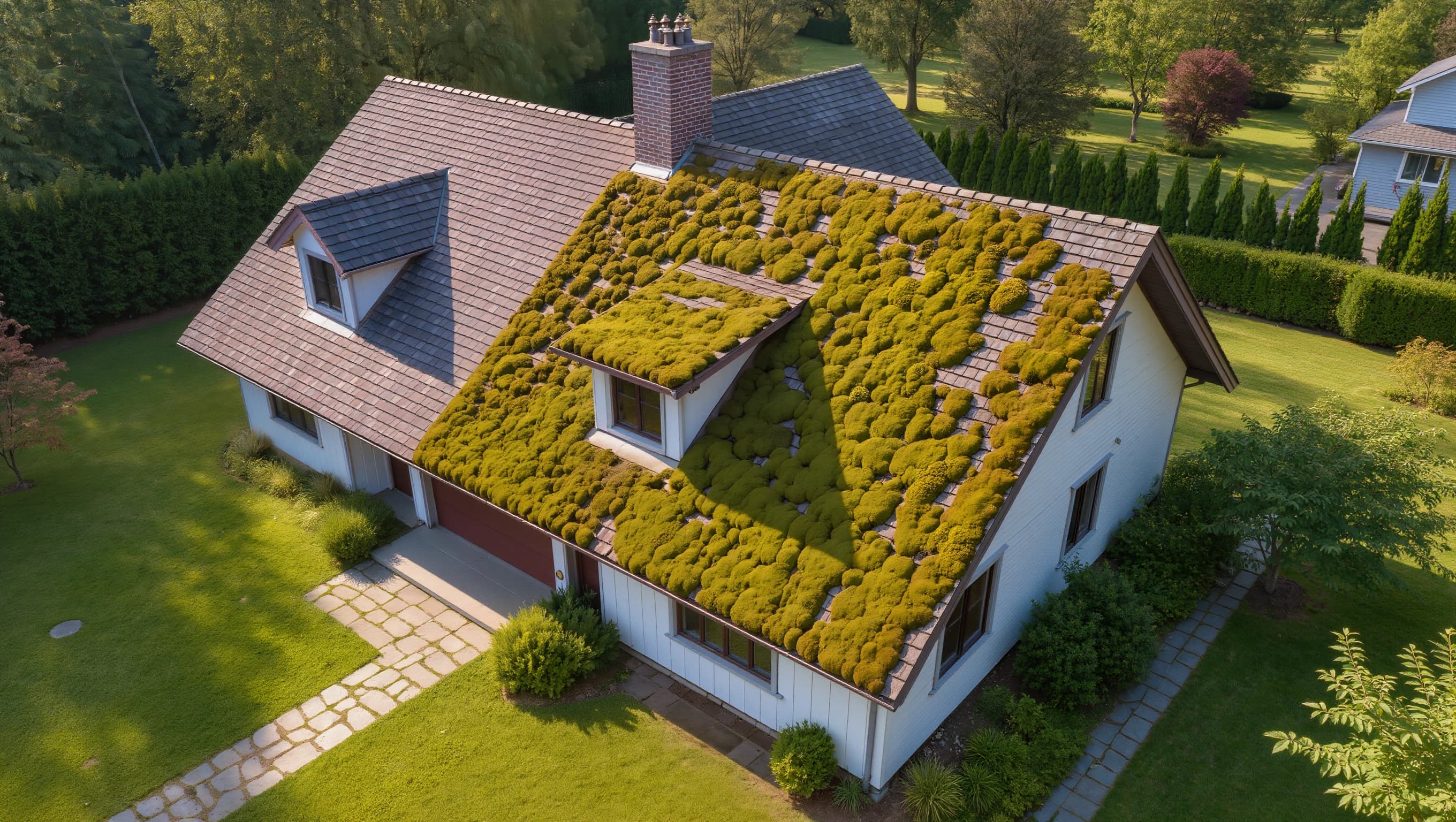
Green moss on the shaded side of the roof grows where moisture stays trapped longer because the sun doesn't dry the surface, often under trees or on the north side. It's not immediately dangerous, but moss holds water against the shingles and eventually lifts them, speeding up roof wear. A professional cleaning within the year is usually enough — this isn't a roofing emergency.
What's Happening?
Moss is a simple plant that needs constant moisture and low light to take hold. On a roof, it grows where water takes longer to evaporate: north-facing sides, sections shaded by trees or another part of the house, and areas where debris (leaves, conifer needles) traps moisture against the shingles.
Once established, moss forms a cushion that soaks up water like a sponge and keeps it in direct contact with the shingle surface, even after the rest of the roof has dried. Over time, moss roots work their way under shingle edges and lift them slightly, creating small gaps water can seep through.
It's a slow process — moss doesn't cause damage overnight, but it accelerates the wear of a roof that would otherwise have lasted longer.
Is It Dangerous?
Not immediately. Fresh, sparse moss is mostly a cosmetic and preventive-maintenance issue, not an emergency. But it never improves on its own — it spreads every wet season if left alone.
Inspect or act more quickly if you notice:
- Shingles visibly lifted or coming loose under moss patches
- A thick moss layer (over a centimetre) that holds water permanently
- Damp spots or a musty smell in the attic below the affected area
- Moss combined with clogged gutters, which makes water retention worse
Most Common Causes
| Cause | Explanation |
|---|---|
| Prolonged shade | A north-facing side or an area under trees gets little direct sun, so the surface dries slowly |
| Tree branches touching the roof | They keep shingles damp and drop organic debris that feeds moss |
| Accumulated debris (leaves, needles) | They trap moisture against the shingles like a sponge |
| Clogged gutters | Standing water wicks upward and dampens the lower part of the roof |
| Poor roof ventilation | A humid attic keeps the underside of the shingle cold, encouraging condensation |
| Low roof slope | A gentle slope drains water more slowly, giving moss more time to establish |
Why This Happens in Quebec
Quebec combines humid summers, long cloudy stretches, and many properties lined with mature trees (maples, conifers) — ideal ground for moss. North-facing sides of houses often hold snow that melts slowly in spring, extending the damp period by several weeks compared to the south side.
In older neighbourhoods of Montreal and Quebec City, where street trees and backyards have been well established for decades, constant shade on certain roof sections is almost unavoidable. Triplexes and bungalows with poorly ventilated attics add another moisture factor that helps moss grow from underneath as well.
How to Check It Yourself
From the ground or a second-floor window, check whether the moss is flat and thin (monitoring is enough) or thick and cushiony (cleaning needed). Also check whether branches are directly touching the roof — good pruning already goes a long way toward reducing shade and moisture.
Never climb onto the roof yourself to remove moss: the surface is slippery when wet or moss-covered, and rough scraping can strip protective granules off the shingles. Leave it to a professional using proper techniques (gentle treatment, never aggressive pressure washing directly on asphalt).
Can I Ignore It?
In the short term, yes, if the moss is thin and localized — it's not an emergency. But in the medium term, no: moss spreads every wet season and eventually lifts shingles, opening the door to leaks. Timely maintenance (cleaning plus pruning) costs a fraction of a repair caused by shingles damaged by years of untreated moss.
How Much Does It Cost?
| Service | Estimated Price (CAD) |
|---|---|
| Professional roof inspection | $150 - $300 |
| Moss cleaning and treatment | $200 - $500 |
| Replacing lifted/damaged shingles | $300 - $800 |
| Full roof replacement | $6,000 - $18,000 |
When to Call a Professional
- The moss has formed a thick cushion for more than one season without maintenance
- You see lifted shingles or edges coming loose under the moss
- A damp spot or musty smell appears in the attic under the affected area
- Tree branches are directly touching the roof and need pruning
- You want preventive treatment before the moss spreads to other sections
Related Questions
- Why Are There Purple or Iridescent Marks On My Shingles?
- My Roof Has Black Streaks — Is That Dangerous or Just Ugly?
- My Shingles Look Like They're Curling at the Edges: Replace Now or Wait?
- How Many Missing Shingles Before It Becomes a Serious Problem?
- A Water Stain on the Ceiling But No Visible Leak on the Roof: Where's It Coming From?
- Can I Wait Through One More Winter Before Replacing My Roof?
- Why Are Roofers All Slammed At the Same Time Every Fall, and How Do I Avoid the Wait?
Frequently asked questions
Can I remove the moss myself with a hose or pressure washer?+
A light low-pressure rinse can help, but aggressive pressure washing strips protective granules off shingles, and climbing onto a wet, mossy roof is slippery and dangerous. A gentle professional treatment is safer and more effective long-term.
Will cutting back trees near the house fix the problem for good?+
It helps a lot by reducing shade and moisture, but it doesn't guarantee moss will never come back, especially on the north side where direct sun stays limited even without trees. Annual maintenance is still recommended.
Can moss damage the wood decking under the shingles?+
Yes, if left untreated for years. Once water seeps under shingles lifted by moss, it can reach the wood decking underneath and cause rot, which costs far more to repair than a simple cleaning.
Is it normal to have moss on only one side of the roof?+
Yes, that's actually the most common scenario. The north-facing or tree-shaded side dries more slowly than the sun-exposed side, so it's completely normal for moss to establish there first.
Should I call a professional right away when I spot moss?+
Not urgently if the layer is thin and there's no sign of lifted shingles. Instead, schedule a cleaning within the next few months to prevent it from thickening and damaging the shingles.
Get a free quote
More to know before your project.
By Éric Gagné — RBQ-licensed roofer, roofing and roof snow removal specialist
Updated on July 23, 2026