
How Much Snow on a Roof Is Actually Dangerous?
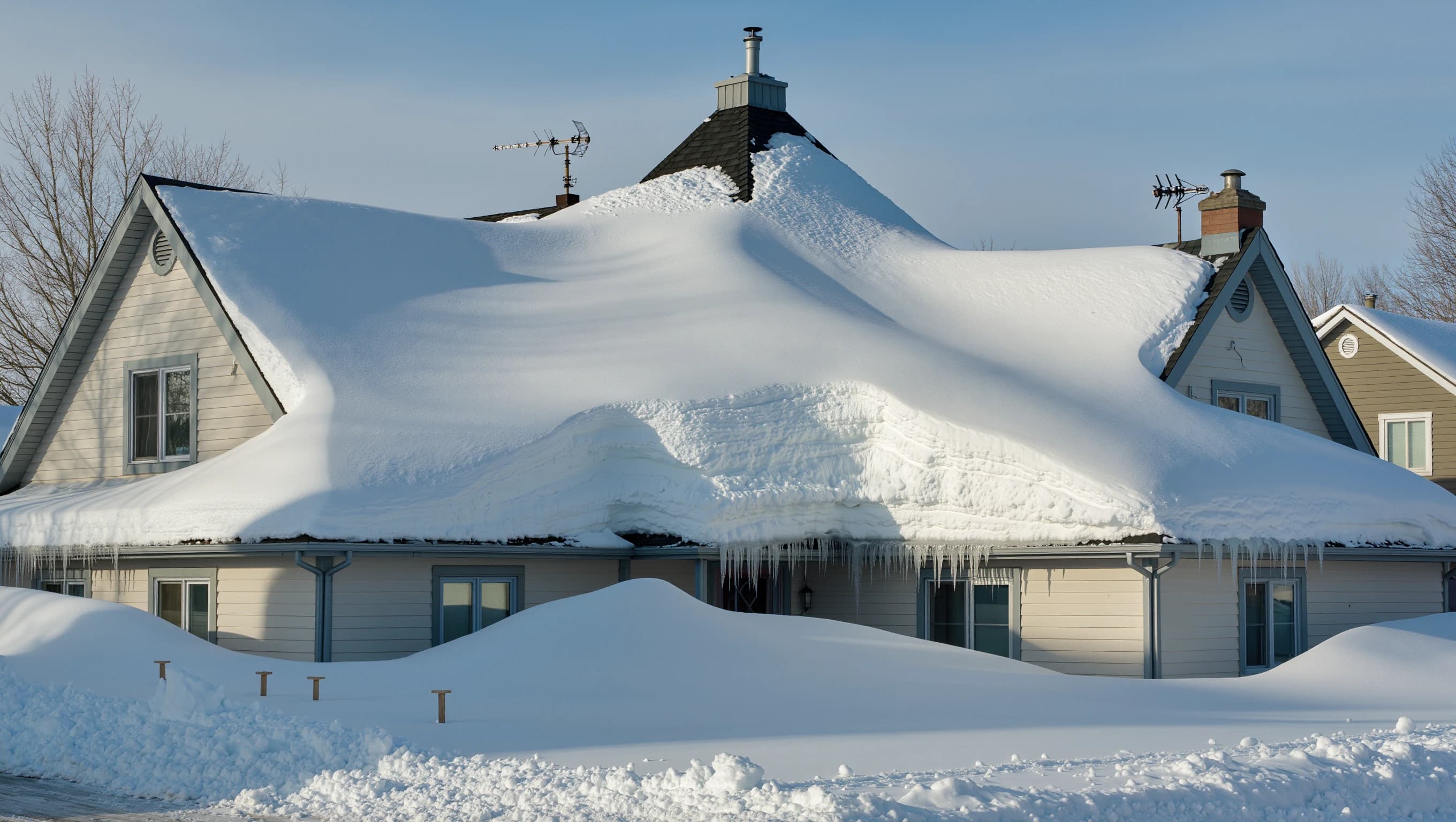
A well-built residential roof typically handles around 60-90 cm of light, dry snow before the load becomes a real concern, but that threshold drops to 30-45 cm if the snow is wet, icy, or wind-packed. The real danger usually isn't fresh snow, it's accumulation that freezes and refreezes over several weeks. If you hear cracking sounds, notice a door suddenly sticking, or see a new ceiling crack, act immediately. Otherwise, a visual inspection and preventive snow removal are usually enough.
What's Happening?
Not all snow weighs the same. Light, dry snow is about 7-10% water by volume, while wet snow or ice can weigh three to five times more for the same visible depth. That's why counting centimetres alone doesn't tell you whether a roof is at risk.
A typical Quebec residential roof is designed to carry roughly 150-250 kg per square metre, per the National Building Code and regional snow-load requirements. The real problem builds when several storms pile up without melting, gradually turning into compacted snow and then ice against the roof surface.
The highest-risk spots aren't always where snow looks deepest: roof valleys, areas near dormers, and flat or low-slope roofs carry far more weight than steep-pitched roofs that shed snow naturally.
Is It Dangerous?
It depends directly on accumulated weight, not visible height. A roof in good condition, built to current code, handles a normal Quebec winter without issue. Real risk shows up with extreme accumulation, wet late-winter snow, or a roof already weakened by age, water damage, or unpermitted structural changes.
Inspect or act immediately if you notice:
- Unusual cracking or creaking sounds in the roof framing
- An interior door or window that suddenly starts sticking (a sign of structural flex)
- A new visible crack in a ceiling or wall, especially on the top floor
- Any visible sagging along the roofline, even slight
- Heavy wet snow accumulated over 30-45 cm, especially after rain-on-snow
- A flat or low-slope roof with weeks of accumulation and no melt
Outside of these signs, a roof in good condition carrying a normal amount of light snow generally isn't an emergency.
Most Common Causes
| Cause | Explanation |
|---|---|
| Buildup from multiple storms without melting | Each new layer adds weight on top of an already compacted base |
| Freezing rain or rain-on-snow | Can double or triple the weight of the same visible depth within hours |
| Flat or very low-slope roof | Snow doesn't shed naturally and accumulates evenly across the surface |
| Aging or already-weakened framing | Reduces the roof's real load capacity below its theoretical rating |
| Uncertified structural modifications | Cut joists, removed load-bearing walls, poorly supported additions |
| Ice buildup at the roof edge (ice dam) | Adds concentrated weight exactly where the roof is most vulnerable |
Why This Happens in Quebec
Quebec winters routinely bring 2-4 metres of accumulated snowfall on the ground over a season, with frequent January and February thaws that turn light snow into compacted snow and then ice. This repeated freeze-thaw cycle is exactly what pushes the real weight on a roof far beyond what the visible depth suggests.
The housing stock also includes many older buildings, notably Montreal triplexes and duplexes with flat or low-slope roofs, a roof type particularly vulnerable to accumulation. A frame built or repaired without following Building Code standards, or modified without an RBQ-licensed contractor, has a much thinner safety margin against an exceptional snow load.
How to Check It Yourself
Safely from the ground or a window, you can observe the snow's depth and texture (light, compacted, icy), spot areas where it's building up abnormally (valleys, around dormers, roof edges), and listen for unusual framing sounds during cold snaps followed by a thaw.
Inside, check whether top-floor doors and windows still close normally, and inspect ceilings for new cracks or damp staining.
Never climb onto the roof yourself, especially with snow or ice present. The fall risk is high, and adding body weight on top of an already critical load can make things worse. Roof snow removal should be done with proper equipment and anchoring by a trained crew.
Can I Ignore It?
It depends. If your roof is in good condition, relatively new, normally pitched, and the accumulation is just light snow with no signs of structural distress, you can generally let it melt naturally without intervention.
If you have a flat roof, weeks of accumulation, a large volume of wet snow, or any of the warning signs above, no, you shouldn't wait. Framing that's already creaking under load can go from "uncomfortable" to structural sagging within days during a rain-on-snow event.
How Much Does It Cost?
| Service | Estimated Price |
|---|---|
| Professional snow-load inspection | $0 - $150 |
| Standard residential roof snow removal | $200 - $450 |
| Emergency roof snow removal (heavy volume, hard access) | $400 - $600 |
| Minor structural repair (if sagging is detected) | $800 - $3,000+ |
Flat roofs, multi-slope roofs, or roofs that are hard to access (near power lines, narrow backyard) generally fall at the higher end of these ranges.
When to Call a Professional
- You hear recurring cracking sounds in the framing, especially during a thaw
- A top-floor door or window suddenly starts sticking with no other explanation
- You notice a new crack in an interior ceiling or wall
- The roof is flat or low-slope and hasn't been cleared in over 3-4 weeks
- Rain-on-snow is forecast and you already have significant accumulation
- Your home is over 40 years old and the framing has never been assessed for snow load
An RBQ-licensed roofer can evaluate your framing's actual capacity, not just visible snow depth, and clear the roof without damaging the roofing material or putting themselves at risk.
Related Questions
Frequently asked questions
How many centimetres of snow make a roof dangerous?+
There's no fixed centimetre threshold, because weight matters more than height. As a rule of thumb, start watching closely at 60-90 cm of light snow, or as little as 30-45 cm if it's wet, compacted, or icy.
Can I remove the snow from my roof myself?+
It's not recommended, especially on a sloped or elevated roof. A roof rake used from the ground can work for a one-storey bungalow, but climbing onto the roof carries a high fall risk and should be left to a crew equipped to do it safely.
Does a sticking door really mean my roof is at risk?+
Not always, but it's worth taking seriously if it happens suddenly in winter and wasn't an issue before. It can indicate the framing is flexing slightly under snow load, which justifies a prompt inspection.
Are flat roofs really more at risk?+
Yes. A steep-pitched roof sheds a good portion of snow naturally, while a flat or low-slope roof accumulates the full weight in place, making it the roof type most closely watched during Quebec winters.
Get a free quote
More to know before your project.
By Éric Gagné — RBQ-licensed roofer, roofing and roof snow removal specialist
Updated on July 23, 2026