
Are the Icicles Hanging From My Roof Actually Dangerous?
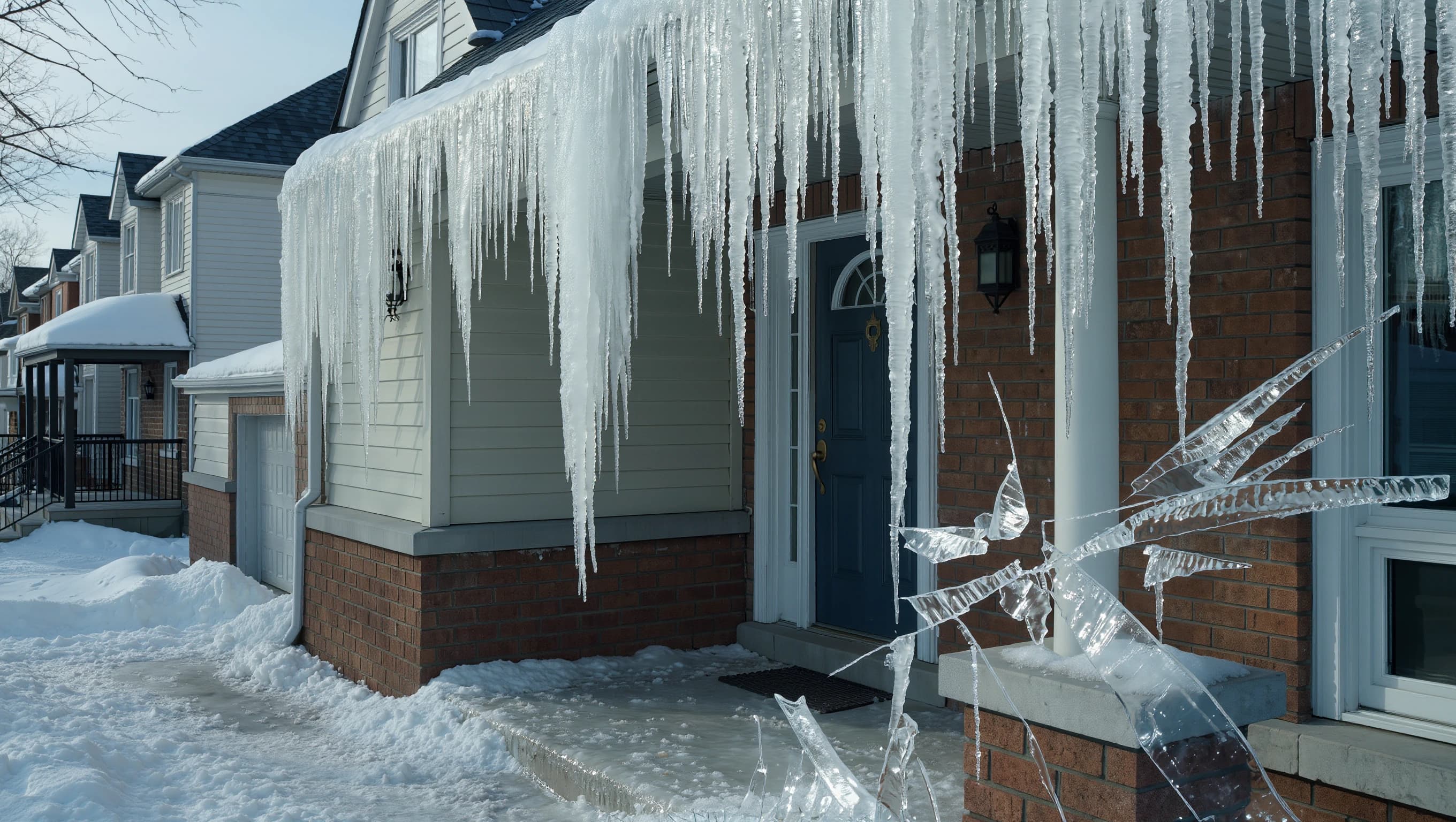
Icicles themselves are mostly a warning sign, not the real danger: they almost always mean an ice dam is forcing water back up under your shingles, which can lead to leaks in the attic or walls. There's also a physical risk — a falling icicle can hurt someone or damage the gutter — but the real cost comes from the water seeping in while the icicles form. Don't knock them down yourself from the ground; have the roof inspected if icicles come back every winter or if you also notice ceiling stains.
What's Happening?
An icicle forms when snow on the roof melts slightly — often from heat escaping the attic — then refreezes when it hits the cold air at the roof's edge, near the gutter. This repeated melt-refreeze cycle makes the icicle grow bigger day after day.
The icicle itself isn't the problem — it's what it reveals. The same meltwater running along the roof edge can also pool behind an ice dam and back up under the shingles, where there's nothing to stop it from seeping into the house.
Thin, short icicles after a small snowfall are normal and mostly harmless. Massive icicles that come back every winter in the same spot almost always point to an underlying attic ventilation or insulation problem.
Is It Dangerous?
Yes, on two different levels: immediate physical danger and longer-term risk to the house.
Inspect or act quickly if:
- An icicle looks visibly heavy and hangs over an entryway, sidewalk, or play area
- You see a thick buildup of ice along the roof edge (a sign of an ice dam)
- Water stains appear on the ceiling at the same time as the icicles
- The gutter looks pulled down or detached under the weight of the ice
An icicle falling from a second story can cause a serious injury or damage a car parked below. Rope off the area under large icicles and avoid walking through it, especially with kids around.
Most Common Causes
| Cause | Explanation |
|---|---|
| Ice dam | Snow melts near the warmer ridge, refreezes at the colder roof edge, and forms a dam that produces icicles |
| Poorly insulated attic | Heat from the house escapes through the roof and melts snow unevenly |
| Poorly ventilated attic | Warm air stays trapped under the roof instead of venting out, speeding up melting |
| Clogged gutters | Leaves or debris block meltwater from draining, encouraging ice buildup |
| Outdoor temperature swings | Frequent freeze-thaw cycles in Quebec winters multiply the chances of icicle formation |
| Roof section in sun, another in shade | Creates uneven melting that concentrates icicles on one side |
Why This Happens in Quebec
Quebec gets heavy snowfalls followed by thaws, sometimes several times in the same week. That thermal back-and-forth is exactly the recipe for ice dams and heavy icicles, especially on homes built before modern insulation standards.
Postwar bungalows and low-slope roofs are particularly at risk, since they accumulate more snow and often have attic ventilation that falls short of current standards. A program like Rénoclimat can help fund attic insulation upgrades, which directly reduces icicle formation year after year.
How to Check It Yourself
From the ground or an upstairs window, watch whether icicles always cluster in the same spot each winter — that points to a localized insulation issue rather than a random occurrence. Also check whether a thick layer of ice, not just icicles, is building up along the gutter (a sign of an active ice dam).
Inside, go up into the attic with a flashlight to check whether the insulation is thin, compressed, or wet in spots.
Never climb onto the roof or a ladder to knock icicles down yourself: the roof is slippery, the fall risk is high, and you could damage the shingles by hitting them.
Can I Ignore It?
It depends. Occasional light icicles after an isolated snowfall can be ignored without consequence. But heavy icicles that come back every winter signal an active ice dam, and ignoring that for several seasons almost always ends up causing water infiltration into the attic or walls, with a risk of mold and framing damage.
How Much Does It Cost?
| Service | Estimated Price |
|---|---|
| Professional roof snow/ice removal | $200 - $600 |
| Removing an existing ice dam | $400 - $1,200 |
| Attic ventilation improvements | $500 - $1,500 |
| Adding attic insulation | $1,200 - $3,500 |
| Ice-damaged gutter repair | $200 - $800 |
Preventive roof snow removal before icicles form costs noticeably less than fixing a leak or drywall damage after infiltration.
When to Call a Professional
- Icicles exceed 30 cm and hang over a high-traffic area
- A thick layer of ice is building up along the whole roof edge
- The icicles come back in the same spot every winter for several years running
- You notice a ceiling stain during icicle season
- The gutter looks like it's bending under the weight of the ice
A roofer or specialized roof snow-removal crew can safely remove the ice with steam rather than knocking icicles down, which avoids damaging the shingles — a method a homeowner shouldn't attempt themselves.
Related Questions
- Why Are Giant Icicles Hanging From My Roof?
- A Water Stain on the Ceiling But No Visible Leak on the Roof: Where's It Coming From?
- Is It Normal to See Daylight in My Attic?
- Why Do I Hear Cracking Noises In the Attic When It's Windy?
- My Ceiling Is Leaking — Do I Call a Roofer or a Plumber?
- How Many Missing Shingles Before It Becomes a Serious Problem?
Frequently asked questions
Can I knock the icicles down myself with a broom?+
It's not recommended: you risk getting hurt by falling ice and damaging the shingles or gutter by hitting them. Professional steam de-icing is safer.
Is it normal to get icicles every winter?+
Small occasional icicles are normal. Massive icicles that return every year in the same spot often point to an attic insulation or ventilation problem worth fixing.
Do heat cables installed on the roof fix the problem for good?+
They help create a drainage path for meltwater, but they treat the symptom, not the cause. Fixing attic insulation and ventilation remains the more lasting solution.
Does my home insurance cover damage caused by an ice dam?+
Most home insurance policies cover sudden water damage tied to an ice dam, but check your policy, since some exclude damage deemed related to lack of maintenance.
How long does an ice dam take to cause a leak?+
It can happen in as little as a few days during a prolonged thaw, if the water pooling behind the dam finds a weak spot in the shingles or flashing.
Get a free quote
More to know before your project.
By Éric Gagné — RBQ-licensed roofer, roofing and roof snow removal specialist
Updated on July 23, 2026