
Why Does My Chimney Smell Bad?
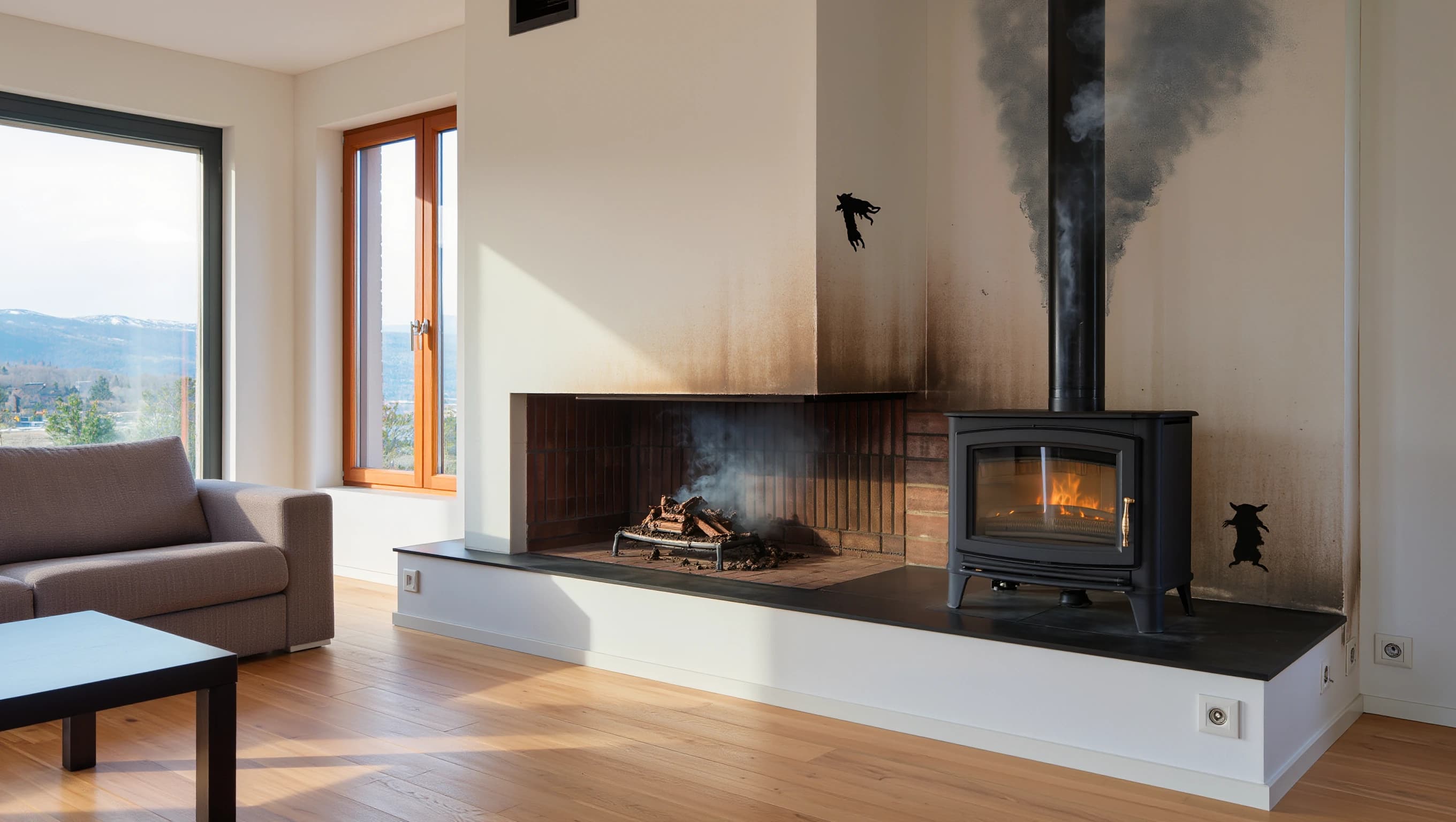
A smelly chimney is almost never an immediate danger, but it's almost always a sign the flue needs attention. The most common cause is creosote buildup releasing an acrid odor in summer when humidity rises inside the flue. Other frequent causes are a dead animal, standing water, or poor draft. Have the chimney inspected before your next fire, especially if the smell is strong or new.
What's Happening?
A chimney works like a long pipe connecting your home to the outdoors. Anything that sticks to its inner walls, or anything that gets inside it, eventually makes itself known in the house, especially when the air is humid or wind pushes outside air downward instead of letting smoke rise.
The most common smell is creosote, a tar-like residue that builds up on flue walls with every fire. In warm, humid weather, creosote absorbs moisture from the air and releases an acrid, stale-smoke odor, similar to a wet ashtray.
Other smells point to other causes: a rotten-egg or mildew smell often suggests water getting into the flue, and a decaying-meat smell suggests a dead animal or a nest lodged higher up.
Is It Dangerous?
In most cases, a bad smell alone isn't an emergency. It's a maintenance signal, not a sign of an imminent fire. But it can point to a problem that becomes dangerous if you keep using the fireplace without checking it.
Inspect or act quickly if:
- The smell comes with smoke entering the room instead of going up
- You smell smoke even when the fireplace isn't in use
- You notice black soot or water stains around the opening
- The smell is paired with scratching sounds (a live animal in the flue)
- A carbon monoxide detector goes off
In these cases, don't light the fireplace again before it's inspected.
Most Common Causes
| Cause | Explanation |
|---|---|
| Creosote buildup | Combustion residue stuck to the flue walls that releases an acrid smell as humidity rises, especially in summer |
| Humidity and poor draft | A poorly insulated or overly cold flue lets humid air stagnate and pushes odors back into the house |
| Animal or nest | A squirrel, raccoon, or bird that got into the flue, dead or alive |
| Debris buildup | Leaves, twigs, or dust that partially block the flue |
| Missing or damaged chimney cap | Lets in rainwater and small animals |
| Water infiltration in the masonry | Water penetrating the mortar can create a lingering musty smell |
Why This Happens in Quebec
Quebec's humid summers are the worst time for creosote odor, because moisture-laden air enters the flue and reactivates residue left over from the previous winter. Many homeowners only notice the problem in June or July, months after the last fire.
Freeze-thaw cycles also damage mortar and chimney caps, creating cracks that let water in. In older homes across Montreal and Quebec City, with their century-old masonry, this kind of infiltration is especially common and adds a musty smell on top of the creosote.
How to Check It Yourself
You can do a simple, safe visual check:
- Look inside the fireplace with a flashlight for excessive soot, debris, or signs of an animal
- Smell near the damper: a strong, localized odor there confirms the flue as the source
- Check the outside, from the ground, to see if the chimney cap is visibly missing or bent
Never climb onto the roof yourself to check the cap or flue, especially in wet weather or winter. Don't try to remove an animal from the flue, dead or alive, yourself: leave that to an equipped professional.
Can I Ignore It?
It depends. A mild creosote smell in summer, with no other symptoms, can wait until your regular fall sweep. But if the smell is new, strong, or paired with smoke entering the house, don't wait.
Ignoring significant creosote buildup increases the risk of a chimney fire the next time you use it. A damaged cap left unrepaired lets water keep degrading the masonry, turning a minor fix into costly masonry repairs over time.
How Much Does It Cost?
| Service | Estimated Cost |
|---|---|
| Inspection only | $100 - $175 |
| Standard sweep | $150 - $350 |
| Animal or nest removal | $150 - $400 |
| Chimney cap replacement | $200 - $600 |
| Minor masonry repair | $300 - $1,500 |
When to Call a Professional
- You smell smoke even when the fireplace is off
- The odor persists after a recent sweep
- You hear animal noises in the flue
- You see water stains or soot around the fireplace opening
- It's been more than a year since the last professional sweep
- You've never had the chimney inspected since buying the house
A certified sweep uses a camera to inspect the whole flue, not just the visible part, and can confirm whether creosote has reached a level that poses a real fire risk.
Related Questions
- 10 Signs Your Chimney Needs Sweeping
- Creosote and Chimney Fire Risk: What You Need to Know
- Why Is There Black Soot Around My Fireplace Opening?
- Why Does Smoke Come Into My Living Room Instead of Going Up the Chimney?
- Can I Light My Fireplace This Winter If I've Never Had It Inspected Since Buying the House?
- How Often Should a Chimney Be Swept
- My House Smells Weird But I Can't Tell If It's the Chimney, the Ducts, or the Plumbing
- Noise in the Ducts: Squirrel, Raccoon, or Dead Animal?
Frequently asked questions
Can creosote smell make my family sick?+
The smell alone is generally not toxic to breathe occasionally, but prolonged exposure to smoke entering the house can irritate your airways. If you smell smoke without a fire lit, have the draft checked promptly.
Will the smell go away on its own if I wait until fall?+
Often yes, the smell fades as the air turns drier and cooler, but the creosote stays in the flue and the fire risk doesn't go away. A sweep addresses the cause, not just the symptom.
Can I use an air freshener or baking soda in the fireplace in the meantime?+
Baking soda placed in the fireplace can slightly mask the smell, but it doesn't fix anything. It can also hide a real problem, like an animal or a blockage, that you should get checked.
Is it normal to smell creosote even if I haven't used my fireplace this year?+
Yes, creosote from previous years stays in the flue and keeps reacting to humidity even without a new fire. That doesn't mean the flue is dangerous, but a sweep is likely overdue.
Should I call a professional right away if the smell just started?+
Not necessarily as an emergency, unless it comes with smoke in the house or animal noises. Otherwise, book an inspection in the coming weeks rather than waiting for the busy fall season.
Get a free quote
More to know before your project.
By Sophie Bouchard — Certified chimney sweep, residential fire safety specialist
Updated on July 23, 2026