
Can I Light My Fireplace This Winter If I've Never Had It Inspected Since Buying the House?
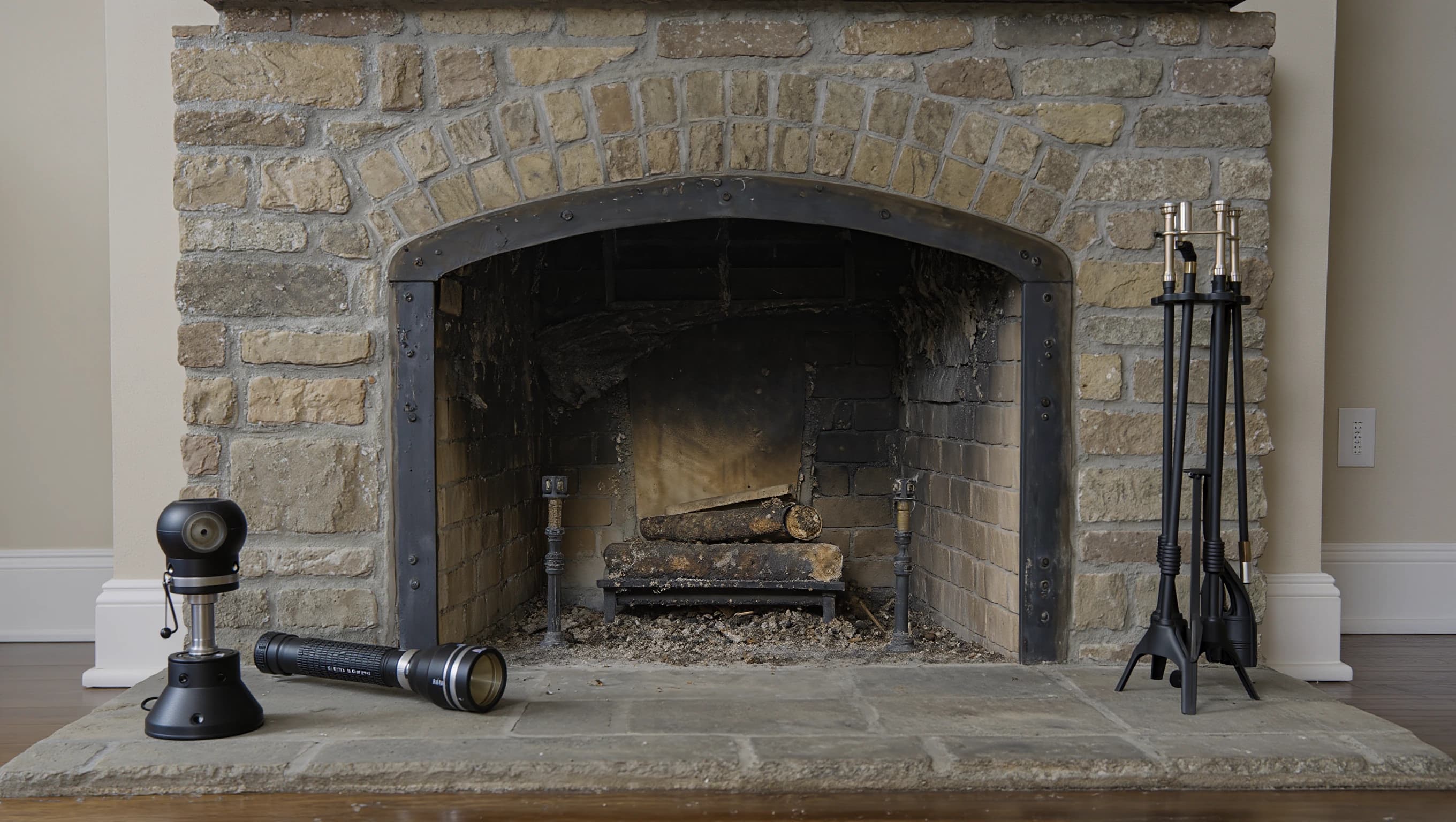
No, it's best not to light a fireplace that's never been inspected since you bought the house, even if it looks fine. You don't know the previous owner's maintenance history, and hidden problems (built-up creosote, an animal nest, cracks, a missing cap) are common in resold homes. A level 2 inspection before the first fire costs $200 to $400, a small amount compared to the risk of a chimney fire in a house you still don't fully know.
What's Happening?
When you buy a house, the standard pre-purchase inspection rarely covers the chimney flue in depth: the general home inspector mostly looks at the exterior appearance and the fireplace's condition, not the inside of the flue with a camera. So you inherit a system whose maintenance frequency, burning habits, and any undisclosed issues from the previous owner are unknown to you.
A flue can look perfectly functional to the eye while hiding several seasons of creosote buildup, a squirrel or raccoon nest, a crack in the masonry, or a damaged liner. None of that is visible from the living room.
Is It Dangerous?
Yes, this is one of the highest-risk situations, precisely because the unknown works against you. Without an inspection, you're lighting a fire in a system whose real condition you don't know.
Inspect or act immediately if:
- The chimney cap is missing or visibly damaged (observable from the ground or in a photo)
- There are visible cracks in the exterior chimney masonry
- A cold-smoke or animal smell comes from the fireplace even with no fire lit
- The seller or agent provided no recent chimney sweep certificate at the sale
- The house is over 30 years old and nothing in the sale documents indicates a sweep
Most Common Causes
| Cause | Explanation |
|---|---|
| Creosote built up over multiple seasons | The previous owner may have burned fires without ever having it swept, a history you can't know without an inspection |
| Animal nest in the flue | Squirrels and raccoons often nest in unused chimneys, blocking smoke passage |
| Invisible cracks or deterioration | Quebec's humidity and freeze-thaw cycles weaken masonry year after year, often with no obvious outward sign |
| Missing or damaged chimney cap | Lets in water, snow, and animals, a problem that isn't visible from the living room |
| Missing or damaged liner | Common in older, unrenovated homes, and greatly increases risk in the event of a chimney fire |
| Flue obstructed by debris | Leaves, branches, or fallen material accumulated during a period the chimney sat unused |
Why This Happens in Quebec
The Quebec housing market includes a large share of homes that have changed hands several times without continuous maintenance records, particularly postwar bungalows and century-old homes in rural areas. The standard pre-purchase inspection, done by a general home inspector, is no substitute for a specialized level 2 chimney inspection, which uses a camera to examine the entire inside of the flue.
Harsh winters and long freeze-thaw cycles also accelerate deterioration of unmaintained masonry, making an inspection even more worthwhile for any house bought without a clear history.
How to Check It Yourself
- Look inside the fireplace with a flashlight for debris, a nest, or an unusual smell
- Observe the chimney cap from the ground, with binoculars if needed, to see if it's present and in good shape
- Check the sale documents for a sweep certificate or recent inspection
- Look for visible cracks in the exterior masonry
Never climb onto the roof yourself for a closer look, and above all, don't light a fire "to test it" if the flue has never been checked — that's exactly the scenario where a chimney fire can happen.
Can I Ignore It?
No. This is precisely the kind of situation where skipping the inspection "just this once" is riskiest, because you have no data to judge the real danger. A level 2 inspection before the first fire removes the unknown at a minimal cost compared to the potential consequences of a chimney fire in a home you don't fully know yet.
How Much Does It Cost?
| Service | Estimated Price |
|---|---|
| Level 1 inspection (basic visual) | $100 - $150 |
| Level 2 inspection (camera, recommended at purchase) | $200 - $400 |
| Sweep, if needed | $150 - $350 |
| Repairs (liner, cap) | $300 - $1,500+ |
When to Call a Professional
- Before any first fire in a home bought without a recent sweep certificate provided
- If the home was bought in the past year and the fireplace hasn't been used since
- If the chimney cap looks missing or damaged from the ground
- If you hear suspicious scratching sounds in the flue, a possible sign of an animal
Related Questions
- Creosote and Chimney Fire Risk: What You Need to Know
- Home Insurance and Chimney Sweep Certificates: What to Know
- Is It Safe to Light My Wood Fireplace With a Young Child Who's Starting to Walk At Home?
- How Long Does a Masonry Chimney Last
- How Often Should a Chimney Be Swept
- How Far In Advance Should I Book My Chimney Sweep Before It's Too Late for Winter?
- Creosote, Draft, Cap: The Chimney Glossary
- 10 Signs Your Chimney Needs Sweeping
Frequently asked questions
Doesn't the home's pre-purchase inspection already cover the chimney?+
Generally not in depth. The home inspector checks the general appearance, but rarely the inside of the flue with a camera. That's a separate, specialized inspection you need to request on its own.
The fireplace looks clean to the eye, do I still need to pay for an inspection?+
Yes, because the riskiest problems (glazed creosote, internal cracks, an animal nest deep in the flue) simply aren't visible from the living room, even to a trained eye.
How long does it take to get a never-checked fireplace inspected?+
The inspection itself usually takes 30 to 60 minutes. Wait time for an appointment varies by season: ideally book in September or October, before the fall peak period.
Do I need to call a professional right away if I just moved in?+
It's not urgent in the sense of an active problem, but schedule the inspection before your first fire, especially as winter approaches. There's no immediate risk as long as the fireplace stays unused.
Get a free quote
More to know before your project.
By Sophie Bouchard — Certified chimney sweep, residential fire safety specialist
Updated on July 23, 2026