
Why Does Smoke Come Into My Living Room Instead of Going Up the Chimney?
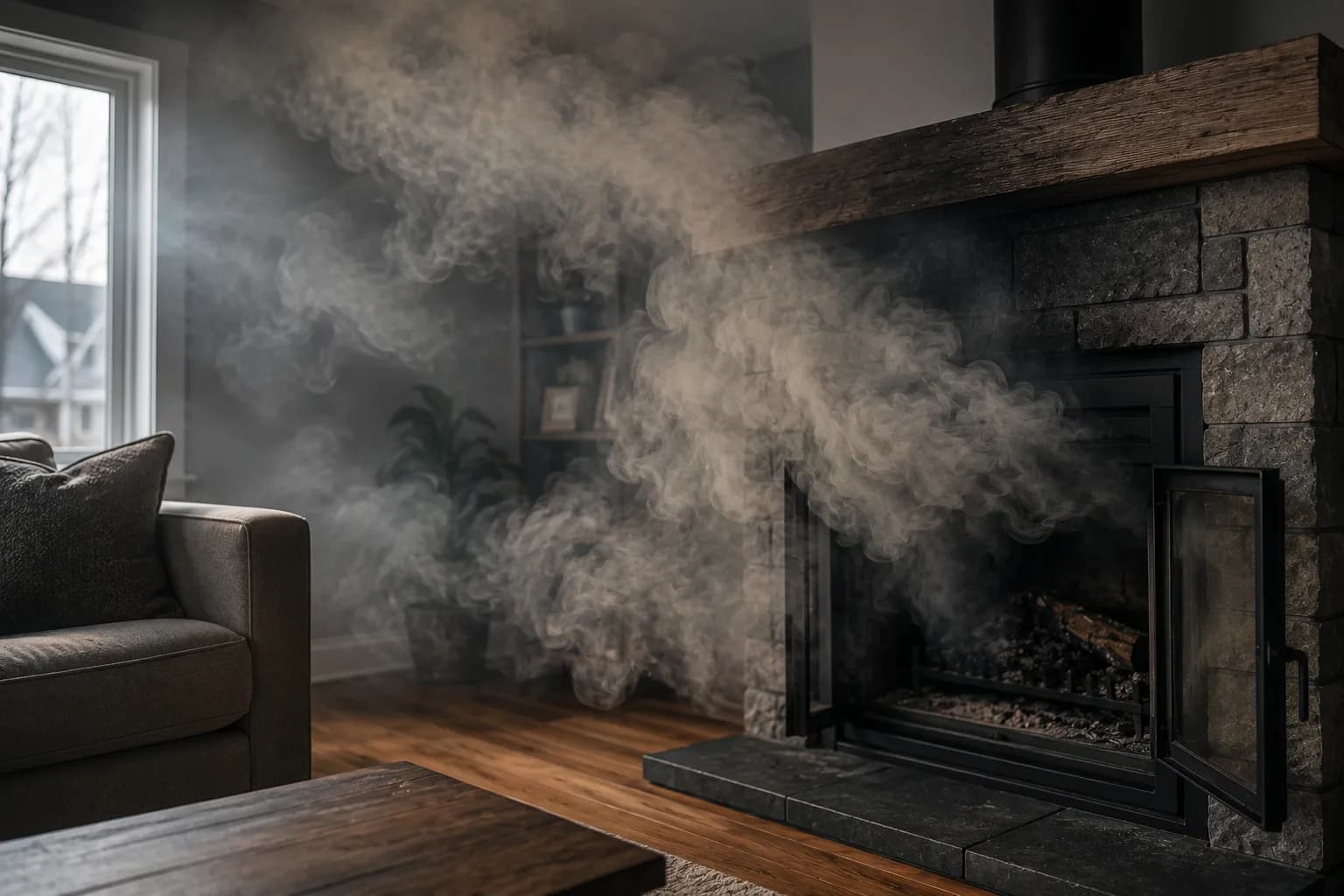
This is almost never dangerous on its own, but it is a signal worth taking seriously: smoke rolling into the room instead of going up the flue is most often caused by poor draft from a cold chimney, a partly closed damper, creosote buildup, or a tightly sealed house creating negative pressure. It's not normal to live with it, and breathing wood smoke regularly carries real health risks along with carbon monoxide exposure. Get your draft and flue checked before your next fire.
What's Happening?
A chimney works because hot air rises: smoke is lighter and warmer than the surrounding air, so it should naturally climb the flue. This upward pull is called "draft." When draft is too weak, smoke cools before it has the strength to rise, sinks back down, and ends up in your living room.
Several things can break that draft: a flue that's still cold when the fire starts, an obstruction inside the flue (creosote, a nest, debris), a damper that isn't opened enough, or even a modern house sealed so tightly that it pulls air backward down the chimney to make up for mechanical ventilation (a range hood, a dryer, an air exchanger).
In most cases it's a combination of two or three of these factors, not one single cause. That's why the same fireplace can draw fine one evening and smoke up the room the next.
Is It Dangerous?
Yes, potentially, if it persists or if the backdraft is sudden and heavy. Wood smoke contains carbon monoxide (CO), an invisible, odorless gas that can be deadly in an enclosed space. An occasional light puff at startup usually isn't an emergency, but frequent, thick smoke, or smoke accompanied by headaches or dizziness, is.
Inspect or act immediately if:
- Your carbon monoxide detector goes off.
- Smoke fills the room quickly, not just a light haze at startup.
- You or a family member feel headaches, dizziness, or nausea while the fireplace is lit.
- You smell smoke persistently even when the fireplace isn't lit (a possible sign of creosote or a cracked flue).
- The backdraft is new and sudden after years without issue (may indicate a blockage, like a bird's nest or partial flue collapse).
In these cases, put out the fire, ventilate the house, and don't relight until it's been inspected.
Most Common Causes
| Cause | Explanation |
|---|---|
| Cold flue at startup | Cold, dense air inside an unheated flue resists smoke's upward pull; this is the most common and easiest to fix cause. |
| Creosote or soot buildup | A thick deposit narrows the usable flue diameter and disrupts airflow, especially if the fireplace hasn't been swept in over a year. |
| Damper not fully opened | A partially closed or stuck damper restricts venting even when everything else is working properly. |
| Negative pressure in the house | A kitchen range hood, a dryer, or a powerful air exchanger can "steal" the air the chimney needs to draw, especially in a tightly sealed home. |
| Blocked or undersized chimney cap | A nest, debris, or an overly restrictive cap blocks air from exiting at the top of the flue. |
| Flue too short or improperly sized | A flue shorter than the recommended height, or a diameter mismatched to the fireplace size, draws poorly by design. |
| Strong wind or a taller nearby roofline | Wind hitting the cap or a taller adjacent structure can create downward pressure that pushes smoke back down. |
Why This Happens in Quebec
Quebec winters combine two things that make backdrafts worse: extreme cold, which cools the flue even further between uses, and the growing trend of sealing homes more tightly for energy efficiency. The result: the flue starts at a bigger disadvantage at ignition, and the house itself pulls harder on the chimney's air to compensate.
Quebec's older housing stock, postwar bungalows, and Montreal-style duplexes and triplexes add another layer: many masonry chimneys built 40, 60, or even 80 years ago were never sized to current standards, and some lack an adequate interior liner, which makes an already marginal draft even worse.
How to Check It Yourself
You can safely observe several signs:
- Check that the damper is fully open before lighting a fire.
- Smell for a creosote odor (like burnt tar) near the fireplace, especially in humid weather: a sign of buildup.
- Try the "rolled newspaper test": light a rolled sheet of newspaper near the fireplace opening before lighting the main fire, to warm the flue and prime the draft.
- Open a nearby window while the fire starts to see if it improves draft (a sign of negative pressure in the house).
- Look outside, ideally from the ground with binoculars, to see if the chimney cap looks blocked or visibly crooked.
Never try to climb onto the roof yourself to inspect the cap, especially in winter or on a sloped or slippery roof. Never put your hand or an improvised camera into a flue that's still warm, and don't try to scrape out creosote yourself: this is a job for a certified chimney sweep with the proper equipment.
Can I Ignore It?
No, not for long. An occasional, mild backdraft you fix by opening a window isn't an emergency every time, but ignoring a recurring problem means continuing to breathe smoke and CO in small doses, and letting creosote build up while you try to diagnose the cause by trial and error.
The longer you wait, the thicker the creosote deposit gets, which worsens the draft further and also raises the risk of a chimney fire, a completely different and more dangerous problem than the backdraft itself.
How Much Does It Cost?
| Service | Estimated Cost (CAD) |
|---|---|
| Draft inspection and diagnosis | $100 - $200 |
| Full sweep (creosote removal) | $150 - $350 |
| Chimney cap repair or replacement | $300 - $800 |
| Damper adjustment or replacement | $200 - $500 |
| Flue liner repair or replacement | $2,500 - $5,000 |
Diagnosis and a sweep resolve most cases. Liner replacement is reserved for flues that are damaged or were undersized from the start, a less common scenario but one that explains persistent backdraft even after a recent sweep.
When to Call a Professional
- Backdraft happens every time you light a fire, not just at startup.
- You haven't had the chimney swept in over a year.
- You smell a strong creosote odor even when the fireplace isn't in use.
- Your CO detector has gone off, even once.
- You recently added a powerful kitchen range hood, an air exchanger, or did major air-sealing work and the backdraft started after.
- You don't know how long it's been since the house last had a chimney inspection since you bought it.
A certified chimney sweep can measure actual draft with a manometer, inspect the full length of the flue with a camera, and identify whether the problem is the flue, the cap, or house pressure, something no homeowner test can confirm with certainty.
Related Questions
- My Chimney Smells Bad: 4 Possible Causes
- Creosote and Chimney Fire Risk: What You Need to Know
- How Often Should a Chimney Be Swept
- How Much Does a Full Sweep vs an Inspection-Only Cost
- 10 Signs Your Chimney Needs Sweeping
- Why Is There Black Soot Around My Fireplace Opening?
- Can I Light My Fireplace This Winter If I've Never Had It Inspected Since Buying the House?
- Why Does My Chimney Make a Whistling Sound When It's Very Windy Outside?
Frequently asked questions
Can I keep using my fireplace if it backdrafts a little smoke at startup?+
A light backdraft right at the start, which stops once the flue warms up, usually isn't dangerous. But if it happens every time or lasts more than a few minutes, get your draft checked before continuing to use the fireplace regularly.
Is it normal for my chimney to draw poorly only in winter?+
Yes, that's common: cold air in the flue takes more effort to get draft going. But if the problem persists once the fire is well established, that's not normal and deserves an inspection.
How much does it cost to fix a draft problem?+
It depends on the cause: a sweep resolves most cases for $150 to $350. A cap or damper issue runs $200 to $800. A liner replacement, less common, costs $2,500 to $5,000.
Should I call a professional immediately if my CO detector goes off?+
Yes. Put out the fire, ventilate the house by opening windows and doors, leave if necessary, and have the chimney inspected before lighting another fire. A CO detector going off is never something to ignore.
Can a kitchen range hood really cause a fireplace to backdraft?+
Yes, especially in a tightly sealed house. A powerful range hood can create negative pressure that forces air back down the chimney to compensate. Opening a nearby window while using both at the same time often helps solve the problem.
Get a free quote
More to know before your project.
By Sophie Bouchard — Certified chimney sweep, residential fire safety specialist
Updated on July 23, 2026