
My Chimney Is Full of Creosote — Am I at Risk of a Chimney Fire?
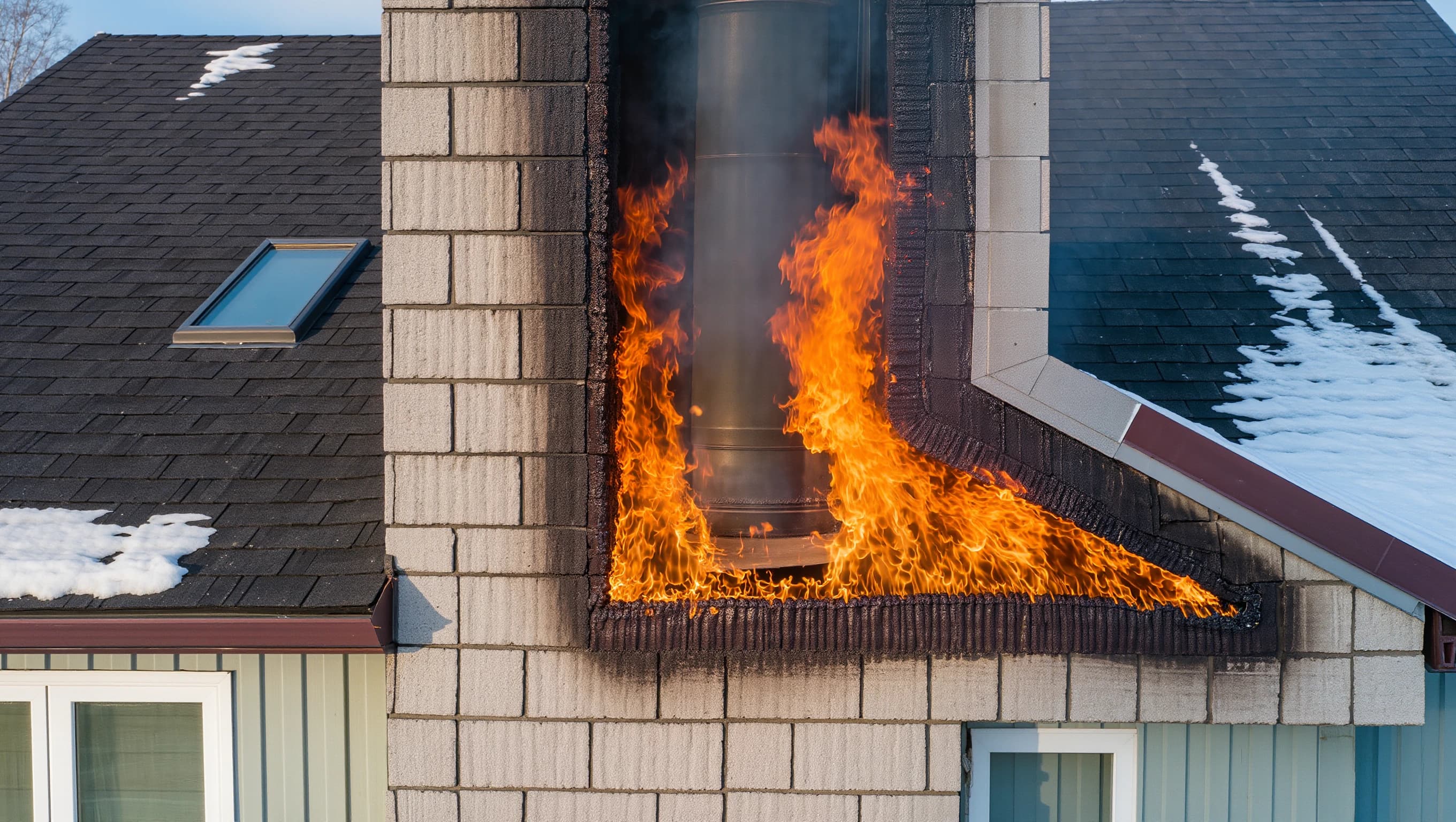
Yes, creosote is dangerous: it's a flammable residue that coats the inside of your flue every time you burn a fire, and it's the leading cause of chimney fires in Canada. It mostly comes from wet or unseasoned wood burned at low temperatures. An annual sweep before the cold season eliminates the risk in the vast majority of cases. If the buildup is thick, glossy, or cracked, stop lighting fires and have the flue inspected before you continue.
What's Happening?
When wood burns, it releases smoke loaded with unburned particles, tar, and water vapor. As this rises through a flue that's relatively cool, especially at the start or end of a fire, those vapors condense on the inner walls and form a sticky deposit: creosote.
Over time and with repeated fires, this deposit thickens and hardens. There are three stages: a flaky, easy-to-remove powder (stage 1), a crusty flaked or scaled deposit (stage 2), and a hard, glossy black glaze resembling tar (stage 3), the most dangerous form, because it's highly flammable and very hard to remove with a standard brush.
A chimney fire happens when this accumulated creosote suddenly ignites inside the flue, often triggered by an unusually hot fire. Temperatures inside the flue can then exceed 1000 °C within minutes.
Is It Dangerous?
Yes, unambiguously. A chimney fire can crack the flue, ignite adjacent framing, and spread to the entire house. This is a safety emergency, not a minor maintenance inconvenience.
Inspect or act immediately if:
- You see a black, glossy, hard deposit (glazed creosote, stage 3)
- The creosote layer exceeds 3 mm thick inside the flue
- You hear a train-like roar or sustained rumbling from the chimney during a fire (a chimney fire in progress: get everyone out and call 911)
- Dense smoke or a burning smell escapes from flue joints or the attic
- A sweep has never been done or was done more than 2 years ago
Most Common Causes
| Cause | Explanation |
|---|---|
| Wet or unseasoned wood | Green wood (seasoned less than 6 months) produces far more smoke and water vapor, meaning more creosote |
| Low-temperature fires | A fire smoldering overnight with reduced air intake cools smoke before it exits, promoting condensation |
| Lack of regular sweeping | Without annual cleaning, each season adds another layer that hardens onto the previous one |
| Unprepared softwood | Conifers (spruce, fir) burn dirtier if not fully dry |
| Oversized or poorly insulated flue | A flue too wide for the stove or a poorly insulated exterior chimney cools smoke faster |
| Insufficient draft | Weak draft slows smoke evacuation, keeping it in contact with cold walls longer |
Why This Happens in Quebec
The wood-heating season is long in Quebec, often running from November to April, which multiplies the number of fires and the potential creosote buildup. Many homes, especially in rural areas, rely on a wood stove or fireplace as their main backup heat source on the coldest nights, with fires often left to smolder for hours.
The stock of century-old masonry chimneys, common in Montreal triplexes and older ancestral homes, adds another factor: some flues are unlined ("no liner"), which are harder to inspect and more vulnerable to damage during a chimney fire. Quebec home insurers are also increasingly requiring a recent chimney sweep certificate to maintain coverage.
How to Check It Yourself
You can do a simple, safe visual check:
- With a flashlight, look up from the firebox or the sweep access door
- Gently scratch a small area with a metal object (like a key) to gauge the thickness and texture of the deposit
- Smell for a persistent cold-smoke odor in the house, which can indicate significant buildup
- Check the date on your last sweep certificate
Never climb onto the roof yourself to inspect the chimney cap, especially in winter, and don't attempt to remove glazed (stage 3) creosote with a standard brush — it requires professional chemical or mechanical treatment.
Can I Ignore It?
No. Creosote doesn't disappear on its own and thickens with every additional fire. The longer you wait, the higher the chimney fire risk and the harder (and more expensive) the cleanup becomes once the layer hardens into glaze. A flue neglected for several years may need intensive mechanical sweeping, or even a liner replacement if a chimney fire has already damaged the flue.
How Much Does It Cost?
| Service | Estimated Price |
|---|---|
| Inspection only | $80 - $150 |
| Standard annual sweep | $150 - $350 |
| Glazed creosote (stage 3) sweep | $300 - $600 |
| Flue repair after a chimney fire | $1,000 - $5,000+ |
When to Call a Professional
- Before every heating season, even if the flue looks clean to the eye
- If you've never had your chimney swept or it's been more than a year
- If you see a glossy black deposit rather than a gray powder
- If you've ever had a chimney fire, even a minor one, before lighting another fire
- If you burn more than 3 cords of wood per winter (heavy use)
Related Questions
- How a Clogged Dryer Vent Can Start a Fire
- How Often Should a Chimney Be Swept
- How Much Does a Full Sweep vs an Inspection-Only Cost
- Creosote, Draft, Cap: The Chimney Glossary
- 10 Signs Your Chimney Needs Sweeping
- Can I Light My Fireplace This Winter If I've Never Had It Inspected Since Buying the House?
- Home Insurance and Chimney Sweep Certificates: What to Know
- Why Is There Black Soot Around My Fireplace Opening?
Frequently asked questions
Can I remove creosote myself with a chimney brush?+
For a light powdery deposit (stage 1), a suitable brush may be enough if you're comfortable doing it safely. But once the deposit is crusty or glazed, a standard brush won't remove it and you risk believing the flue is clean when it isn't.
Is it normal to have some creosote after one heating season?+
Yes, a light powdery deposit is normal even with good burning habits. That's exactly why an annual sweep before the next winter is recommended, before that deposit thickens and hardens.
How long before a chimney fire can actually start?+
It can happen with the very first unusually hot fire of the season if creosote built up over previous years is already at an advanced stage. There's no fixed timeline: it's the thickness and type of deposit that determine the risk, not the time elapsed.
Can my smoke detector catch a chimney fire starting?+
Not necessarily, especially at first, since the fire occurs inside the closed flue. The first sign is often a roaring or train-like sound, or unusually dense smoke coming from the roof. A carbon monoxide detector remains essential for any wood-burning fireplace regardless.
Does properly seasoned firewood really reduce creosote?+
Yes, significantly. Wood seasoned for at least 6 to 12 months, with a moisture content under 20 percent, burns hotter and cleaner, which greatly reduces creosote condensation inside the flue.
Get a free quote
More to know before your project.
By Sophie Bouchard — Certified chimney sweep, residential fire safety specialist
Updated on July 23, 2026