
I Hear Noise in My Ducts: Squirrel, Raccoon, or Dead Animal?
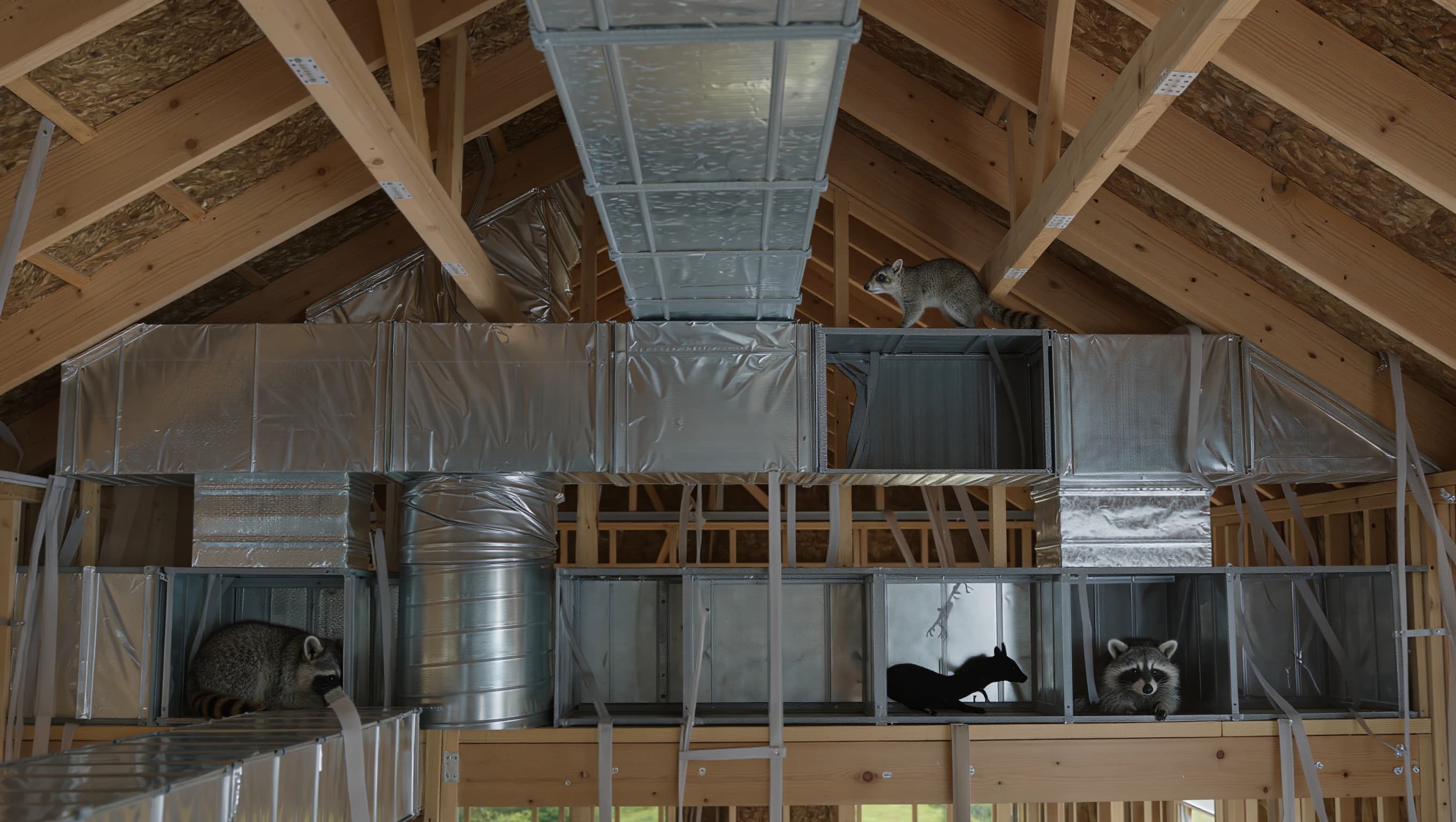
Noise in your ducts or chimney almost always comes from an animal that got in, dead or alive. A quick, light scratching suggests a squirrel, a heavier sound suggests a raccoon, and a smell appearing without noise suggests a dead animal. This is generally not an immediate safety emergency, but you should act quickly before the animal causes damage or blocks the flue.
What's Happening?
Chimney and duct flues offer a warm, dry shelter protected from predators, exactly what a small animal looks for in fall or spring. Once inside through a missing chimney cap or a poorly screened vent outlet, the animal can move around, scratch, or build a nest.
The sound you hear depends on the animal and its behavior. A squirrel makes quick, light scratching sounds, often in the morning or evening. A raccoon is heavier and louder, with slower movements and sometimes growling. A trapped bird produces panicked wing-flapping against the metal walls.
If the noise suddenly stops and a smell appears a few days later, the animal likely died in the flue, often trapped without being able to climb back up or down.
Is It Dangerous?
An animal in the flue is generally not an immediate danger to the home's occupants, but the situation can develop into several real risks if left untreated.
Inspect or act quickly if:
- The noise gets louder or more frequent
- You smell decay that's getting stronger
- The flue seems blocked (poor draft, smoke backing up)
- You see nesting material (twigs, leaves) falling into the fireplace
- The animal could chew an electrical wire near the flue
A nest or dead animal can partially block the flue and prevent smoke or combustion gases from venting properly, which becomes dangerous if you light a fire without checking first.
Most Common Causes
| Cause | Explanation |
|---|---|
| Live squirrel | Seeking shelter, enters through a missing or damaged chimney cap |
| Live raccoon | A female looking for a place to give birth, especially in spring |
| Dead animal | Trapped in the flue after entering, died from starvation or heat |
| Bird nest | Partially blocks the flue and can catch fire |
| Missing or damaged chimney cap | Leaves a direct, unobstructed opening |
| Unscreened vent outlet | Allows squirrels or small rodents into the home's ducts |
Why This Happens in Quebec
Fall and spring in Quebec are peak activity periods for squirrels and raccoons seeking shelter before winter or a safe spot for their young. Chimney caps damaged by our climate's frequent freeze-thaw cycles create exactly the opening these animals need.
In neighborhoods with lots of mature trees, like many residential areas of Montreal and Quebec City, the close proximity of squirrels to rooftops makes this issue especially common. Older homes, with original chimney caps that are sometimes rusted or missing entirely, are at the highest risk.
How to Check It Yourself
You can safely observe and listen:
- Note the time of day the noise happens and its nature (light, heavy, regular)
- Look at the ground around the house to see if the chimney cap is visible and intact
- Smell near the fireplace or vents for an unusual odor
- Check if daylight passes through any visible duct screens from inside
Never climb onto the roof to inspect or try to remove an animal yourself. Don't attempt to capture or dislodge an animal, dead or alive, from the flue: a trapped animal can panic and injure itself, and a decomposing animal poses a health risk to handle without proper equipment.
Can I Ignore It?
No, you shouldn't ignore a confirmed animal in the flue, even if the noise seems to have stopped. A live animal will keep scratching, potentially damaging the inside of the flue or chewing materials, and a female may give birth, which multiplies the problem.
A dead animal left unremoved keeps decomposing, worsening the smell over time and potentially attracting insects or other scavengers. The nest left behind, even after the animal leaves, remains a fire and blockage risk until it's removed.
How Much Does It Cost?
| Service | Estimated Cost |
|---|---|
| Camera inspection | $100 - $175 |
| Live animal removal | $150 - $400 |
| Dead animal removal and cleanup | $200 - $450 |
| Screened cap installation | $200 - $600 |
| Full sweep after removal | $150 - $350 |
When to Call a Professional
- You hear clear movement in the flue or chimney
- A decay smell appears, even faintly
- You see nest debris falling into the fireplace or ducts
- Draft seems reduced or smoke backs up into the house
- You suspect a female gave birth inside the flue
An animal removal specialist or certified sweep has the equipment to remove the animal without getting hurt, clean up residue, and install protection to prevent it from happening again.
Related Questions
- My Chimney Smells Bad: 4 Possible Causes
- Creosote and Chimney Fire Risk: What You Need to Know
- How a Clogged Dryer Vent Can Start a Fire
- 10 Signs Your Chimney Needs Sweeping
- My House Smells Weird But I Can't Tell If It's the Chimney, the Ducts, or the Plumbing
- Can I Light My Fireplace This Winter If I've Never Had It Inspected Since Buying the House?
- How Often Should a Chimney Be Swept
Frequently asked questions
Can the animal get out on its own?+
Sometimes, especially a healthy adult, but many get trapped because of the flue's shape or a cap blocking the exit. Don't count on it if the noise persists more than a few days.
Can I light a fire to scare the animal away?+
No, never. It can burn or kill a live animal, create an unbearable smell of burning flesh, and a panicked animal may come down into the house instead of leaving. Call a professional instead.
Does the smell of a dead animal in the flue go away over time?+
Yes, eventually, once decomposition is complete, but it can take several weeks and the smell may spread through the whole house in the meantime. Quick removal is still the best option.
Can a raccoon damage my roof or flue?+
Yes, a raccoon can widen an existing opening by scratching or chewing, which worsens the problem and makes it easier for other animals to get in afterward.
Should I call a professional right away if I hear noise at night?+
Not necessarily in the middle of the night, unless there's an obvious emergency like smoke or a strong odor. But schedule the inspection the very next morning rather than waiting several days.
Get a free quote
More to know before your project.
By Sophie Bouchard — Certified chimney sweep, residential fire safety specialist
Updated on July 23, 2026