
Why Is There Black Soot Around My Fireplace Opening?
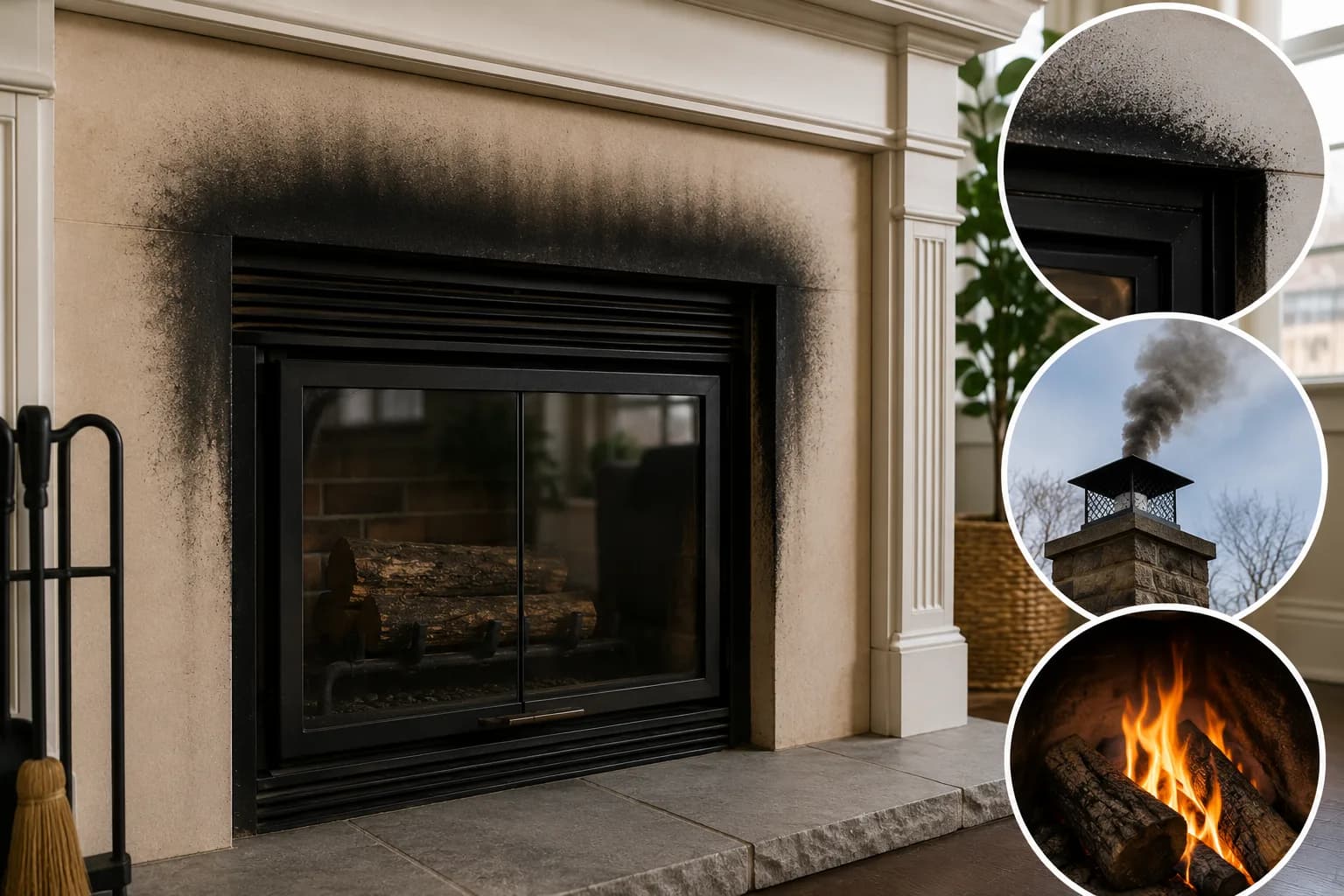
Black soot around your fireplace opening is usually a sign of weak draft or incomplete combustion, not an immediate danger. The most common cause is a fire starved of air or a partially blocked flue. It's not urgent in most cases, but it deserves an inspection before your next fire, especially if the stain keeps growing with each use.
What's Happening?
When wood burns properly, with enough oxygen and good flue evacuation, almost all the smoke exits through the chimney. If combustion is incomplete or draft is weak, some of that particle-laden smoke drifts back slightly into the room instead of rising, and settles as black soot on the lintel and sides of the opening.
It's essentially the same phenomenon as the creosote forming inside the flue, just visible this time outside the fireplace, where the human eye notices it first.
Is It Dangerous?
In the vast majority of cases, no — it's mostly a cosmetic issue and a maintenance signal worth watching. But in certain situations, it deserves immediate attention.
Inspect or act immediately if:
- The soot comes with a persistent smoke smell in the house, even with no fire lit
- Your carbon monoxide detector goes off or you get unexplained headaches near the fireplace
- Smoke visibly enters the living room while you're burning a fire instead of going up
- The soot stain appears suddenly after years with no issue (can signal a recent flue obstruction, like an animal nest)
Most Common Causes
| Cause | Explanation |
|---|---|
| Insufficient draft | A cold, too-short, or poorly sized flue struggles to create enough suction to clear all the smoke |
| Wet or unseasoned wood | Produces more dense smoke and particles that drift back before being cleared |
| Fireplace door left open too long | A fire burning with the door open and no damper properly set loses optimal suction |
| Fireplace too large for the flue | An oversized opening relative to the flue diameter creates an air imbalance |
| Partial flue obstruction | Accumulated creosote, an animal nest, or debris that reduces smoke passage |
| Damper not fully open | A damper not fully opened limits evacuation even with a good flue |
Why This Happens in Quebec
Modern Quebec homes are increasingly airtight for energy efficiency, which paradoxically reduces the air available to feed a fireplace fire and can weaken draft. Older homes, meanwhile, often have unlined masonry chimneys where the flue cools faster between uses, slowing draft buildup every time you light a fire.
Prefabricated fireplaces installed in suburban homes from the 1970s to 1990s pose a classic problem too: their insulated metal flue is often undersized for the room's volume.
How to Check It Yourself
- Watch the flame color: dull orange with lots of white or gray smoke signals incomplete combustion; a bright orange-yellow flame with little smoke is normal
- Check that the damper opens fully before every fire
- Watch whether the soot forms a stain that gradually spreads from one season to the next, which indicates worsening
- Don't clean soot off masonry with abrasive or acidic products yourself — it can permanently stain or damage the brick and mortar
Can I Ignore It?
It depends on the progression. A light, stable mark from one year to the next can be monitored without urgency. But if the stain is growing, comes back quickly after cleaning, or comes with smoke entering the room, that's a sign the draft problem or obstruction is getting worse, and waiting only increases the risk of undetected creosote buildup in the flue.
How Much Does It Cost?
| Service | Estimated Price |
|---|---|
| Soot cleaning on brick/mortar | $100 - $250 |
| Draft and flue inspection | $80 - $150 |
| Full sweep | $150 - $350 |
| Sealing repair (prefabricated fireplace) | $200 - $500 |
When to Call a Professional
- Before your first fire of the season if the soot stain has grown since last year
- If smoke enters the living room more than once, not just on the first light
- If you've never had your fireplace's draft checked
- If soot returns quickly after cleaning, a possible sign of persistent obstruction
Related Questions
- My Chimney Smells Bad: 4 Possible Causes
- Why Does Smoke Come Into My Living Room Instead of Going Up the Chimney?
- Creosote and Chimney Fire Risk: What You Need to Know
- How Often Should a Chimney Be Swept
- 10 Signs Your Chimney Needs Sweeping
- Can I Light My Fireplace This Winter If I've Never Had It Inspected Since Buying the House?
- Why Does My Chimney Make a Whistling Sound When It's Very Windy Outside?
Frequently asked questions
Is it normal to have a little soot near the opening after each season?+
A very light gray mark that stays stable year to year isn't concerning. What should raise a flag is a stain that grows, gets darker, or comes back quickly after cleaning.
Can I keep using my fireplace if I have soot around the opening?+
Generally yes for one or two more fires while you schedule an inspection, unless you notice smoke entering the room or a persistent smell, in which case it's better to stop until the draft is checked.
How much does it cost to clean soot off the fireplace brick?+
Expect roughly $100 to $250 for professional masonry cleaning, depending on how extensive the stain is and the type of brick or mortar.
Do I need to call a professional right away?+
Not urgently if it's purely cosmetic, but schedule an inspection before your next fire if the stain has grown. However, stop right away if smoke enters the living room or a CO detector goes off.
Get a free quote
More to know before your project.
By Sophie Bouchard — Certified chimney sweep, residential fire safety specialist
Updated on July 23, 2026