
My House Smells Weird But I Can't Tell If It's the Chimney, the Ducts, or the Plumbing
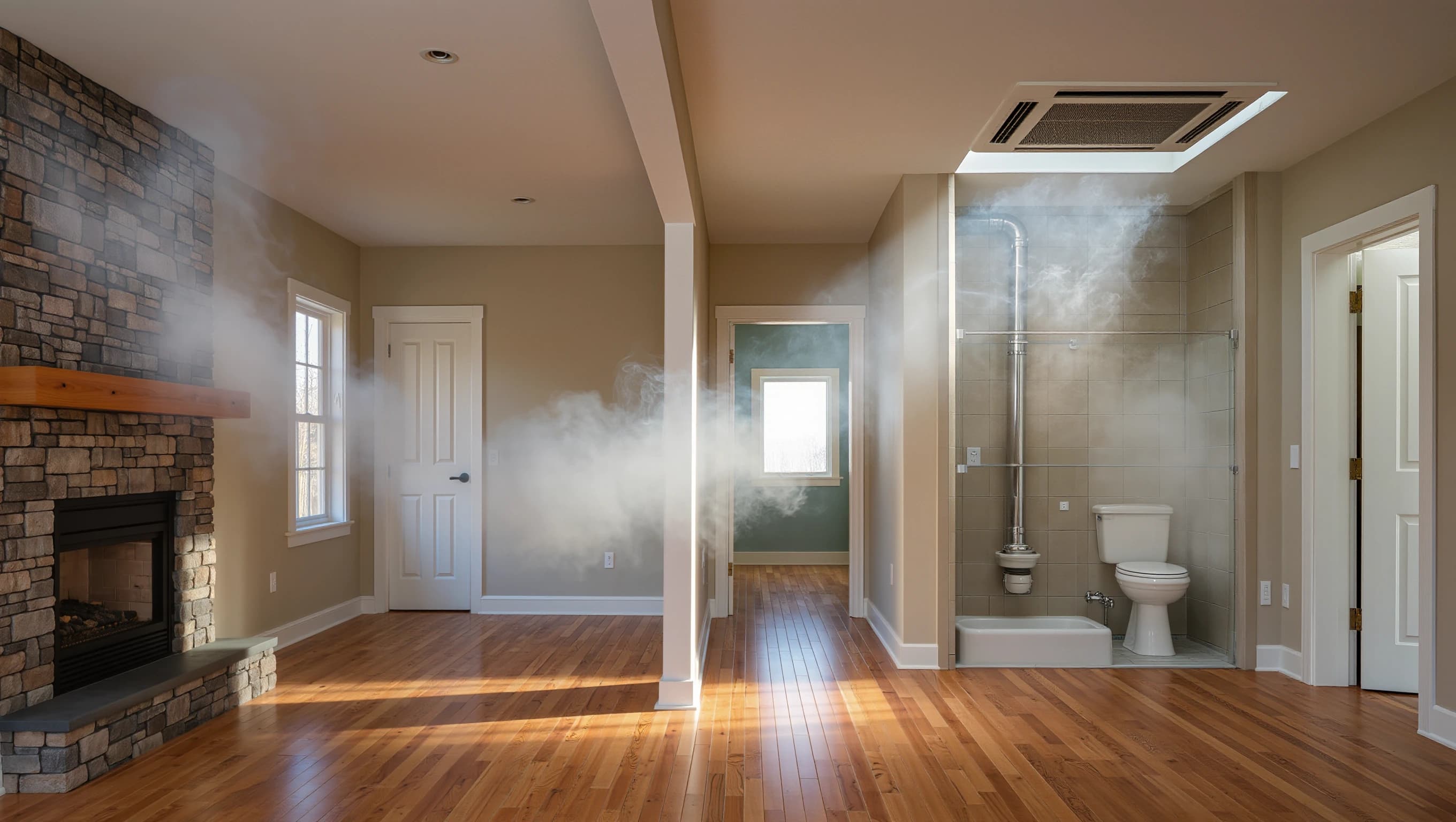
An unusual smell lingers in the house, with no obvious source, leaving you to guess whether the problem comes from the chimney, the ventilation ducts, or the plumbing. Fortunately, the exact type of smell is generally a reliable clue.
The triage table by smell type
| Smell type | Most likely source | Who to call |
|---|---|---|
| Smoke or burnt wood smell with no active fire | Chimney, backdraft, or creosote | Chimney sweep |
| Burning electrical or hot plastic smell | Electrical system or fan motor | Electrician |
| Rotten egg or sulfur smell, especially from hot water | Water heater or sacrificial anode | Plumber |
| Sewage smell, especially after rain | Dried-out floor drain or backup | Plumber |
| Musty smell seeming to come from air vents | Ventilation or AC ducts | Duct cleaning specialist |
| Gas smell (distinctive rotten egg, sharper) | Natural gas leak, potentially an emergency | Gas provider first, then a professional |
Why the timing of the smell is a key clue
A smell that appears only when the heating or cooling system starts points to the ducts or the appliance itself, while a smell that persists regardless of whether a system is running suggests a fixed source instead, like plumbing or buildup in an enclosed space such as a floor drain.
The one case where you should never try to self-diagnose
A natural gas smell, often described as a distinctive rotten-egg odor sharper than a water heater's, is an emergency that should never wait for a diagnosis attempt — leave the house immediately and contact the gas provider from outside.
How to refine the diagnosis before calling
Note exactly when the smell is strongest, which room it seems most concentrated in, and whether it coincides with the use of a specific appliance (heating, hot water, ventilation). These details, shared with the professional contacted, considerably speed up the initial diagnosis.
What to do if the smell doesn't match any clear category
An ambiguous smell that doesn't clearly fit a category is worth starting with whichever professional is closest to where the smell seems strongest, even if that means being redirected to another specialist after an initial assessment.
Frequently asked questions
What should I do immediately if I smell natural gas?+
Leave the house immediately without flipping any electrical switches, and call the gas provider from outside or a neighbor's home.
Is a musty smell in the ducts dangerous to health?+
It can indicate mold buildup affecting indoor air quality, particularly concerning for people with allergies or asthma.
Why do some plumbing smells only show up occasionally?+
An intermittent sewage smell is often tied to a trap that dries out then refills depending on use, a common phenomenon for rarely used floor drains.
Can I just ignore a mild smell that doesn't seem to be getting worse?+
Except for a gas smell, which always demands immediate action, a mild, stable smell can be monitored for a few days before calling, but should never be ignored indefinitely.
Get a free quote
More to know before your project.
By Sophie Bouchard — Certified chimney sweep, residential fire safety specialist
Updated on July 23, 2026