
How Often Should a Chimney Be Swept
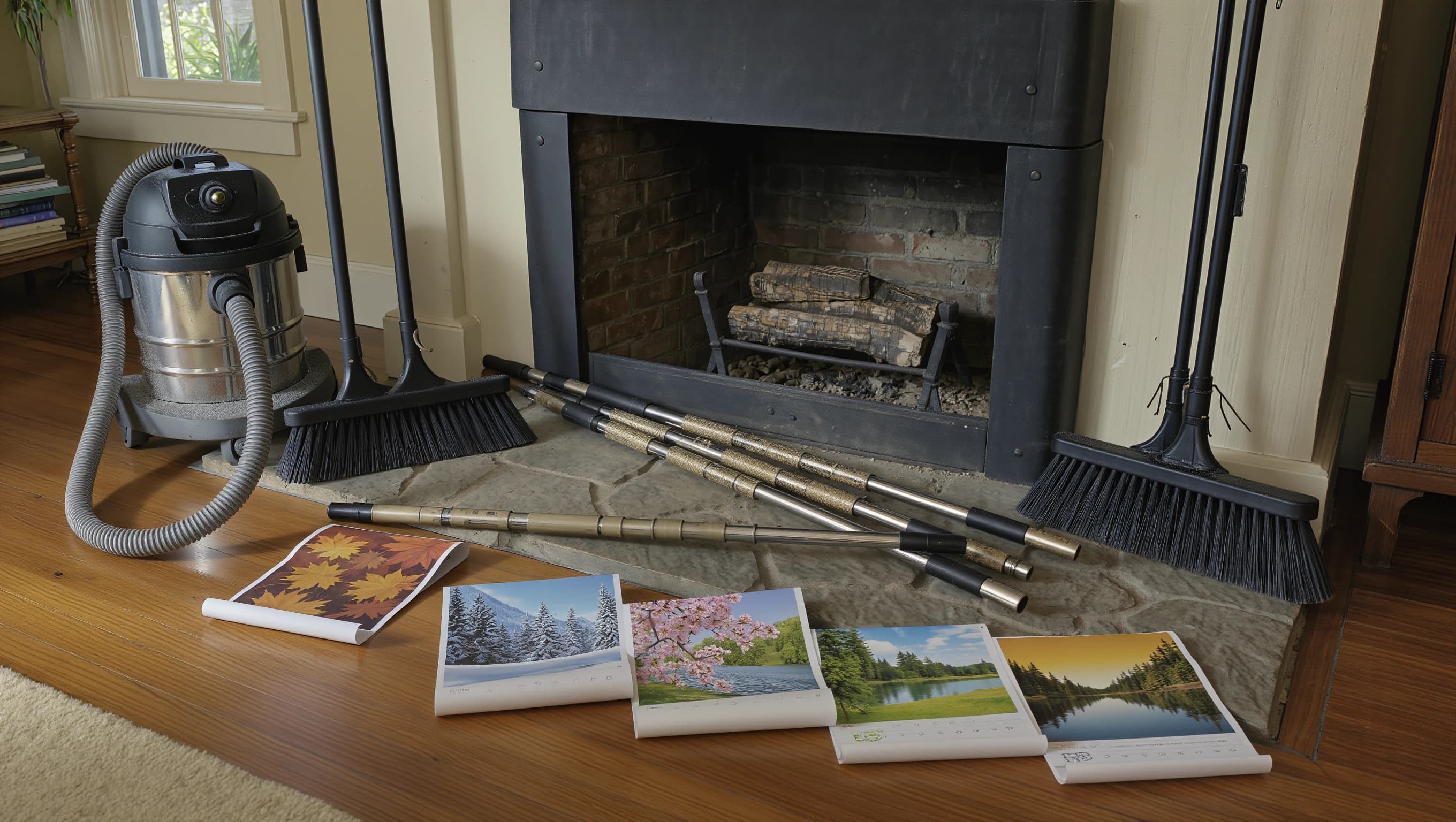
The standard recommendation — an annual sweep, ideally in fall before heating season — suits most households, but your actual frequency should depend on your usage, not just the calendar.
Recommended frequency by usage type
| Usage type | Recommended frequency |
|---|---|
| Occasional (less than a cord of wood per winter) | Once a year, in fall |
| Regular (several times a week all winter) | Once a year + mid-season check |
| Primary wood heating | Twice a year (before and during the season) |
| Gas fireplace | Annual inspection (less creosote, but ignition system safety to verify) |
| After a specific event | Immediately, regardless of the usual schedule |
Occasional use (less than a cord of wood per winter)
An annual sweep is still recommended, even with light use — creosote buildup isn't just about the amount of wood burned, but also combustion quality and draft, two factors that vary independently of total volume used.
Regular use (frequent supplemental heating)
Consider a mid-season check if you use the fireplace several times a week all winter. This second check catches buildup progressing faster than expected, before it reaches a dangerous grade in the middle of heating season.
Primary wood heating
If a wood stove is your primary heat source rather than an occasional amenity, sweeping twice a year — before and during the season — is often necessary, particularly if you sometimes burn wood that isn't fully dry due to limited access to well-seasoned wood.
Gas fireplace
Less prone to creosote buildup than a wood system, but still needs an annual inspection to check fitting airtightness, proper ignition system function, and absence of obstruction — a carbon monoxide safety issue, not simply a cosmetic maintenance matter.
After a specific event
An immediate inspection, outside the usual schedule, is recommended after: an earthquake or minor tremor that can crack masonry, a severe storm, or if you suspect a chimney fire occurred without being actively brought under control — see our article on signs a chimney fire went unnoticed.
What a full sweep covers
Beyond simple mechanical cleaning, a professional sweep generally includes an inspection of the flue, liner, cap, and flashing — a chance to catch an emerging structural problem before it worsens into a major repair.
Frequently asked questions
Does my insurer require an annual sweep certificate?+
Many Quebec insurers require it to maintain coverage for a home with a fireplace or wood stove — check your policy's terms.
Can I space it out more if I only burn very dry wood?+
Well-dried wood slows the buildup rate but doesn't eliminate it — an annual sweep is still recommended even with the best burning practices.
Does a new chimney need sweeping in its first year?+
Yes, particularly if used regularly — creosote buildup starts from the very first fire, regardless of the installation's age.
Get a free quote
More to know before your project.
By Sophie Bouchard — Certified chimney sweep, residential fire safety specialist
Updated on July 23, 2026