
My Heat Pump Is Making a Clicking or Grinding Noise: Is It Serious?
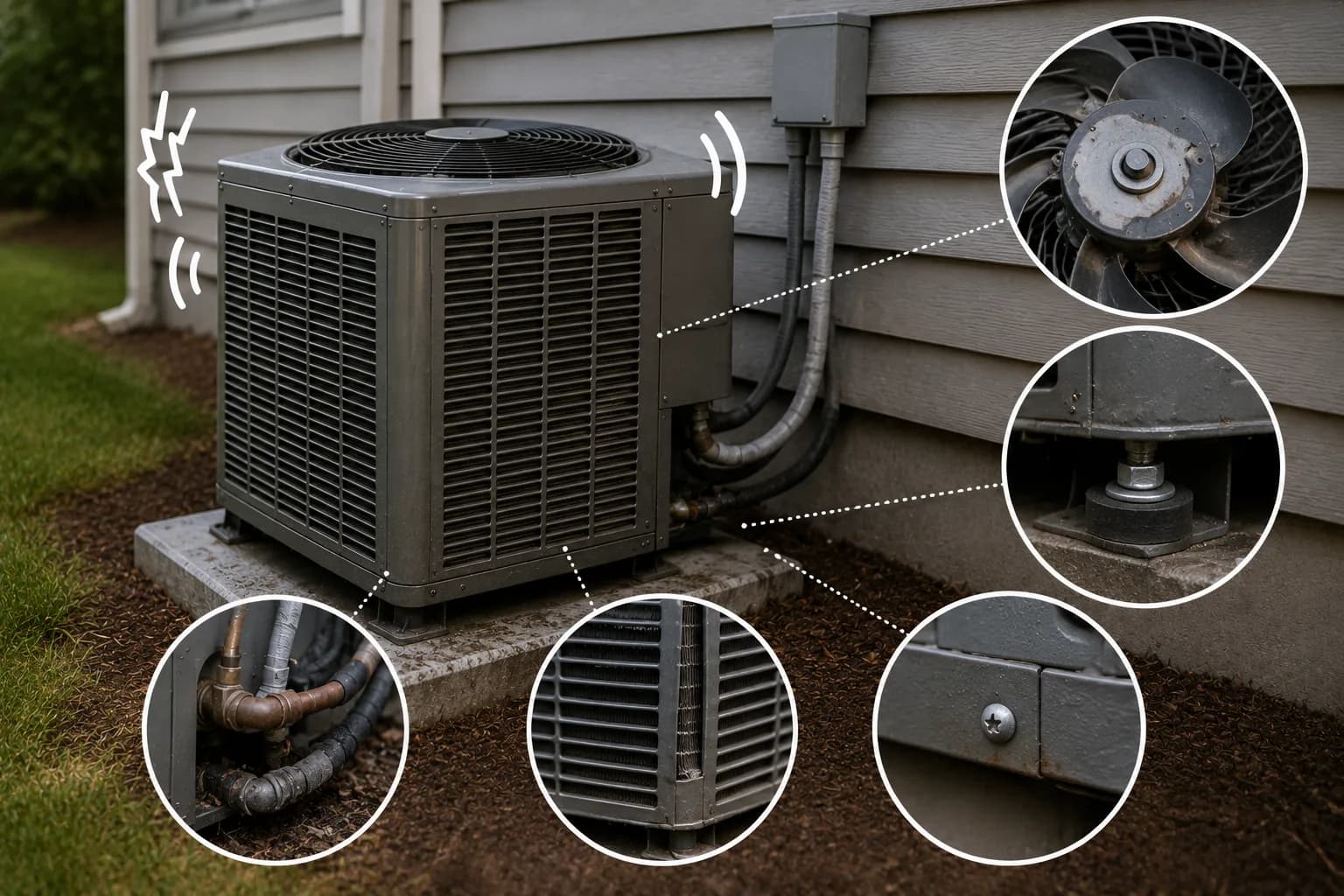
A brief click when the heat pump starts or stops is almost always normal. A sound that continues through the whole cycle — metallic grinding, loud humming with vibration, or hissing — almost always points to one specific part wearing out or failing: the fan, a bearing, a capacitor, or a refrigerant leak. This usually isn't a safety emergency, but waiting too long often turns a $150 repair into a motor or compressor replacement. Shut the unit off if the noise is intensifying and get it inspected promptly.
What's Happening?
An outdoor heat pump runs on several mechanical and electrical parts working together: a fan that pulls air through the coil, a compressor that pressurizes refrigerant, a capacitor that gives the electrical push needed at startup, and a set of relays that control the on/off cycles. Running normally, all of that produces a soft, steady hum, barely audible from a few meters away.
The moment a new noise shows up, it almost always comes from just one of these parts. The exact type of sound — click, grind, hum, or hiss — maps to a specific mechanism, which usually lets you guess the cause before the technician even arrives.
The most important distinction is simple: does the noise last a second at startup, or does it continue while the unit is running? A one-time sound and a continuous sound almost never share the same cause, and they don't carry the same urgency.
Is It Dangerous?
In the vast majority of cases, no — an abnormal heat pump noise isn't an immediate danger to you or your home. It's mainly a signal of mechanical or electrical wear that will get worse if ignored, not a fire or poisoning risk on the scale of a gas furnace issue.
There are still situations where it's better to cut power at the breaker and wait for a technician rather than let the unit keep running:
- A burning or hot-plastic smell accompanies the noise
- The breaker trips every time the unit tries to start
- You see smoke, sparking, or scorch marks on the control box
- The noise appeared suddenly alongside a noticeable drop in heating or cooling output
In those cases, it's no longer just about the noise — it's a sign the electrical or mechanical problem is progressing quickly, and continuing to run the unit can make the damage worse by the hour.
Most Common Causes
| Cause | Explanation |
|---|---|
| Relay or check valve at startup/shutdown | Brief one-second click, normal, unrelated to wear |
| Debris caught in the outdoor fan | A branch, gravel, or ice rubbing against the grille or blades |
| Unbalanced fan or damaged blade | Clicking or vibration that continues through the whole cycle |
| Worn motor bearing | Sharp, continuous metallic grinding — can't be lubricated back to health, gets replaced |
| Failing start capacitor | Loud humming with noticeable vibration |
| Loose electrical connections in the control box | Intermittent humming or electrical clicking |
| Refrigerant leak at a fitting or valve | Continuous hissing or whistling under pressure |
Why This Happens in Quebec
A heat pump in Quebec runs almost year-round — heating in winter, cooling in summer — which wears its moving parts faster than in a climate where the unit only runs three months a year. Freeze-thaw cycles also force the fan and outdoor cabinet to deal with ice, wet snow that refreezes, and debris kicked up by wind or a snowblower passing nearby.
The wide temperature swings between January and July put particular stress on capacitors, which lose capacity through repeated hot-cold cycling — one reason capacitor failures are so common here. For any repair involving refrigerant, make sure the technician holds the required certifications: handling refrigerant is regulated, and it isn't a job to hand to just anyone.
How to Check It Yourself
You can do a first-pass sort with no tools or expertise:
- Listen for when the noise happens: only at startup/shutdown, or throughout the whole cycle
- Look at the outdoor unit from a distance, with the power off: is there a branch, plastic bag, or ice visibly caught in the grille?
- Note whether the noise comes with a drop in performance (less heat or cooling than before)
- Put your hand on the interior wall near the wall unit: strong vibration often goes along with an electrical issue
What you should never do yourself: remove the control box panel, touch the electrical connections inside the unit, handle refrigerant lines, or test a capacitor with a multimeter — a capacitor can hold a dangerous electrical charge even with the unit off and unplugged.
Can I Ignore It?
It depends entirely on the type of noise. A brief click at startup: yes, you can ignore it completely, it's normal. A continuous noise — grinding, loud humming, or hissing: no, don't ignore it.
A continuous bearing grind almost always ends in the motor seizing abruptly, which can damage surrounding electrical components. A hissing refrigerant leak forces the compressor to work harder every day to produce the same output, shortening its lifespan. In both cases, waiting turns a repair costing a few hundred dollars into a motor or even compressor replacement — often several thousand dollars — because one failing part ends up damaging others.
How Much Does It Cost?
| Service | Estimated Cost |
|---|---|
| Diagnostic inspection only | $100 - $150 |
| Minor repair (capacitor, electrical connection, debris cleanout) | $150 - $350 |
| Major repair (fan motor, bearing) | $350 - $600 |
| Repair involving a refrigerant leak seal and recharge | $400 - $700 |
These figures are for a targeted repair, not a full heat pump replacement. If the compressor itself is damaged — usually because another problem was ignored for too long — the bill can climb toward a partial or full unit replacement, well beyond these numbers.
When to Call a Professional
- The noise continues through the whole cycle rather than lasting a second at startup
- You hear metallic grinding or screeching, even faintly
- Loud humming comes with vibration in the wall or the unit
- Continuous hissing is audible near the outdoor unit
- The breaker trips when the unit tries to start
- The noise appeared after a storm, a thaw followed by a freeze, or a snowblower pass nearby
- Heating or cooling performance drops at the same time the noise appears
A certified technician inspects the fan and its blades, tests the capacitor with a multimeter, checks the tightness of connections in the control box, and measures refrigerant pressure if a leak is suspected — checks that require tools and expertise a homeowner normally doesn't have, and that isolate the exact cause in a single visit instead of swapping parts by guesswork.
Related Questions
- Why Does My Heat Pump Make a Repeated Clicking Sound Right Before It Starts?
- My Heat Pump Is Covered in Frost or Ice in Winter: Is That Normal?
- Why Is My AC Freezing Up?
- Why Is My AC Leaking Water?
- My AC Is Running All Day, Is It Broken?
- When to Replace Your Heat Pump: 7 Signs to Watch For
- Why Does My Heat Pump Smell Like Burning the First Time I Turn It On For Summer?
- Spring Heat Pump Maintenance Checklist
- Who Do I Call If My Breaker Trips Every Time My Heat Pump Starts: an Electrician or an HVAC Technician?
Frequently asked questions
Is an occasional noise normal?+
A single one-second click when the heat pump starts or stops is normal — it's the relay or check valve engaging. If that same sound repeats throughout the whole run cycle, it's a different problem and the unit should be checked.
Can I keep using my heat pump if it's making noise?+
For a brief click at startup, yes, no problem. For metallic grinding, continuous hissing, or strong vibration, it's better to shut the unit off at the breaker and have it inspected before running it again, so a failing part doesn't damage others.
How much does it cost to fix a noisy heat pump?+
It depends on which part is at fault: a minor repair like a capacitor typically costs $150 to $350, while a fan motor or a worn bearing runs closer to $350 to $600. A proper diagnosis confirms the exact amount before any work starts.
Can the noise come from the indoor unit instead of the outdoor unit?+
Yes. Clicking from the indoor wall unit often points to a misaligned motorized louver or an indoor fan rubbing against an obstruction — generally a cheaper fix than an outdoor unit problem.
Can annual maintenance prevent these noises?+
Largely, yes. Tightening electrical connections, cleaning the fan, and checking the refrigerant charge during an annual tune-up catches most causes of abnormal noise before they turn into a costly breakdown.
Get a free quote
More to know before your project.
By Marc Tremblay — Certified HVAC technician, 12 years of experience in Quebec
Updated on July 23, 2026