
My Heat Pump Is Covered in Frost or Ice in Winter: Is That Normal?
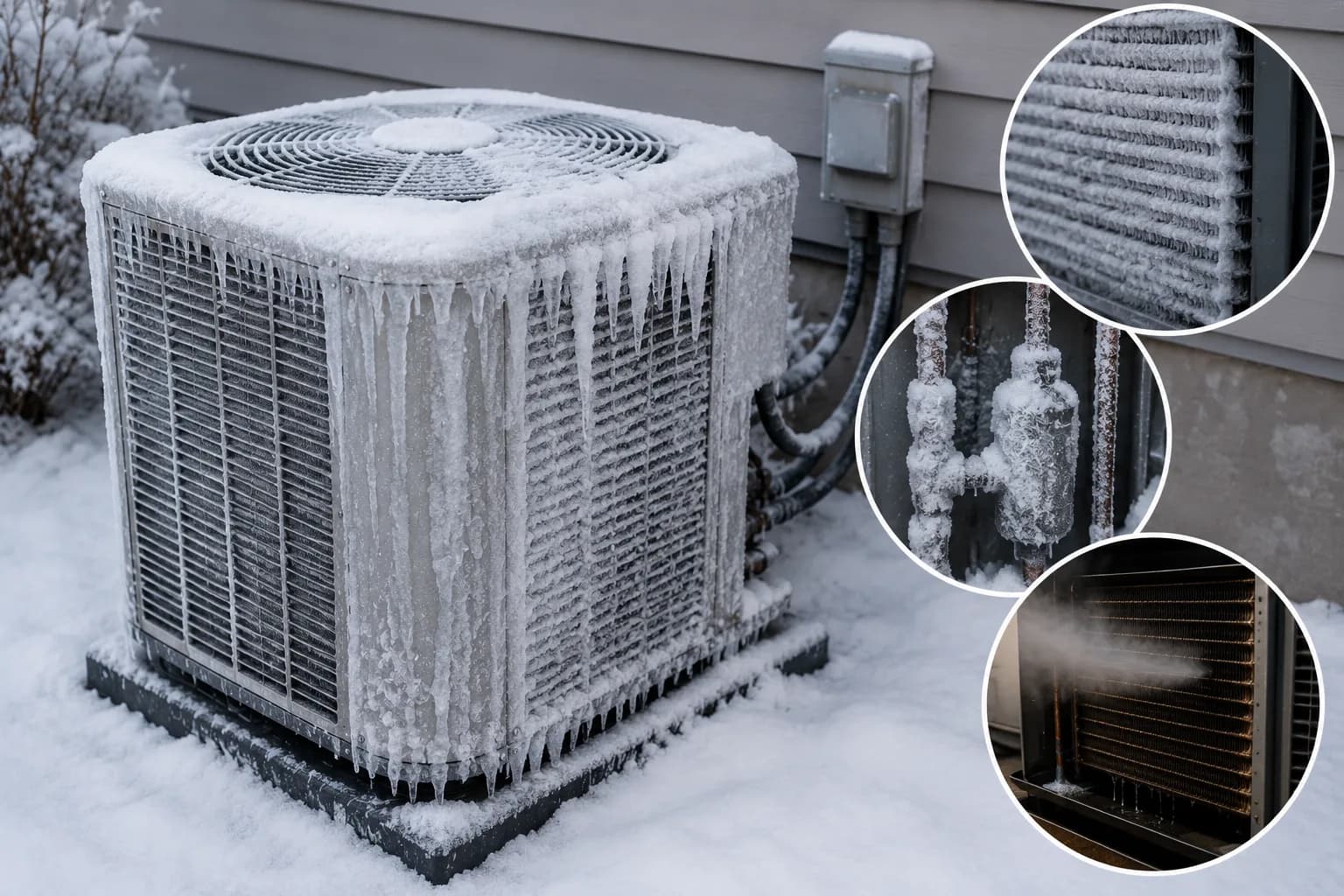
A light layer of frost on a heat pump in winter is normal: the unit defrosts itself every few hours in 10 to 15 minutes. It's no longer normal when ice builds up thick, covers the fins, or keeps coming back — that usually means a faulty fan, blocked clearance, or a refrigerant leak. This is almost never a safety risk to you, but it can damage the compressor if left alone. Get it checked if ice lingers for more than a day.
What's Happening?
A heat pump pulls heat from outside air even in cold weather. Moisture in that air condenses on the outdoor coils and freezes, much like frost forming in a freezer. That's why nearly every heat pump builds up some ice in winter, especially on humid days near freezing temperatures.
To handle this, the unit periodically switches into defrost mode: it briefly reverses its cycle to warm the coils and melt the ice. You may see steam or water coming off the unit during this — that's normal and rarely lasts more than 15 minutes.
The problem starts when that defrost cycle can no longer clear all the ice, or doesn't trigger at all. Ice then builds layer by layer until it blocks the fins and drags down performance.
Is It Dangerous?
For your personal safety, no — this isn't a fire or shock risk on its own. But for the unit's lifespan, it can become serious if ignored too long.
Inspect or act quickly if:
- ice covers more than half of the outdoor coil
- defrost never kicks in, even after several hours of running
- you hear scraping or grinding from the fan
- ice is touching the refrigerant lines (the insulated copper pipes)
- heating performance drops noticeably at the same time ice appears
In these cases, the compressor — the most expensive part of the unit — can strain against the ice and wear out prematurely.
Most Common Causes
| Cause | Explanation |
|---|---|
| Normal defrost cycle | Thin frost layer that melts on its own in 10-15 minutes; no action needed |
| Blocked airflow | Snow buildup or poor snow clearing around the unit restricts air circulation |
| Faulty or slow outdoor fan | The motor can't move enough warm air during the defrost cycle |
| Low refrigerant (a leak) | The coil runs abnormally cold and ice doesn't melt off fully |
| Unlevel unit or too close to the ground | Defrost water pools instead of draining, then refreezes |
| Broken defrost sensor or control board | The unit no longer "knows" it needs to trigger a defrost cycle |
Why This Happens in Quebec
Quebec winters combine cold air with high humidity — exactly the conditions that make a heat pump frost up the most. Thaw-then-freeze spells, common in December and March, are especially prone to producing ice buildup.
Many units are also installed too close to the ground or in a spot that catches snow thrown by a snowblower or sliding off the roof, which makes things worse. A properly installed unit (usually mounted on a raised stand, following clearance rules) reduces this a lot — a good sign your installer, ideally RBQ-licensed, did the job right.
How to Check It Yourself
You can safely:
- watch whether ice melts during a defrost cycle (observe for 15-20 minutes while the unit runs)
- clear snow buildup around the unit with a shovel, without forcing anything against the unit itself
- check that nothing is blocking the top or back of the unit
- listen for the fan running smoothly, without scraping sounds
Never try to: chip ice off with a hard tool (it can bend the fins), pour hot water on it (thermal shock can crack components), or touch the refrigerant lines. Those are jobs for a certified technician.
Can I Ignore It?
It depends on how thick the ice is. A little frost that clears on its own — yes, ignore it. Thick, persistent ice — no. It gets worse over time, cuts heating efficiency (raising your Hydro-Québec bill), and can eventually damage the compressor, the most expensive repair on the whole unit.
How Much Does It Cost?
| Service | Estimated Price |
|---|---|
| Diagnostic inspection | $100 - $150 |
| Minor repair (fan, defrost sensor) | $200 - $500 |
| Refrigerant recharge (minor leak) | $300 - $600 |
| Compressor replacement | $1,500 - $3,000 |
| Full heat pump replacement | $4,000 - $12,000 |
When to Call a Professional
- ice doesn't melt after a full defrost cycle
- ice comes back every day, even in dry weather
- you hear an unusual noise (grinding, banging) along with the ice
- heating performance is visibly worse than before
- you suspect a refrigerant leak (faint chemical smell, ice localized on one pipe)
A certified technician can measure refrigerant pressure and test the defrost cycle electrically — two things you can't verify yourself without specialized equipment.
Related Questions
- My Heat Pump Is Making a Clicking or Grinding Noise: Causes & Fixes
- Why Does My Heat Pump Make a Repeated Clicking Sound Right Before It Starts?
- Why Does My Heat Pump Blow Cold Air In Heating Mode During Extreme Cold?
- How Long Should I Really Wait After Turning My Heat Pump Off and Back On?
- When to Replace Your Heat Pump: 7 Signs to Watch For
- Spring Heat Pump Maintenance Checklist
- Mitsubishi Electric vs Daikin: Which Heat Pump for Quebec?
Frequently asked questions
Can I keep using my heat pump if it's covered in ice?+
For light frost, yes, no problem. If the ice is thick and persistent, let the unit keep running but get it inspected soon — continuing to force it in that state can wear out the compressor prematurely.
How long should a normal defrost cycle last?+
Usually 10 to 15 minutes, occurring a few times per day depending on humidity and outdoor temperature. If it lasts more than 20-30 minutes or keeps repeating nonstop, there's likely a problem.
Can I prevent my heat pump from icing up next winter?+
Annual maintenance before the cold season (coil cleaning, refrigerant check, clearing space around the unit) greatly reduces the risk. A raised installation, away from snow accumulation zones, also helps a lot.
Should I call a professional immediately if I see ice?+
Not urgently. First watch a full defrost cycle; if the ice melts normally, it's nothing. If it lingers more than 24 hours or covers a large part of the coil, book an inspection within the next few days.
Get a free quote
More to know before your project.
By Marc Tremblay — Certified HVAC technician, 12 years of experience in Quebec
Updated on July 23, 2026