
Spring Heat Pump Maintenance Checklist
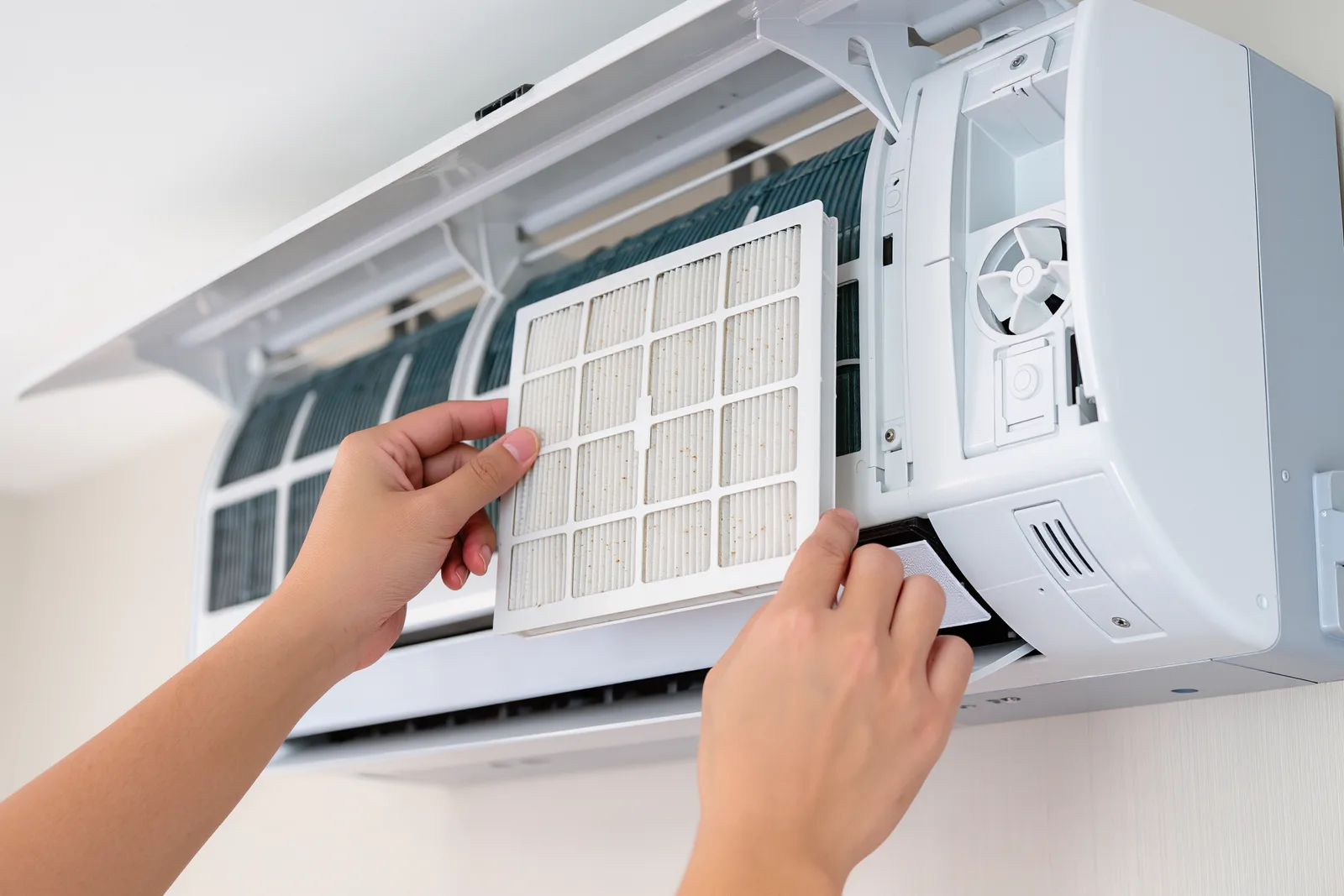
Spring is the ideal time to prepare your heat pump for cooling season, after months of heavy use through winter — months during which the unit accumulated dust, potentially suffered freeze-thaw-related damage, and probably received zero attention since the previous fall.
What you can do yourself
- Clean or replace the air filter — a clogged filter reduces efficiency and forces the system to work harder for the same output, one of the most common and easiest-to-fix causes of a high electricity bill
- Clear the outdoor unit — remove leaves, debris, and branches that accumulated over winter, keeping at least 30 cm of clearance on all sides for proper airflow
- Check that the unit is level — winter freeze-thaw cycles can slightly shift or tilt the base, which affects drainage and long-term mechanical wear
- Visually inspect the fins — look for any visible damage from ice, snow blower discharge, or weather in general
- Clean the indoor vents — dust the grilles on wall-mounted units, where accumulated dust reduces airflow just as much as a clogged filter
What needs a technician
- Refrigerant level check — requires specialized equipment to measure pressure, a task no consumer-grade tool can replace
- Electrical inspection — connections, capacitors, relays, common failure points that often show no visible sign before a complete breakdown
- Deep coil cleaning — a dirty coil, invisible without disassembly, noticeably reduces efficiency even when the filter is clean
- Defrost and cooling cycle test — confirms both modes work correctly before you actually need them
- Drainage check — making sure condensate drains properly, particularly important after a winter where the drain may have partially clogged
Recommended frequency
| Task | Frequency | Who handles it |
|---|---|---|
| Filter cleaning | Monthly during use season | You |
| Clearing the outdoor unit | Every season, after storms | You |
| Full professional maintenance | Once a year, ideally in spring | Technician |
| Post-event inspection (storm, severe freeze) | As needed | You, then a technician if damage is suspected |
Why not to skip this
Regular spring maintenance extends the unit's lifespan, keeps energy efficiency at expected levels, and often catches a minor issue — a weakening capacitor, a small refrigerant leak — before it becomes an expensive breakdown in the middle of a heat wave, exactly when getting an emergency appointment is hardest and discomfort is highest.
Frequently asked questions
How often should professional maintenance be done?+
Once a year is generally enough for standard residential use, ideally in spring before cooling season.
Should I also do maintenance in the fall?+
This generally isn't necessary for most households if spring maintenance was done thoroughly, but a system used heavily year-round can benefit from a twice-yearly check.
How long does a full professional maintenance visit take?+
Typically 45 to 90 minutes for a standard residential heat pump, depending on the number of indoor units and outdoor unit accessibility.
Get a free quote
More to know before your project.
By Marc Tremblay — Certified HVAC technician, 12 years of experience in Quebec
Updated on July 23, 2026