
My AC Is Running All Day, Is It Broken?
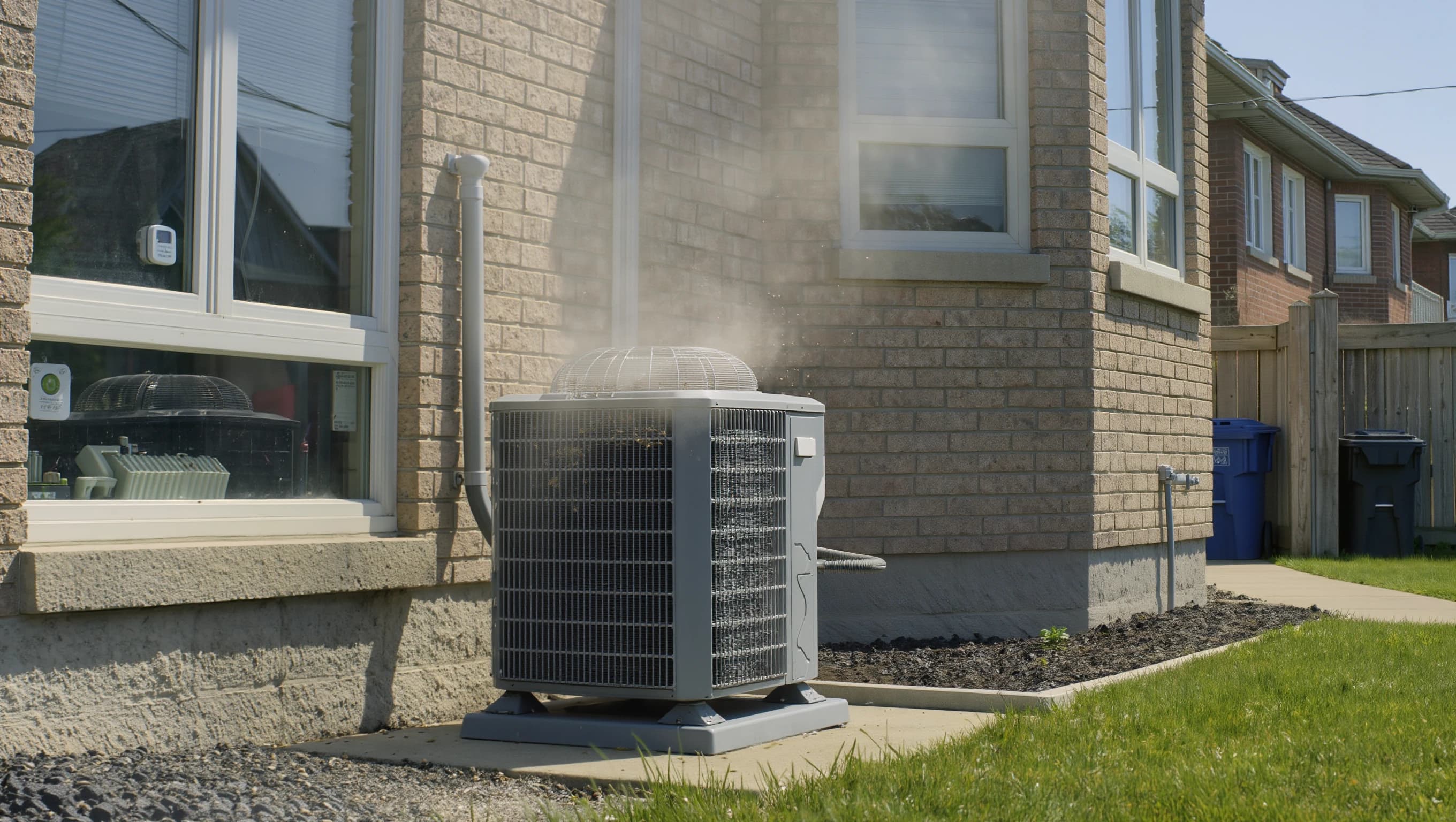
An air conditioner or heat pump running for long stretches on a very hot day is normal, especially above 28-30°C. It's only concerning if the unit runs nonstop AND the house never cools down, or if your Hydro-Québec bill spikes with no matching weather explanation. The most common cause is a clogged filter, low refrigerant, or an undersized unit. Check the filter first; if the problem continues after that, call a technician.
What's Happening?
Air conditioners and heat pumps are designed to run for long stretches when it's very hot outside: the bigger the gap between outdoor temperature and your indoor setpoint, the harder and longer the unit has to work to keep up. That's not a defect, it's just physics.
The real problem is when the unit runs a long time WITHOUT actually cooling the house to the temperature you set, or when it never shuts off at all, even overnight when it's cooler outside. In that case, something is stopping it from working efficiently: blocked airflow, low refrigerant, or a unit that's simply too small for the house.
The most reliable signal isn't "it runs a long time" — it's "it runs a long time and nothing changes": the house stays hot, or the gap with the thermostat setting never closes.
Is It Dangerous?
In the vast majority of cases, no. It's not a safety risk or an immediate threat to your home. It's mainly a comfort and electricity-bill issue.
Check or act quickly if:
- The unit gives off a burning or smoky smell
- You hear a loud metallic noise that wasn't there before
- Visible ice is forming on the indoor or outdoor unit
- The breaker for the AC circuit gets hot or trips repeatedly
Long runtimes without these signs are just a sign of inefficiency, not danger.
Most Common Causes
| Cause | Explanation |
|---|---|
| Dirty air filter | Blocks airflow, forcing the system to work harder and longer for the same result |
| Heat wave day | A large gap between indoor and outdoor temperature naturally makes the unit run longer |
| Undersized heat pump/AC | The unit is too small for the square footage, so it never catches up to the setpoint |
| Low refrigerant (leak) | The system loses its ability to absorb heat, running longer for less effect |
| Blocked or dirty outdoor unit | Leaves, grass, dust around the condenser interfere with heat release |
| Poorly insulated or leaky ducts | Cold air is lost in transit before reaching the rooms |
| Miscalibrated or poorly placed thermostat | The system gets a wrong temperature reading and keeps running needlessly |
Why This Happens in Quebec
Quebec summers combine heat and high humidity, forcing air conditioners and heat pumps to do double duty: cool the air AND pull moisture out of it. Many older homes (postwar bungalows, Montreal triplexes) have systems added after the fact, often undersized for the actual floor area or mismatched to a poorly insulated house. Increasingly frequent heat waves in July and August only make this worse.
How to Check It Yourself
You can safely:
- Check and replace the air filter (every 1-3 months in summer)
- Look at whether the outdoor unit is clear (no leaves, tall grass, snow, or debris)
- Check that indoor vents aren't blocked by furniture or curtains
- Note the time and length of cycles to see if the system eventually shuts off at night
Never attempt to recharge refrigerant yourself or open the electrical housing of the outdoor unit — refrigerant is regulated and dangerous to handle without certification, and there's a real risk of electric shock.
Can I Ignore It?
It depends. If it's just a heat wave and the house does eventually cool down, yes, you can ignore it — that's normal operation. If the unit runs continuously without ever reaching the set temperature, no: every day that passes wears down a compressor working in overdrive, and an unrepaired refrigerant leak gets worse over time, often leading to full compressor failure, the most expensive part to replace.
How Much Does It Cost?
| Service | Estimated Price |
|---|---|
| Inspection / diagnostic | $100 - $200 |
| Outdoor unit cleaning and filter change | $80 - $150 |
| Refrigerant recharge (depending on the leak) | $200 - $600 |
| Component repair (capacitor, fan motor) | $250 - $700 |
| Full replacement if the unit is undersized | $4,000 - $12,000 |
When to Call a Professional
- The unit runs 24/7 and the house never drops below 26-27°C
- Your electricity bill jumped with no clear weather explanation
- You see frost or ice on the indoor or outdoor unit
- The system is over 12-15 years old and runs longer every summer
- An unusual noise or smell accompanies the long runtimes
A technician can measure refrigerant pressure, test the capacitor, and confirm whether the unit is properly sized for your home — checks that are impossible to do without specialized equipment.
Related Questions
- Why Is My AC Freezing Up?
- Why Is My AC Leaking Water?
- Why Does My Central Heat Pump Take Longer to Cool the House Than It Used To?
- When to Replace Your Heat Pump: 7 Signs to Watch For
- Spring Heat Pump Maintenance Checklist
- SEER, HSPF, BTU: Understanding HVAC Terminology
- When Should I Really Get My Heat Pump Checked Before Summer?
- Why Is Just One Room In My House Always Hot?
Frequently asked questions
Is it normal for my AC to run all night during a heat wave?+
Yes, as long as the house eventually reaches the set temperature. It's only a concern if the thermostat reading never drops, even after several hours.
Can a dirty filter really make that much of a difference?+
Yes. A clogged filter can cut airflow by 50% or more, forcing the system to run much longer for the same result. It's the most common and easiest cause to fix.
How much does a refrigerant recharge cost?+
Expect between $200 and $600 depending on the amount needed and how hard the leak is to locate. If the leak comes back every year, replacement may end up being more cost-effective.
Should I call a professional right away if it never shuts off?+
Not urgently, unless there's a burning smell, a loud noise, or visible frost. Otherwise, check the filter and outdoor unit first, then call if nothing improves after 24-48 hours.
Get a free quote
More to know before your project.
By Marc Tremblay — Certified HVAC technician, 12 years of experience in Quebec
Updated on July 23, 2026