
Why Is My AC Leaking Water?
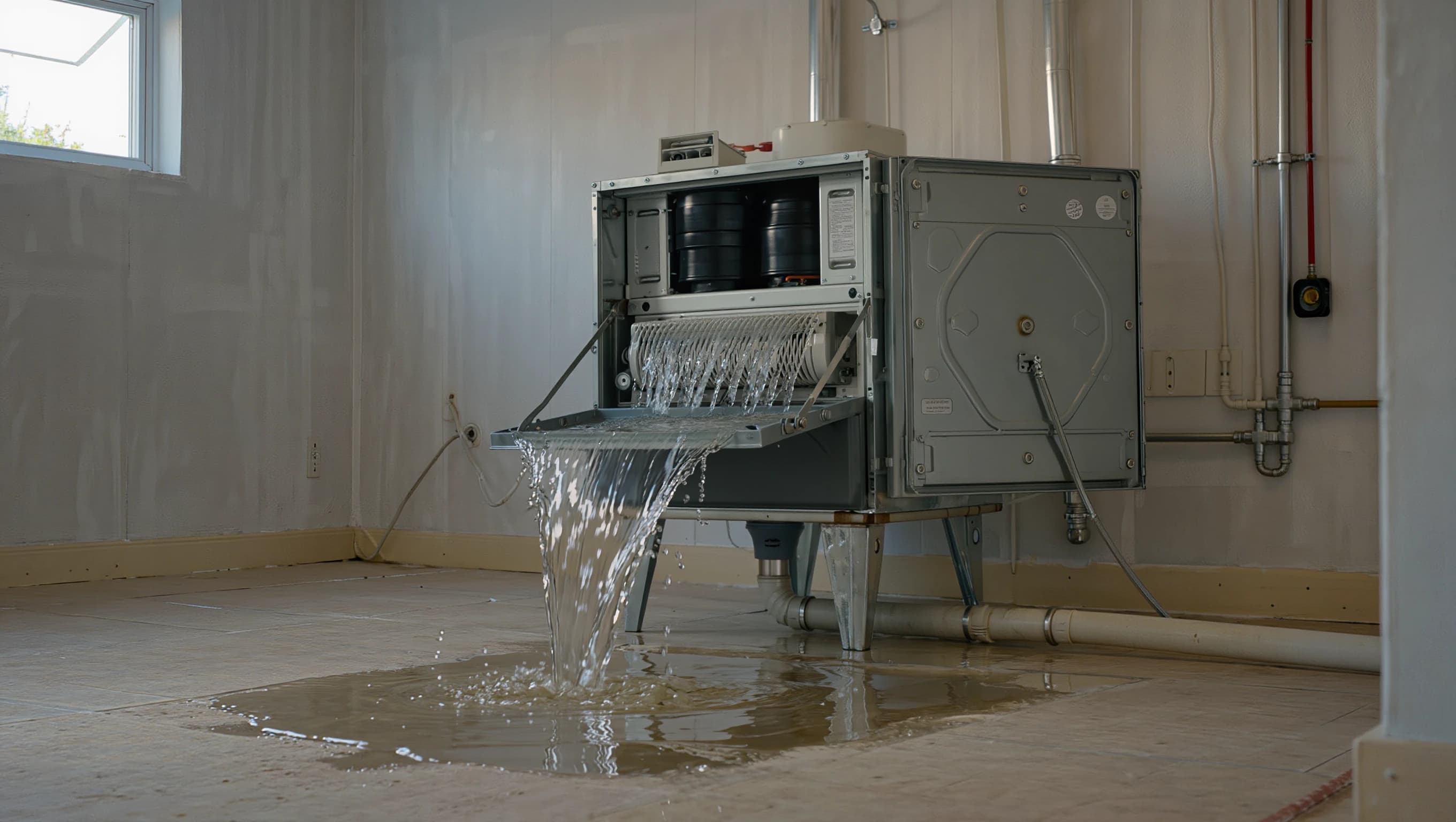
A water leak from an air conditioner is almost always caused by a clogged condensate drain or a frozen indoor coil that's thawing. It's usually not dangerous to you, but it can damage a ceiling, wall, or floor if the water keeps seeping in. Turn off the unit as soon as you see water, mop up the mess, then check the drain — most cases are fixed with a simple cleaning, but if the water comes back quickly, you need a technician.
What's Happening?
An air conditioner or heat pump in cooling mode removes humidity from the air along with cooling it. That humidity condenses into water on the cold coil of the indoor unit, then normally flows out through a drain line to the outside or into a floor drain.
A leak happens when that water stops following its intended path: the drain is clogged, the drain pan overflows, or ice that built up on the coil melts all at once and produces more water than the system can carry away. The water then ends up on the floor, in the ceiling below the unit, or visibly dripping from the unit itself.
Is It Dangerous?
Not to you — it's not an electrical risk as long as the water isn't touching exposed electrical components. For the house, it can become a problem if the water seeps in for a long time untreated.
Act quickly if:
- Water is flowing near outlets, a panel, or exposed wiring — cut power to the system before cleaning up
- You see a spreading stain on a ceiling or wall (a sign of ongoing seepage)
- Water is accumulating fast enough to form a persistent puddle
- A musty smell appears near the unit
Outside of these cases, it's more of a maintenance issue than a safety emergency.
Most Common Causes
| Cause | Explanation |
|---|---|
| Clogged condensate drain | Dust, mold, and algae build up in the narrow drain line and block the flow |
| Frozen coil thawing | Low refrigerant or a dirty filter causes the coil to freeze; when it thaws, it produces excess water |
| Cracked or rusted drain pan | An aging or damaged pan lets water escape instead of channeling it |
| Indoor unit not level or poorly installed | An incorrect slope prevents water from draining properly toward the drain line |
| Failed condensate pump | On systems that have one, a broken pump lets water build up instead of being pumped out |
| Very dirty air filter | Reduces airflow across the coil, promoting freezing and excess water |
Why This Happens in Quebec
The high humidity of Quebec summers makes the AC's dehumidification work harder, producing more condensate than elsewhere in Canada. Older homes often have condensate drains installed with minimal slope or poorly maintained over the years, making them more prone to clogging. Intense heat waves also make systems run longer, producing more water that needs to be drained away.
How to Check It Yourself
You can safely:
- Locate the drain line (often white PVC pipe near the indoor unit or exiting outside) and check if it's clogged or disconnected
- Check if the drain pan under the indoor unit is full or cracked
- Look at whether the air filter is very dirty
- Check for visible ice on the coil or lines — if so, shut off the unit and let it thaw before continuing
Don't attempt to disassemble the indoor unit or handle the coil and refrigerant yourself. Simply cut power if water is near electrical components, and mop up the mess while you wait for a technician.
Can I Ignore It?
No, not indefinitely. A small occasional leak after a thaw can be watched for a few days, but a leak that keeps coming back needs to be addressed: standing water promotes mold, can damage the floor or ceiling below, and a clogged drain eventually causes a bigger overflow. The longer you wait, the more expensive the resulting water damage becomes compared to simply clearing the drain.
How Much Does It Cost?
| Service | Estimated Price |
|---|---|
| Inspection / diagnostic | $100 - $200 |
| Condensate drain clearing | $100 - $250 |
| Drain pan replacement | $150 - $350 |
| Condensate pump repair or replacement | $200 - $450 |
| Water damage repair (ceiling/floor, if neglected) | $500 - $3,000+ |
When to Call a Professional
- The leak comes back after you've cleared the drain yourself
- Water is building up fast enough to form a puddle within hours
- You repeatedly see ice on the coil
- A damp stain appears on the ceiling below the unit
- Water is flowing near electrical fixtures
A technician can check the drain slope, test the condensate pump, and confirm whether the problem stems from low refrigerant causing freezing — causes that look similar on the surface but require different repairs.
Related Questions
- Why Is My AC Freezing Up?
- My AC Is Running All Day, Is It Broken?
- My Heat Pump Is Covered in Frost or Ice in Winter: Is That Normal?
- My Baby's Room Feels Humid Even With the AC On: Why & What to Do
- Spring Heat Pump Maintenance Checklist
- My Heat Pump Is Making a Clicking or Grinding Noise: Causes & Fixes
- When Should I Really Get My Heat Pump Checked Before Summer?
Frequently asked questions
Can I keep using my AC while it's leaking?+
No, it's best to shut it off while you figure out the cause. Continuing to use it risks worsening the water damage, especially if the drain stays clogged.
Is it normal for a little water to collect under the outdoor unit?+
Yes, a small amount of drainage outside is normal — that's where the drain is supposed to release the water. The real problem is water inside the house, near the indoor unit.
How much does clearing a condensate drain cost?+
Usually between $100 and $250, including the diagnostic. It's one of the cheaper AC repairs, often resolved in a single visit.
Should I call a professional right away if I see water?+
Not necessarily urgent, unless the water is touching electrical components. Shut off the unit, mop up, check the drain yourself, and call if the leak comes back.
Get a free quote
More to know before your project.
By Marc Tremblay — Certified HVAC technician, 12 years of experience in Quebec
Updated on July 23, 2026