
Why Does My Heat Pump Make a Repeated Clicking Sound Right Before It Starts?
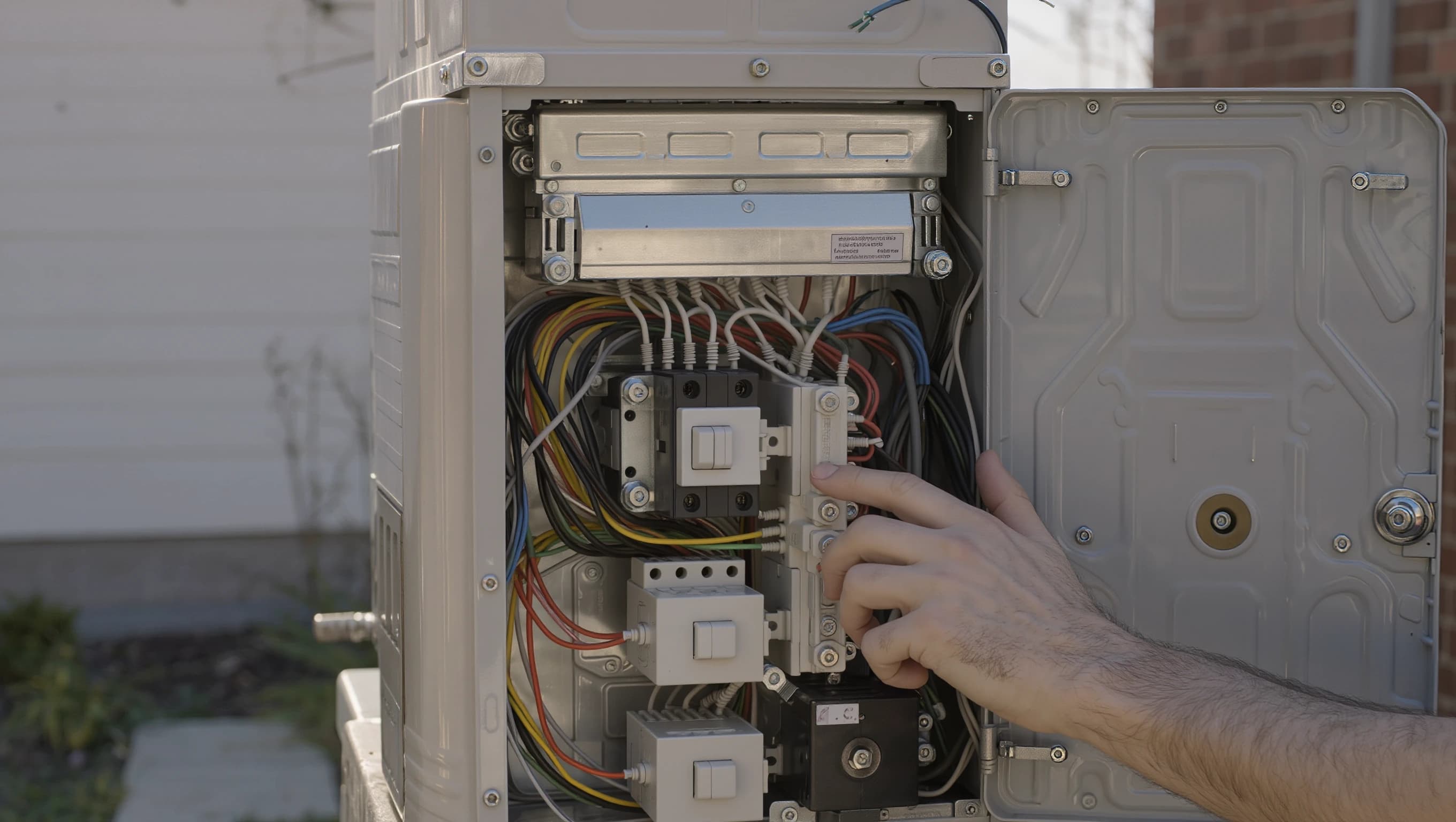
A single click at startup is normal — it's the relay or contactor engaging the electrical circuit. But repeated clicking (several clicks in a row, or repeating on every startup attempt) usually points to a worn contactor, a faulty relay, or a voltage issue preventing the compressor from starting properly. It's not an immediate emergency, but it deserves a quick inspection since a compressor that repeatedly strains to start can get damaged.
What's Happening?
Every time it starts, your heat pump uses a contactor (a type of electrical switch) to send power to the compressor and fan motor. This contactor normally produces a single crisp click as it engages.
When you hear several rapid clicks in a row — like a repeated clicking sound — it generally means the contactor is "hesitating": it tries to close the circuit, fails, opens back up, then tries again. It's similar to turning a key several times in an ignition that catches before the motor finally starts.
This can also come from an electronic start relay (on newer heat pumps) sending repeated pulses before successfully launching the compressor.
Is It Dangerous?
It's generally not an immediate safety danger to occupants, but it can damage the unit if it continues.
Inspect or act immediately if:
- The clicking comes with a burning smell or smoke
- The unit no longer starts at all after several attempts
- You also hear a loud electrical hum
- The breaker trips during or after the clicking
- The noise comes with visible sparks near the outdoor unit
If none of these signs are present, you can monitor the situation for a few days, but don't let it drag on for weeks: every failed start attempt puts strain on the compressor, the most expensive part of the unit.
Most Common Causes
| Cause | Explanation |
|---|---|
| Worn or pitted contactor (corroded electrical contacts) | Most common cause; metal contacts wear down over time and with humidity |
| Weak start capacitor | The compressor struggles to start, causing multiple attempts and thus multiple clicks |
| Unstable or too-low voltage | Overloaded dedicated circuit or faulty electrical connection |
| Faulty start relay | On newer models with electronic starting |
| Aging compressor that starts with difficulty | On units 10+ years old, the compressor loses efficiency |
| Loose wiring or connection | Vibration creating intermittent contact at electrical terminals |
Why This Happens in Quebec
The wide temperature swings between summer and winter in Quebec put contactors and relays through repeated thermal expansion and contraction cycles. This accelerates their wear compared to more stable climates.
High humidity, particularly in spring and fall, also promotes corrosion of electrical contacts in the outdoor unit, which is a direct cause of clicking at startup.
Can I Ignore It?
No, not indefinitely. An occasional, isolated click can wait for a regular appointment, but clicking that repeats on every startup shouldn't be ignored for more than a few weeks.
If you keep running the unit without checking the cause, the compressor can suffer permanent damage from repeatedly trying to start under insufficient voltage or with a weak capacitor. Replacing a contactor costs a fraction of replacing a compressor.
How to Check It Yourself
You can safely:
- Note exactly when the click occurs (right before compressor startup vs. during operation)
- Roughly count how many clicks happen before the unit starts
- Check whether the noise is more frequent in very hot or very cold weather
- Observe whether the unit always eventually starts, or sometimes fails to start at all
Never remove the panel of the outdoor or indoor unit to inspect the contactor yourself — it's a live electrical component that can cause a serious shock even when the unit appears to be off.
How Much Does It Cost?
| Service | Estimated Price |
|---|---|
| Electrical diagnostic | $100 - $200 |
| Contactor replacement | $150 - $300 |
| Start capacitor replacement | $150 - $350 |
| Wiring or connection repair | $150 - $400 |
| Full compressor replacement (if damaged) | $1,200 - $2,500 |
When to Call a Professional
- The clicking repeats on every startup for more than a week
- The unit takes longer and longer to start
- You notice a drop in heating or cooling performance at the same time
- A burning smell or light smoke comes with the noise
- The unit is over 8-10 years old with no recent maintenance
A technician can measure voltage and current at startup with a multimeter, test the capacitor and contactor under real load, and pinpoint exactly which component is hesitating — a diagnosis that's impossible to make visually or without specialized equipment.
Related Questions
- My Heat Pump Is Making a Clicking or Grinding Noise: Causes & Fixes
- How Long Should I Really Wait After Turning My Heat Pump Off and Back On?
- Why Does My Heat Pump Smell Like Burning the First Time I Turn It On For Summer?
- When to Replace Your Heat Pump: 7 Signs to Watch For
- Spring Heat Pump Maintenance Checklist
- My AC Is Running All Day, Is It Broken?
- Why Does My Central Heat Pump Take Longer to Cool the House Than It Used To?
Frequently asked questions
Can I keep using my heat pump if it makes this noise?+
Yes in the short term if the unit eventually starts normally and there's no smell or smoke. But get it inspected within the next few weeks to avoid damaging the compressor.
Is this normal in winter or only in summer?+
The clicking can happen in either case, but it's often more frequent during extreme cold or extreme heat, when the compressor has to work harder to start.
How much does fixing a contactor cost?+
Replacing a contactor typically costs between $150 and $300, labor included, which is far cheaper than letting the problem damage the compressor.
Should I call a professional immediately?+
Not necessarily the same day, unless there's a burning smell, smoke, or the unit stops starting altogether. Otherwise, schedule an inspection in the coming weeks.
Can repeated failed starts break the compressor?+
Yes, over time. Each start attempt under insufficient voltage or with a weak capacitor puts mechanical strain on the compressor, which can shorten its lifespan by several years.
Get a free quote
More to know before your project.
By Marc Tremblay — Certified HVAC technician, 12 years of experience in Quebec
Updated on July 23, 2026