
Why Does My Chimney Make a Whistling Sound When It's Very Windy Outside?
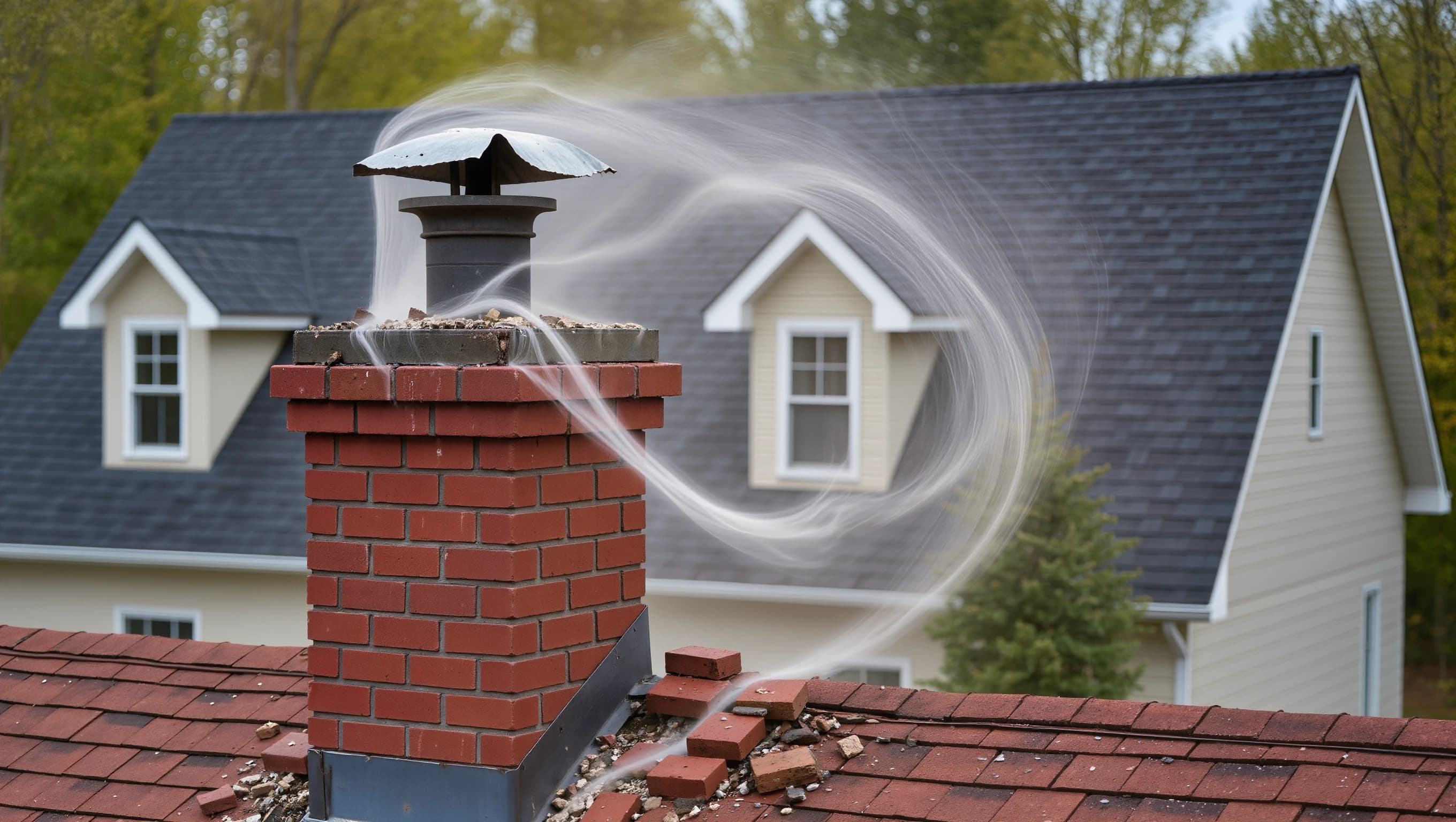
A whistle that only shows up on windy days is almost always caused by a damaged or poorly fitted chimney cap, or a damper that isn't closing all the way. This usually isn't dangerous and can wait a few weeks, but the same gap that's making the noise is also letting in cold air and sometimes moisture, so it's worth getting checked before winter rather than just getting used to the sound.
What's Happening?
A whistling chimney works a bit like a bottle or a wind instrument: when air moves fast through a narrow or irregular opening, it creates a vibration that produces a high-pitched sound. The stronger the wind, the more audible the whistle, which is why the noise comes and goes with the weather.
In the vast majority of cases, that opening is at the chimney cap (the metal or masonry piece at the top of the flue) or the damper (the flap that seals the flue inside the fireplace). A cap that's bent, rusted, or loosely fitted, or a damper that stays open by just a few millimetres, is enough to create the effect.
The whistling itself doesn't damage anything — it's a symptom, not a problem on its own. What matters is understanding what's causing the gap, because that same gap affects the chimney's draft and airtightness year-round, not just on windy days.
Is It Dangerous?
No, in the vast majority of cases, a chimney whistling in strong wind is not a safety emergency. It isn't a fire risk or a carbon monoxide risk by itself. It's mostly a sign that something at the top of the chimney isn't perfectly sealed.
That said, there are situations where the same noise deserves quicker attention:
- The whistling is joined by scraping, banging, or thudding sounds, which can mean a nearly detached cap that could fall
- A smoke or soot smell is noticeable indoors at the same time as the noise
- The whistling started at the same time as a visible crack or a piece of masonry that fell to the ground
- The damper stays stuck partly open and won't fully close even with gentle force
In these cases, it's no longer just a noise nuisance: a cap that's about to come loose can fall onto the roof or ground, and a crack in the chimney's masonry can worsen with freeze-thaw cycles. Outside of these signs, the noise can wait for a routine check rather than an emergency call.
Most Common Causes
| Cause | Explanation |
|---|---|
| Damaged or poorly fitted chimney cap | Wind passes through the gap between the cap and the flue, which is the most common source of the whistle |
| Damper not closing all the way | A residual gap of just a few millimetres is enough to create the same effect, even when the fireplace isn't in use |
| Partial obstruction from a nest or debris | A bird's nest, leaves, or branches narrow the airflow and create a whistling turbulence |
| Rusted or bent spark arrestor screen | A pierced or warped mesh lets wind whistle through the irregular holes |
| Cracked or loose mortar joint around the cap | Creates an extra opening for air to rush through |
| Loose flashing at the roof-chimney junction | Less common, but flashing lifted by the wind can whistle or vibrate against the masonry |
Why This Happens in Quebec
Chimney caps in Quebec go through repeated freeze-thaw cycles every winter: water that gets into a joint or a seam freezes, expands, then thaws, and this gradually warps or loosens the metal parts year after year. This is especially true for older homes around Montreal and its suburbs, where many masonry chimneys are decades old and never got a modern, properly sealed cap.
The strong autumn and winter winds, often with sustained gusts, are exactly when the whistling becomes most noticeable, which coincides with the time homeowners start using their fireplace more regularly. It's a good reminder that the annual inspection recommended before the heating season is meant precisely to catch this kind of issue before it becomes uncomfortable or starts hurting the home's energy efficiency.
How to Check It Yourself
From inside, if the damper is accessible, check that it closes completely when the fireplace isn't in use. A damper that looks closed but still lets a thin draft of cold air through is often the easiest cause to confirm yourself.
From the ground outside, a pair of binoculars can often reveal a visibly bent, rusted, or off-center cap without needing to climb onto the roof. Also look for orange rust streaks running down the flue, a classic sign of water getting in at the top.
What you should never do yourself: climb onto the roof to inspect or repair the cap, especially in windy weather (exactly the conditions where the problem shows up). An unstable cap or a wet or icy roof surface makes this inspection dangerous for anyone without a professional's equipment and training.
Can I Ignore It?
It depends, but in most cases, this isn't urgent enough to require an immediate call. The noise itself doesn't cause additional damage to the home.
What you should know while you wait: the gap causing the whistle is also letting in cold air and outside moisture year-round, not just on windy days. Over time, this can speed up corrosion of the flue or insert's metal parts, slightly raise the heating bill from air loss, and let more debris or small wildlife get into the chimney. A repair that costs a few hundred dollars today can turn into a full cap replacement, or worse, a moisture problem in the masonry, if it's left unaddressed for several seasons.
How Much Does It Cost?
| Service | Estimated Cost |
|---|---|
| Cap and flue inspection | $100 - $180 |
| Obstruction removal (nest, debris) | $150 - $300 |
| Chimney cap replacement | $200 - $450 |
| Cracked mortar joint repair | $300 - $800 |
| Full sweep (if the obstruction involves creosote buildup) | $150 - $350 |
The final cost mostly depends on how accessible the roof is, how tall the chimney is, and what type of cap is needed (a standard prefabricated model versus a custom-fit one for a masonry chimney). A professional can usually confirm the exact cause and give a firm quote in a single visit.
When to Call a Professional
- The whistling has lasted more than one season with no improvement
- A ground-level visual check shows a visibly bent, rusted, or off-center cap
- The damper won't close fully anymore, even when checked from inside
- The noise comes with banging, scraping, or a cap that appears to move in the wind
- No obvious cause is visible from the ground or inside, requiring a camera inspection of the flue or roof access
- The last inspection or sweep was more than a year ago
A certified technician can usually identify the exact cause within minutes once on the roof, check the full condition of the cap, spark arrestor screen, and masonry joints, and handle the repair or replacement in a single visit instead of guessing from the ground.
Related Questions
- 10 Signs Your Chimney Needs Sweeping
- My Chimney Smells Bad: 4 Possible Causes
- How Much Does a Full Sweep vs an Inspection-Only Cost
- How Often Should a Chimney Be Swept
- Can I Light My Fireplace This Winter If I've Never Had It Inspected Since Buying the House?
- Creosote and Chimney Fire Risk: What You Need to Know
- Why Do I Hear Cracking Noises In the Attic When It's Windy?
- Why Does My Roof Make a Drumming or Wave-Like Sound When It's Very Windy?
- Home Insurance and Chimney Sweep Certificates: What to Know
Frequently asked questions
Does the whistling only happen in strong wind?+
Generally yes. The whistling depends directly on how fast air moves through the gap causing it, so it gets louder with the wind and disappears in calm weather, even though the gap itself is still there all the time.
Can a poorly closed damper also affect my heating bill?+
Yes. A damper that doesn't fully close continuously lets heated air escape the home, which makes the heating system work harder and raises the bill, on top of causing the whistling on windy days.
Can I still use my fireplace if the chimney is whistling?+
In most cases, yes, as long as there are no warning signs (a smoke smell indoors, a visibly unstable cap, a recent crack). The whistling itself doesn't affect draft safety while the fireplace is in use.
Do I need to call a professional immediately?+
Not urgently, unless the noise comes with banging, a smoke smell indoors, or a visibly unstable cap. Otherwise, an inspection within the next few weeks, ideally before the heating season, is more than enough.
Can I repair the chimney cap myself?+
It's not recommended. Climbing onto the roof to adjust or replace a cap requires safe access and specialized equipment, especially in strong wind (exactly the conditions when the problem is most noticeable), so this job is best left to a professional.
Get a free quote
More to know before your project.
By Sophie Bouchard — Certified chimney sweep, residential fire safety specialist
Updated on July 23, 2026