
Why Do My Pipes Bang When I Shut the Water Off?
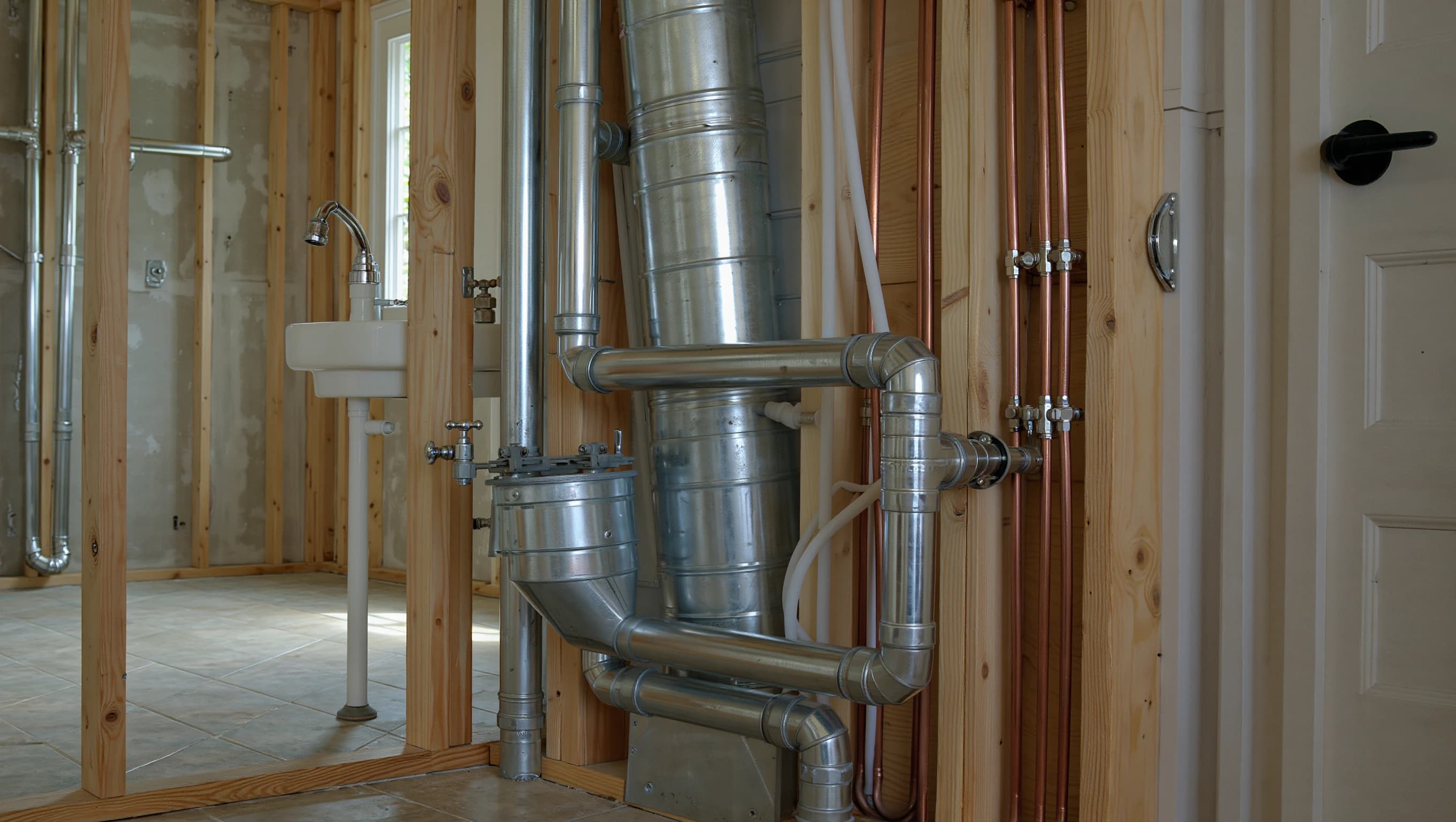
No — a sharp bang in your walls when a faucet or dishwasher valve shuts is almost never an emergency: it's water hammer, caused by a shock wave when moving water stops abruptly in the pipe. There's no need to worry short-term, but frequent banging wears on your plumbing over years. A plumber can install a water hammer arrestor or check your water pressure to fix it for good.
What's Happening?
Water flowing through your pipes moves with real mass and speed. When a faucet, dishwasher valve, or washing machine valve shuts suddenly, that moving column of water stops almost instantly. All the energy of that motion has to go somewhere: it converts into a shock wave that strikes the pipe walls and its fastening points, producing the sharp bang you hear in the walls.
This isn't specific to your house, nor is it a construction defect on its own — it's a normal physical phenomenon in pressurized plumbing. Modern appliances with fast-closing valves (dishwashers, washing machines, some tank toilets) trigger it more often than old slow-closing faucets, because they cut off the water in a fraction of a second.
The noise can happen once per cycle, or as a series of bangs that fade out, a bit like an echo bouncing through the piping.
Is It Dangerous?
In the vast majority of cases, no. Occasional water hammer is annoying, especially at night, but it doesn't pose an immediate danger to your safety or your home.
What should make you act faster:
- The noise happens throughout the house, no matter which faucet or appliance is used
- You notice a sudden drop or spike in water pressure at the same time
- You see or hear water running somewhere it shouldn't be (a wall, ceiling, under a sink)
- The noise comes with visible vibration of exposed pipes in the basement
- The problem appeared suddenly after recent plumbing renovation work
In these cases, it's no longer just noise: there may be excessively high pressure throughout the system, which accelerates wear on joints, fittings, and even the water heater.
Most Common Causes
| Cause | Explanation |
|---|---|
| Fast-closing valve (dishwasher, washing machine) | Cuts off flow in a fraction of a second, amplifying the shock wave |
| Air chambers filled with water | The air pockets that normally absorbed the shock have filled with water over time and no longer act as a cushion |
| Excessively high water pressure | Pressure above 80 psi amplifies any water hammer, even minor cases |
| Loose or poorly fastened pipes | The pipe moves freely against studs or joists instead of being secured, which makes the noise worse |
| No water hammer arrestor installed | Installations without a dedicated device transmit the shock directly into the structure |
| Pipe diameter too small for the flow | Forces water to move faster, increasing the inertia that has to be absorbed when the valve closes |
Why This Happens in Quebec
Quebec's housing stock has a large share of homes and duplexes/triplexes built before the 1980s, often with copper or galvanized piping secured with fasteners that loosen over the decades — which makes water hammer more audible than in modern, better-anchored plumbing.
Municipal water networks in several Quebec cities and suburbs also run at relatively high pressure to serve elevated neighborhoods or areas far from pumping stations, which pushes some homes well above recommended pressure without the owner knowing. Add to that kitchen or laundry room renovations that install a newer, higher-performance dishwasher or washing machine without revisiting water hammer protection, and the noise shows up suddenly in a house that never had it before.
How to Check It Yourself
You can identify the source without specialized tools:
- Note exactly when the noise happens: right after the dishwasher or washing machine shuts off, at the end of a toilet fill cycle, or any time any faucet closes
- Shut off each suspect appliance at a different time to see which one triggers the noise
- Listen for whether the noise comes from a single wall or area (points to an air chamber or a specific appliance) or from all over the house (points more to overall pressure)
- If you have access to exposed piping in the basement, look for a pipe visibly moving or striking a joist at the moment of the bang
What you should not attempt yourself: opening up a wall to access piping, soldering or disconnecting a pressurized fitting, or trying to adjust the incoming water pressure without knowing how to read a pressure gauge — a bad adjustment can damage the water heater or other appliances.
Can I Ignore It?
It depends on frequency and intensity. A light, occasional bang limited to a single appliance can wait without issue — it isn't a safety concern.
Frequent, pronounced water hammer, on the other hand, shouldn't be ignored indefinitely. Each repeated shock wears down soldered joints, threaded fittings, and pipe fasteners a little more. Over several years, that gradual wear can lead to a slow leak at a weakened joint — a problem far more costly to repair than a hammer arrestor installed in time.
How Much Does It Cost?
| Service | Estimated Cost |
|---|---|
| Service call / diagnostic | $100 - $150 |
| Water hammer arrestor (1-2 appliances) | $150 - $350 |
| Multiple arrestors (several fixture points) | $300 - $600 |
| Pressure-reducing valve installed at the water main | $350 - $700 |
| Purging existing air chambers | Often included in a service call |
These figures cover a targeted water hammer fix. A larger piping problem, such as replacing a damaged section, would cost more — in a range comparable to or above an emergency drain-clearing call ($150 to $450), depending on the scope of the work.
When to Call a Professional
- The noise happens throughout the house, not just near one appliance
- You suspect excessively high water pressure (loud noise, hissing faucets, very forceful water jets)
- The noise appeared suddenly after plumbing work or a new appliance was added
- You notice moisture, a stain, or an odor near a wall where the noise occurs
- You've already tried purging the air chambers yourself with no lasting results
A plumber has the tools to measure the exact incoming water pressure (a pressure gauge) and determine whether the problem is one isolated appliance or the whole system — a diagnosis that's hard to make with certainty on your own.
Related Questions
- Why Does My Toilet Make Noise In the Middle of the Night?
- Why Does My Toilet Make a Sucking or Gurgling Sound After I Flush?
- Why Did My Water Pressure Suddenly Drop?
- Why Does My Faucet Keep Dripping Even When I Turn It All the Way Off?
- My Toilet Gurgles When the Washing Machine Drains: What Does It Mean?
- Should I Insulate My Water Pipes In the Unheated Basement?
- How Much Longer Before My Water Heater Gives Out?
- How Do I Know If There's a Water Leak Behind My Wall?
Frequently asked questions
Can water hammer damage my appliances?+
Rarely the appliance itself in the short term, but repeated shocks year after year can prematurely wear the internal valves of appliances and the fittings that feed them.
How much does a plumber-installed water hammer arrestor cost?+
Expect $150 to $350 for one or two arrestors installed near the appliances responsible, including the plumber's service call.
Can I install a water hammer arrestor myself?+
It's possible if you're comfortable with basic plumbing and the installation point is accessible, but a poor installation can create a leak; many homeowners prefer to let a plumber handle it for the warranty.
Should I call a professional immediately if my pipes are banging?+
No, in most cases it can wait for a regular appointment. Call promptly only if the noise affects the whole house or comes with a pressure change or a sign of moisture.
Get a free quote
More to know before your project.
By Julien Fortin — RBQ-licensed plumber, 10 years of experience in residential plumbing
Updated on July 23, 2026