
My Toilet Gurgles When the Washing Machine Drains: What Does It Mean?
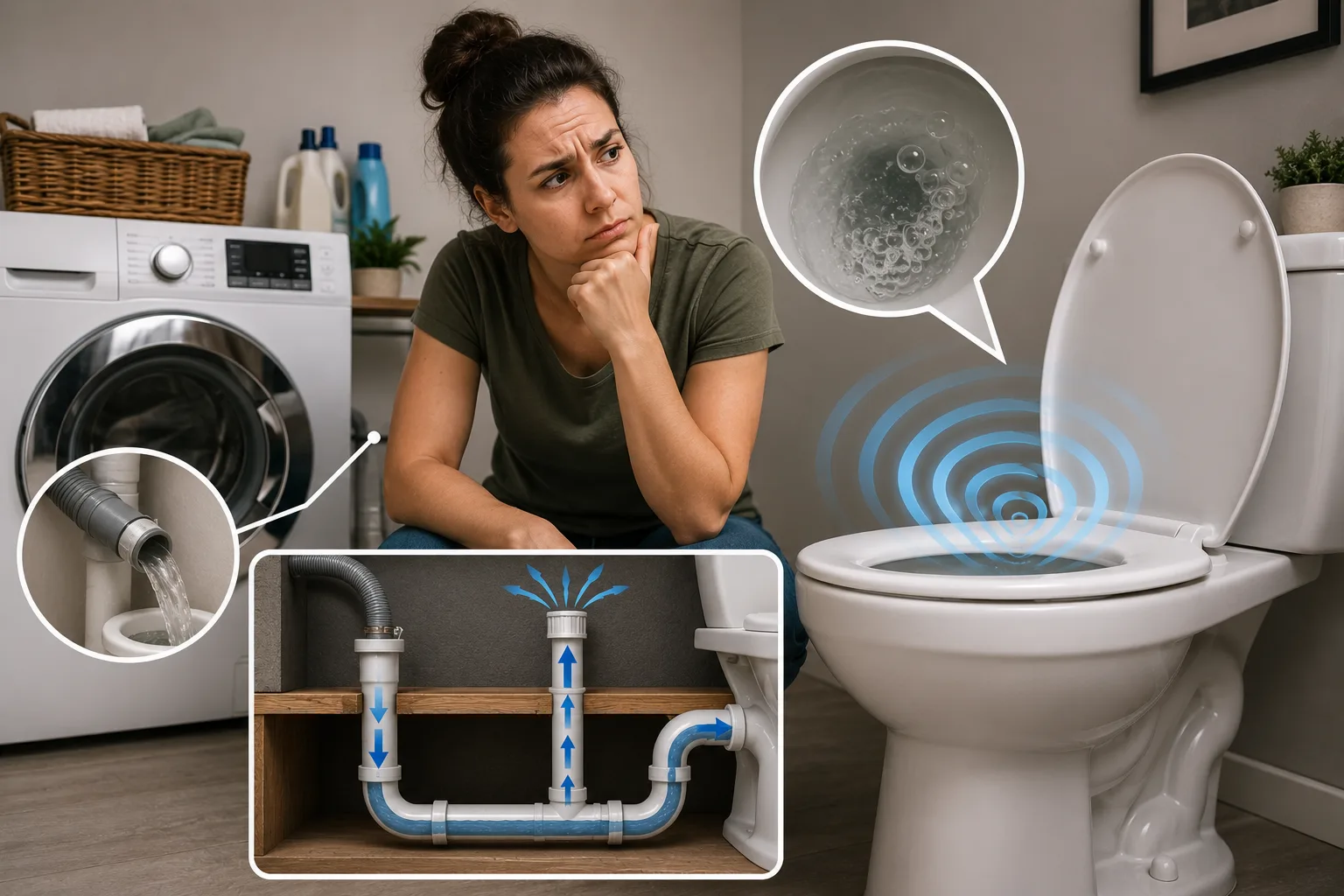
This is usually a sign of a partially blocked main drain or roof vent, not an immediate emergency. The most common cause is buildup (hair, lint, grease) further down the pipe shared between the toilet and the washing machine. You can watch it for a few days, but if the gurgling comes with a smell or standing water, call a plumber soon.
What's Happening?
Your toilet and washing machine often share the same drain stack, especially in older Quebec homes. When the washer dumps a large volume of water at once, the air in the pipe has to go somewhere.
If there's a restriction further down the drain, that air takes the path of least resistance: back up through the toilet's water seal, which causes the gurgling or bubbling you hear in the bowl. It's essentially an air-pressure problem caused by slowed drainage, not a defect in the toilet itself.
Is It Dangerous?
An occasional light gurgle is usually not dangerous. It's an early warning sign, not an emergency on its own. But it shouldn't be ignored indefinitely, because a drain that keeps clogging further can lead to sewage backing up into the home.
Inspect or act quickly if you notice:
- A sewage smell accompanying the gurgling
- Water rising in the bathtub or floor drain when the washer drains
- The toilet's water level rising or dropping abnormally
- The gurgling getting louder or more frequent over a few days
Most Common Causes
| Cause | Explanation |
|---|---|
| Lint and detergent residue buildup | The washer discharges textile fibers that accumulate over time in the shared stack |
| Blocked roof vent | Leaves, snow, or a bird's nest block the air intake, forcing air back up through the traps |
| Tree roots in the main drain | Roots infiltrate joints in the pipe leading to the municipal sewer |
| Insufficient drain slope | A poorly pitched pipe slows the flow and lets air push back more easily |
| Localized clog in the shared stack | Grease, hair, or debris forming a partial blockage between the two fixtures |
| Nearly full septic system | For homes off the municipal network, a tank nearing capacity restricts drainage |
Why This Happens in Quebec
In Montreal triplexes and duplexes, as well as postwar bungalows, cast-iron drain stacks are sometimes 50 to 70 years old. They corrode from the inside and lose effective diameter over time, which makes any early blockage worse.
Roof vents are also more vulnerable here: snow and freezing temperatures can form an ice plug at the top of the pipe during winter, producing this exact same gurgling symptom, especially after a snowfall followed by a thaw.
How to Check It Yourself
Run the washer and listen carefully during the drain cycle. A light, brief gurgle is normal in some older setups. A loud, prolonged gurgle, or one that visibly disturbs the water in the toilet bowl, deserves attention.
Also check the other drains in the house (bathtub, basement sink) to see if they react at the same time. Never climb onto the roof yourself to inspect the vent, especially in winter or wet conditions — that's a job for a professional with the right equipment.
Can I Ignore It?
It depends on the frequency and intensity. An occasional, mild gurgle can wait a few days to a week of observation. But if it worsens, it won't resolve on its own — the blockage causing it usually keeps building up.
If you wait too long, the main risk is sewage backing up into the home, which costs far more to clean up and repair than a preventive service call.
How Much Does It Cost?
| Service | Estimated Price |
|---|---|
| Camera drain inspection | $200 - $400 |
| Standard drain clearing | $150 - $450 |
| Roof vent cleaning | $200 - $500 |
| Damaged drain section repair | $500 - $2,000 |
When to Call a Professional
- The gurgling comes with a persistent sewage smell
- Multiple drains in the house react at the same time (sign of a main blockage)
- You see water rising through a floor drain or bathtub
- The problem persists or worsens after a week of watching it
- You have mature trees near the drain line to the street
A plumber uses a camera inspection to pinpoint exactly where the blockage sits in the stack or main drain, something no homeowner can do by eye.
Related Questions
- Why Does My Toilet Make Noise In the Middle of the Night?
- Why Does My Toilet Make a Sucking or Gurgling Sound After I Flush?
- My Basement Smells Like Sewage After It Rains: Causes & Fixes
- That Floor Drain In My Basement — Should I Be Worried About It?
- Why Does My Tub Drain Very Slowly While the Sink Works Fine?
- Can Vinegar and Baking Soda Actually Unclog a Drain?
- Why Does My Dishwasher Leave Standing Water After Every Cycle?
Frequently asked questions
Can I keep using my toilet and washer at the same time?+
Yes, occasional gurgling doesn't stop normal use. Just avoid running a big load at the same time as a flush if the noise is loud, until the drain gets checked.
Can vinegar and baking soda fix this problem?+
Rarely, if the cause is a blocked vent or roots in the main drain, no home remedy will fix that. It can only help with a light surface grease buildup.
How long before this turns into a real clog?+
It varies from a few weeks to several months depending on how fast buildup happens, but the gurgling itself means the pipe is already narrowing. It's better to act before it turns into a backup.
Should I call a plumber right away?+
Not necessarily right away if it's mild and occasional. But if it comes with a smell or water backing up elsewhere, yes, call soon to avoid water damage.
Get a free quote
More to know before your project.
By Julien Fortin — RBQ-licensed plumber, 10 years of experience in residential plumbing
Updated on July 23, 2026