
Why Does My Toilet Make Noise In the Middle of the Night?
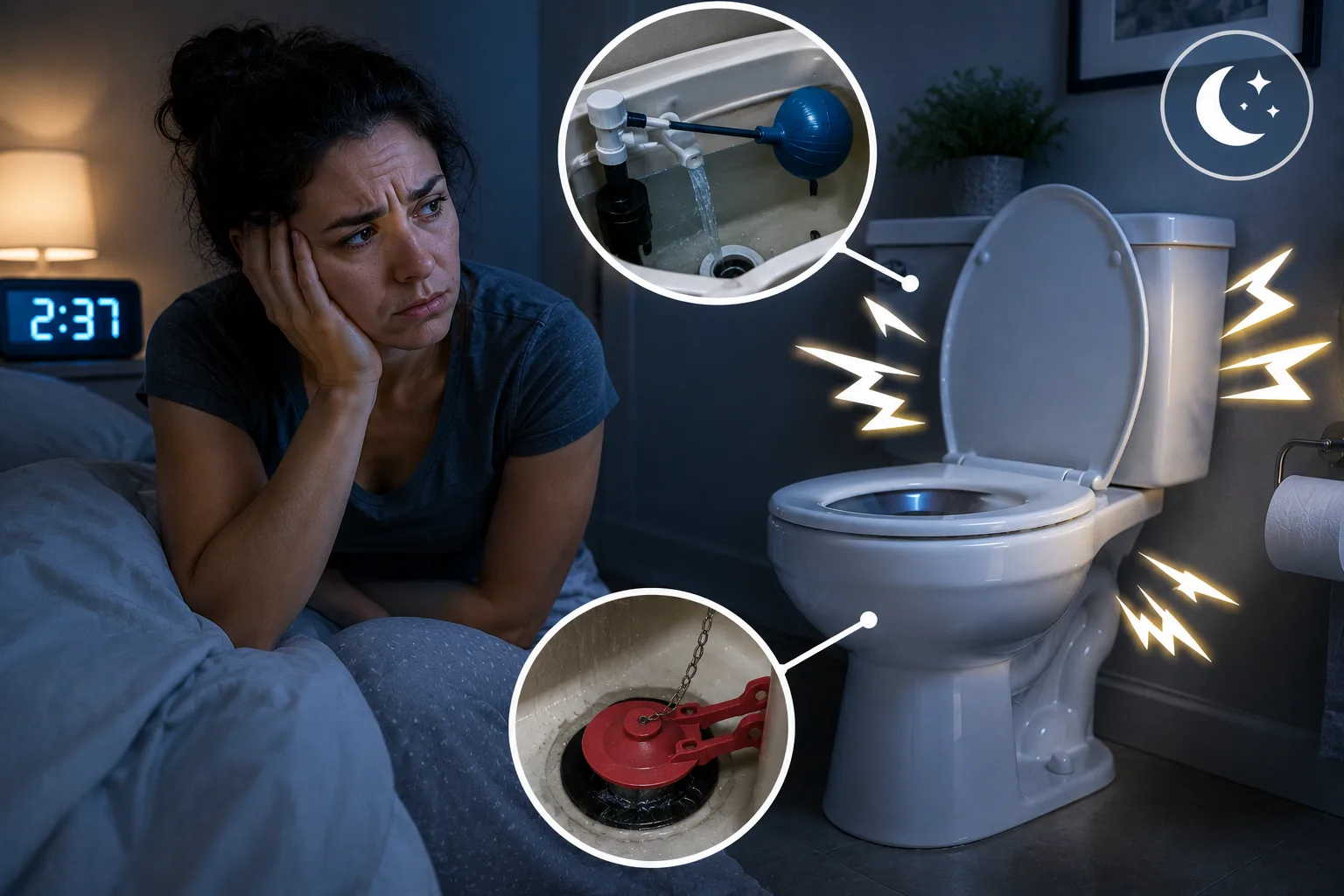
Toilet noise at night — hissing, gurgling, or a refill cycle that starts on its own — almost always comes from a worn flapper that lets water slowly leak from the tank into the bowl, which forces the fill valve to kick back in periodically. It's not dangerous, but it wastes water and drives up your bill. It's also usually a very simple, inexpensive repair.
What's Happening?
A quiet toilet keeps a steady water level in the tank thanks to a flapper that seals the opening at the bottom tightly. As that flapper ages, warps, or gets coated in mineral deposits, it no longer closes perfectly and lets a thin stream of water leak into the bowl continuously.
The tank slowly loses water without anyone flushing. When the level drops below a certain point, the fill valve (float mechanism) kicks back on automatically to top it up — that sudden refill, often in the quiet of the night, is what wakes people.
Other nighttime noises (banging in pipes, a sharp hiss) can also come from an aging fill valve itself, or from water pressure fluctuating overnight when fewer homes in the neighborhood are using water at the same time.
Is It Dangerous?
No, it's not dangerous. A noisy toilet at night is a water-waste and comfort issue, not a safety one.
It's not urgent unless you also notice:
- Water visibly overflowing the tank or leaking onto the floor
- A very loud, continuous hissing sound suggesting a larger leak in the supply valve
- A sudden, noticeable jump in your water bill (if you're metered)
In those cases, shut off the water supply valve at the base of the toilet (usually by turning it clockwise) while you wait for the repair.
Most Common Causes
| Cause | Explanation |
|---|---|
| Worn or misaligned flapper | The most common cause, it seals poorly and leaks water slowly |
| Faulty fill valve | The float mechanism ages and triggers irregularly |
| Misadjusted flapper chain | Too short or too long, preventing the flapper from sealing properly |
| Mineral deposits on the flapper seat | Hard water wears down the seal and prevents a tight closure |
| Nighttime water pressure fluctuation | Can cause a brief hissing sound with no actual leak |
| Cracked tank | Rarer, but can cause a slow water loss and noise |
Why This Happens in Quebec
This isn't especially climate-driven, but the hard water present in many regions (especially with a well) speeds up wear on the flapper's rubber seal, shortening its useful life compared to softer water.
In older homes (Montreal duplexes, triplexes, postwar bungalows), original toilets or older fill mechanisms are also more prone to this kind of wear, simply because the parts are often 15-20 years old or more.
How to Check It Yourself
- Take the lid off the tank and listen for water trickling even when nobody has flushed
- Add a few drops of food coloring to the tank (without flushing) and wait 15-20 minutes — if color shows up in the bowl, the flapper is leaking
- Visually check the condition of the rubber flapper — if it's stiff, cracked, or coated in deposits, it's probably the culprit
- Check that the chain linking the flush handle to the flapper isn't too tight or too loose
What you shouldn't do yourself: force fragile plastic parts inside the tank (they break easily), or ignore an actual water overflow thinking it's "just noise."
Can I Ignore It?
It depends. The noise itself doesn't damage anything, but a continuous flapper leak can waste an enormous amount of water — sometimes several hundred liters a day in severe cases.
If you're on a metered water supply, that translates directly into dollars on your bill. Even without a meter, it's needless waste of a resource, and the nighttime noise disrupts sleep. Since the repair is simple and cheap, there's not really a good reason to let it drag on.
How Much Does It Cost?
| Service | Approximate Price |
|---|---|
| Flapper replacement (part + labor) | $80 - $150 |
| Fill valve replacement | $100 - $200 |
| Full internal mechanism replacement | $150 - $300 |
| Emergency night/weekend repair | $200 - $450 |
| Full toilet replacement | $400 - $900 |
When to Call a Professional
- You've tried replacing the flapper yourself and the noise continues
- You see water on the floor around the base of the toilet, not just inside the tank
- The noise comes along with a drop in water pressure elsewhere in the house
- Several toilets make the same noise at the same time — that can point to a pressure issue across the whole plumbing system, not just one worn part
Related Questions
- Why Does My Toilet Keep Running Even When I'm Not Using It?
- Why Does My Toilet Make a Sucking or Gurgling Sound After I Flush?
- My Toilet Gurgles When the Washing Machine Drains: What Does It Mean?
- Why Do My Pipes Bang When I Shut the Water Off?
- My Basement Smells Like Sewage After It Rains: Causes & Fixes
- That Floor Drain In My Basement — Should I Be Worried About It?
Frequently asked questions
Can I replace the flapper myself?+
Yes, it's one of the simplest DIY plumbing repairs. Shut off the supply valve, empty the tank, remove the old flapper, and attach the new one — expect about 15 minutes and a $10-20 part from the hardware store.
Does this really waste that much water?+
Yes. A slowly leaking flapper can waste several hundred liters a day without you noticing, since the water drains silently into the bowl rather than overflowing.
Is it normal for this to only happen at night?+
Yes, that's very common: the house is quiet at night, so the fill valve kicking on becomes much more noticeable than during the day, even though the leak is present around the clock.
Do I need to call a professional immediately?+
No, not unless there's a visible overflow or a very loud hiss. Otherwise, this is a repair that can wait a few days or be attempted yourself before calling a plumber.
Get a free quote
More to know before your project.
By Julien Fortin — RBQ-licensed plumber, 10 years of experience in residential plumbing
Updated on July 23, 2026