
Why Are There Always More Plumbing Emergencies During the Spring Thaw?
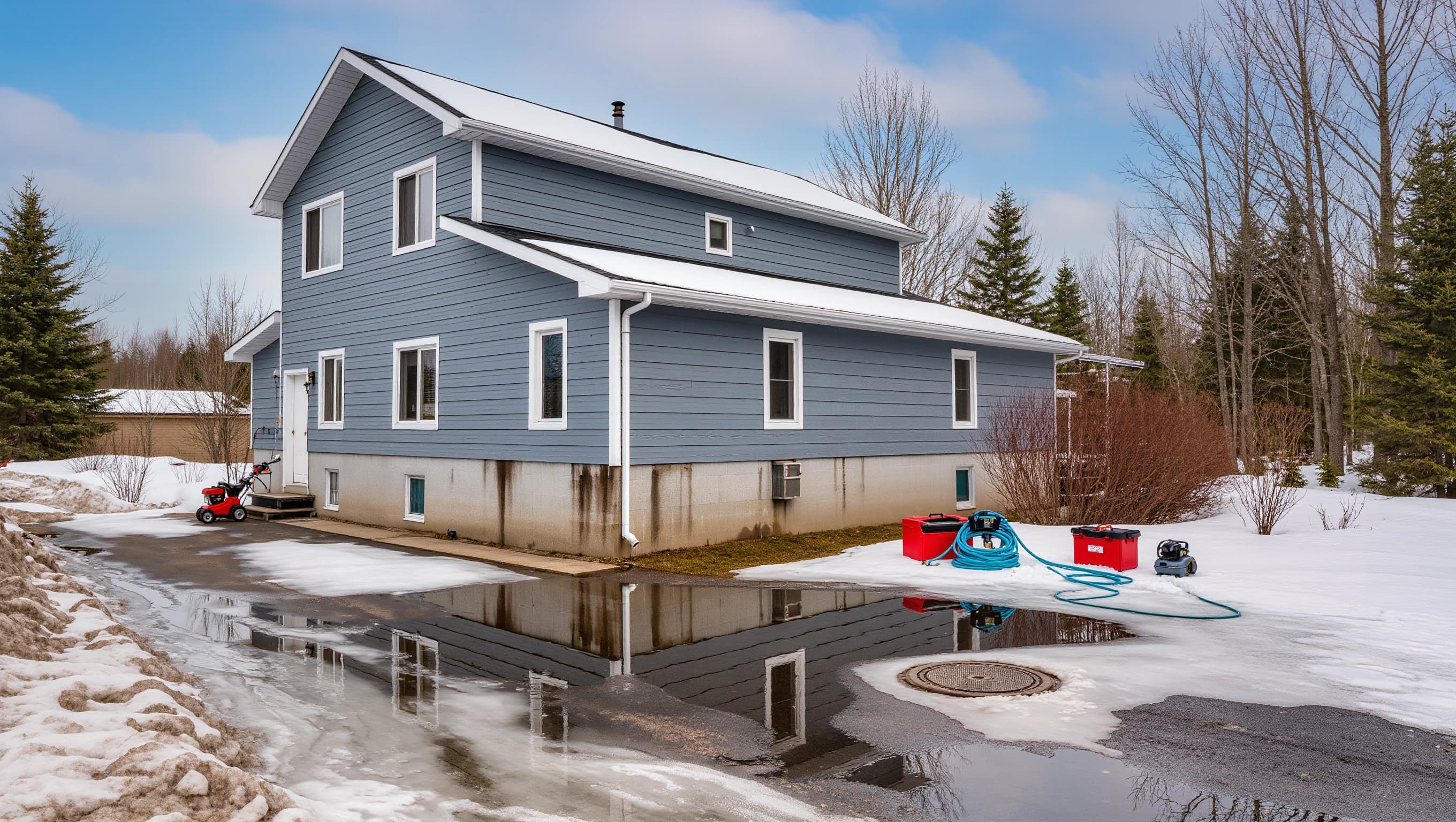
Yes, this is a well-documented reality: plumbing emergency calls rise sharply every spring across Quebec, mainly because of frozen pipes thawing out and revealing cracks, and shifting ground releasing water accumulated over winter. The most common cause is a pipe that froze and cracked over the winter without anyone knowing, then leaks only once the water turns liquid again at thaw. If water suddenly shows up somewhere during the thaw, act quickly rather than waiting.
What's Happening?
When water freezes inside a pipe, it expands — by up to 9% in volume. If the pipe can't absorb that pressure, it cracks or bursts, but often without a visible leak as long as ice still blocks the passage. It's only at thaw, when the ice melts and water starts flowing again at normal pressure, that the crack reveals itself and water starts leaking — sometimes weeks after the initial freeze.
At the same time, the thaw melts a large amount of snow and ice accumulated over winter in a short period. That water has to go somewhere: it seeps into the ground, saturates foundations, and puts extra pressure on French drains and sump pump systems, which suddenly have to handle a much higher flow than normal.
The ground itself also shifts with repeated freeze-thaw cycles, which can slightly move buried pipes or fittings, creating new weak points right when the system is under the most strain.
Is It Dangerous?
It really depends on what's happening in your home, but several thaw scenarios turn into real emergencies very quickly. Inspect or act immediately if:
- Water suddenly appears in the basement with no recent rain
- A sump pump runs continuously or seems unable to keep up with the flow
- You hear water running inside a wall or ceiling without knowing where from
- An exposed pipe (garage, crawlspace, unheated basement) shows frost, bulging, or a visible crack
- The French drain seems to be backing up instead of draining
A pipe that bursts during the thaw can dump hundreds of liters of water an hour into a home — it's one of the most costly water damage scenarios of the year, and it develops fast, within hours.
Most Common Causes
| Cause | Explanation |
|---|---|
| Pipe frozen and cracked over winter, revealed at thaw | Ice blocked the crack all winter; water only flows once the ice melts |
| Sump pump overwhelmed by the flow | The volume of meltwater exceeds the pump's capacity, especially if it's old or poorly maintained |
| Saturated or clogged French drain | Meltwater combined with spring rain saturates a drain already partially blocked by sediment |
| Foundation cracked by ground movement | Repeated freeze-thaw cycles widen an existing crack, letting meltwater in |
| Outdoor faucet (garden hose) not shut off in the fall | An outdoor faucet still connected to a hose froze and cracked the plumbing behind it over winter |
| Municipal sewer backup | The municipal network, overwhelmed by the combined volume of meltwater and rain, backs up toward the lowest properties |
Why This Happens in Quebec
Quebec goes through extreme temperature swings between deep winter and the spring thaw, often concentrated over just a few weeks in March-April, creating an abrupt rather than gradual transition. It's exactly this kind of fast transition, combined with ground still partly frozen deeper down that prevents meltwater from draining normally, that multiplies emergencies.
Older housing stock — postwar bungalows, Montreal triplexes with century-old masonry foundations — also has drainage systems and pipes that weren't always designed for the meltwater volumes seen today with sometimes milder winters followed by sharper thaws. Plumbing contractors are generally swamped during this period, which stretches out response times if you wait too long to call.
How to Check It Yourself
Before the thaw, if possible, inspect exposed pipes in unheated areas (garage, crawlspace, basement) for frost, visible bulging, or a crack. Test your sump pump now by pouring a bucket of water into the pit to confirm it starts up and drains properly.
During the thaw, check the basement daily for any sign of water, even minor, and listen for the sound of running water without any tap turned on. Make sure the ground around your foundation is graded to direct meltwater away from the house rather than toward it.
Never try to thaw a pipe yourself with an open flame (torch) — that's a serious fire risk inside a wall or ceiling. Do not enter a basement where water is touching the electrical panel or any outlet.
Can I Ignore It?
No, not if you have a concrete sign like water appearing or an overloaded sump pump. These situations don't wait — a cracked pipe that's leaking keeps leaking until the water is shut off or the pipe is repaired, and an overwhelmed sump pump can flood an entire basement within hours.
If you have no current sign but know some pipes are exposed to cold or your drainage system is old, you can schedule a preventive inspection before the next thaw rather than waiting for an incident — that's almost always cheaper than the emergency repair that follows a water disaster.
How Much Does It Cost?
| Service | Estimated Price (CAD) |
|---|---|
| Emergency drain-clearing or intervention during the thaw | $150 - $450 |
| Repairing a cracked pipe (accessible location) | $300 - $900 |
| Sump pump replacement or repair | $400 - $1,200 |
| Cleanup and repair of basement water damage after a flood | $2,000 - $10,000+ depending on extent |
Costs rise fast if water had time to damage the basement (floors, walls, belongings) before being stopped — that's why acting quickly at the first signs is almost always cheaper than waiting.
When to Call a Professional
- Water appears in the basement or elsewhere with no obvious explanation
- Your sump pump runs nonstop or you hear an unusual noise
- You see or suspect a cracked pipe, even without an active leak yet
- The French drain seems to be backing up instead of draining normally
- You want a preventive inspection before the next thaw if your home has had a problem before
A plumber can pinpoint a crack in a buried or in-wall pipe without tearing everything apart, assess whether your sump pump's actual capacity matches the typical meltwater volume in your area, and respond quickly during the busy season when wait times stretch out if you delay too long.
Related Questions
- Why Do My Pipes Bang When I Shut the Water Off?
- Should I Insulate My Water Pipes In the Unheated Basement?
- My Basement Smells Like Sewage After It Rains: Causes & Fixes
- My Basement Is Damp — Is It a Plumbing, Foundation, or Ventilation Problem?
- Why Did My Water Pressure Suddenly Drop?
- My Neighbor Has a Drainage Problem That's Affecting My Property — What Can I Do?
Frequently asked questions
How do I know if one of my pipes froze this winter without my knowledge?+
Watch unheated areas for frost, slight pipe bulging, or unusually weak water pressure at a specific faucet — these are signs a pipe may have frozen and could leak once it thaws.
Should I shut off the house water before leaving on a winter trip?+
It's good practice if you're gone more than a few days and the heat stays low — it limits the damage if a pipe freezes and cracks while you're away, even though it doesn't prevent the freezing itself.
My sump pump has a battery backup system — is that enough?+
It's good protection during a power outage, but it has limited runtime (often just a few hours) and sometimes lower pumping capacity than the main pump — it's not a guarantee against an exceptional meltwater flow.
How long after the thaw can plumbing emergencies still show up?+
The peak is usually within two to three weeks of the thaw starting, but a cracked pipe can take longer to leak visibly if the crack is small or water access is limited.
Should I call a plumber immediately if I see water in the basement during the thaw?+
Yes, especially if you can't identify the source yourself within a few minutes. Every hour an active leak continues adds to the damage and the final repair cost.
Get a free quote
More to know before your project.
By Julien Fortin — RBQ-licensed plumber, 10 years of experience in residential plumbing
Updated on July 23, 2026