
Why Does My Floor Creak More Than Before Since the Renovation?
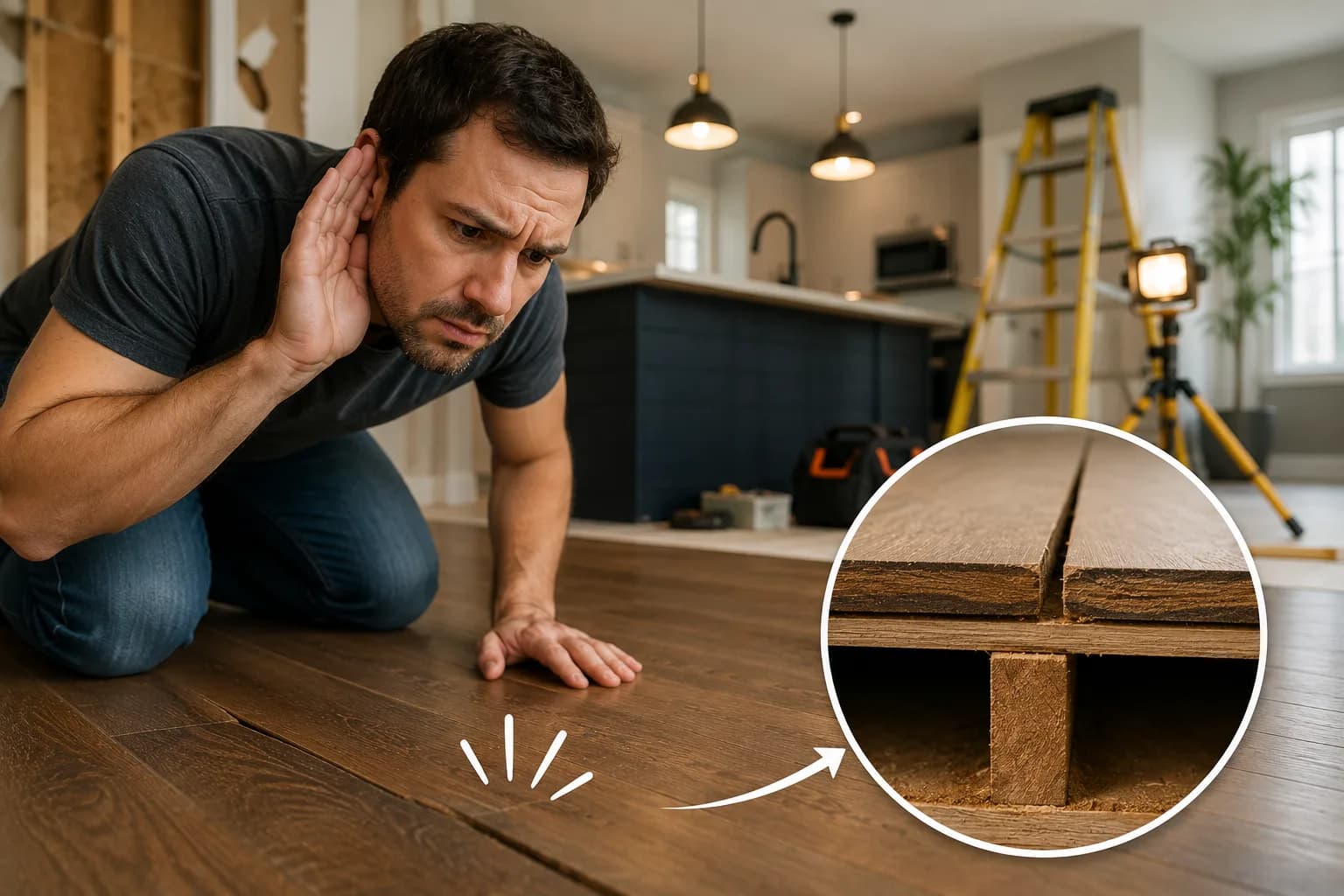
A floor that creaks more after a renovation is almost always caused by subfloor screws or nails that got disturbed during the work, or by wood shrinking as it dries out after a change in the home's humidity. This is usually not dangerous or structural. Worry only if the noise comes with a floor that sags or shifts underfoot, or if a wall was removed during the renovation. If in doubt, have someone check underneath before you repaint or install new flooring.
What's Happening?
A wood floor sits on a subfloor (plywood or boards) fastened to the joists with nails or screws. Over time, or after vibration from construction work, these fasteners loosen slightly. The wood then rubs against itself or against the nails with every step, which creates the squeak.
A renovation often disturbs this fastening without anyone noticing: workers walking around with heavy equipment, a floor removed and reinstalled, or simply a change in humidity level caused by a new heating or cooling system that dries out the wood faster than before.
In the vast majority of cases, this is normal wear accelerated by the work, not a sign that something broke underneath the house.
Is It Dangerous?
No, in the vast majority of cases a creaking floor is a cosmetic and noise issue, not a structural one. The sound does not mean the floor is going to give way.
Have the structure checked promptly if:
- the floor visibly sags or shifts underfoot, not just noise
- the creaking appeared at the same time a wall was removed or altered during the renovation
- you see a crack in the ceiling below that follows the same path as the noise
- a nearby door or window started sticking at the same time
- the noise covers a large section of the floor, not just one or two spots
Most Common Causes
| Cause | Explanation |
|---|---|
| Loosened subfloor fasteners | The nails or screws holding the subfloor to the joists loosened during construction |
| Wood drying and shrinking | A new heating or cooling system lowers the home's humidity, causing the wood to move |
| Flooring not acclimated before install | New wood didn't have time to adjust to the room's humidity before being installed |
| Subfloor not refastened properly after plumbing or electrical work | A section opened to run wires or pipes, then closed again without properly re-screwing it |
| Changed load in the room | A heavy piece of furniture or a new kitchen island adds weight where the floor wasn't used to it |
| Structural change | A wall or support removed during the renovation changes how the floor behaves |
Why This Happens in Quebec
Quebec's climate makes wood move more than in milder regions. In winter, heating dries out indoor air drastically, which shrinks the wood slightly and loosens fasteners. In summer, humidity returns and the wood swells back. This cycle is normal, but a recent renovation that disturbed the subfloor makes this movement much more audible than before.
Older Quebec homes — postwar bungalows, Montreal triplexes — also have joists that have already shifted over decades, so a renovation can wake up weak points that had been silent for years.
How to Check It Yourself
- Walk slowly across the floor to pinpoint exactly which spots creak
- Go to the basement or crawlspace under the area and check whether the subfloor sits flush against the joists, with no visible gap
- Look for slightly raised nail heads or signs of movement on the wood
- Note whether the noise is localized to one or two spots (normal) or spread across a whole room (worth watching)
Don't pull up finished flooring yourself to inspect underneath unless you're confident you can put it back correctly — you risk damaging new flooring for no reason.
Can I Ignore It?
Yes, in most cases. A localized creak caused by loosened fasteners doesn't dangerously worsen over time — it stays a noise annoyance. You can live with it, or have it fixed whenever it really bothers you.
If the noise comes with visible floor movement, the situation can get worse: the subfloor keeps detaching further, wear on the flooring at that spot accelerates, and a repair that would cost a few hundred dollars today can turn into replacing an entire section later.
How Much Does It Cost?
| Service | Estimated Price |
|---|---|
| Subfloor inspection | $150 - $300 |
| Spot repair (screws from below) | $200 - $500 |
| Localized subfloor repair | $500 - $1,500 |
| Structural assessment with engineer (if wall removed) | $400 - $900 |
| Major structural repair | $1,500 - $5,000+ |
These figures are for a targeted repair, much smaller than a full kitchen renovation ($15,000 to $50,000), which often includes a complete flooring redo.
When to Call a Professional
- The creaking covers a large area, not just one or two spots
- The floor visibly moves or feels soft underfoot
- The noise appeared exactly when a wall was removed or altered
- You see a crack in the ceiling of the floor below
- The basement shows a visible gap between the subfloor and the joists
A contractor or inspector can access the space under the floor, check the condition of the joists, and tighten or replace fasteners without damaging the finished flooring — access a homeowner usually doesn't have without tearing up part of the floor.
Related Questions
- Why Do Cracks Keep Coming Back In the Same Spot After the Renovation?
- How Do I Know If a Wall Is Load-Bearing Before I Remove It?
- My Contractor Disappeared In the Middle of the Job — What Do I Do?
- Why Does My Renovated Kitchen Still Smell Weird Months Later?
- Why Is There a Gap Between My Counter and the Wall Since the Kitchen Renovation?
- How Many Quotes Should I Really Get Before Choosing a Contractor?
- Why Did My Renovation Quote Nearly Double Once the Work Started?
Frequently asked questions
Is it normal for it to creak more than before even though the renovation finished months ago?+
Yes, that's common. Wood keeps moving for several months after a renovation while the home's humidity stabilizes and the subfloor settles again. If the noise levels off without getting worse, it's normal.
Can I fix a floor creak myself?+
For a specific spot accessible from the basement, yes: a properly placed subfloor screw can solve the problem. From above, it's riskier without the right tools, since you can damage the finished flooring.
How much does fixing a squeaky floor cost?+
For a spot repair accessible from the basement, expect $200 to $500. If the subfloor needs to be refastened over a larger area, it can climb to $1,500.
Do I need to call a professional right away?+
No, unless the floor visibly shifts underfoot, a wall was removed during the renovation, or you see a crack in the ceiling below. For a simple localized noise, it can wait.
Get a free quote
More to know before your project.
By Catherine Lavoie — RBQ-licensed general contractor, residential renovation specialist
Updated on July 23, 2026