
Why Is There a Gap Between My Counter and the Wall Since the Kitchen Renovation?
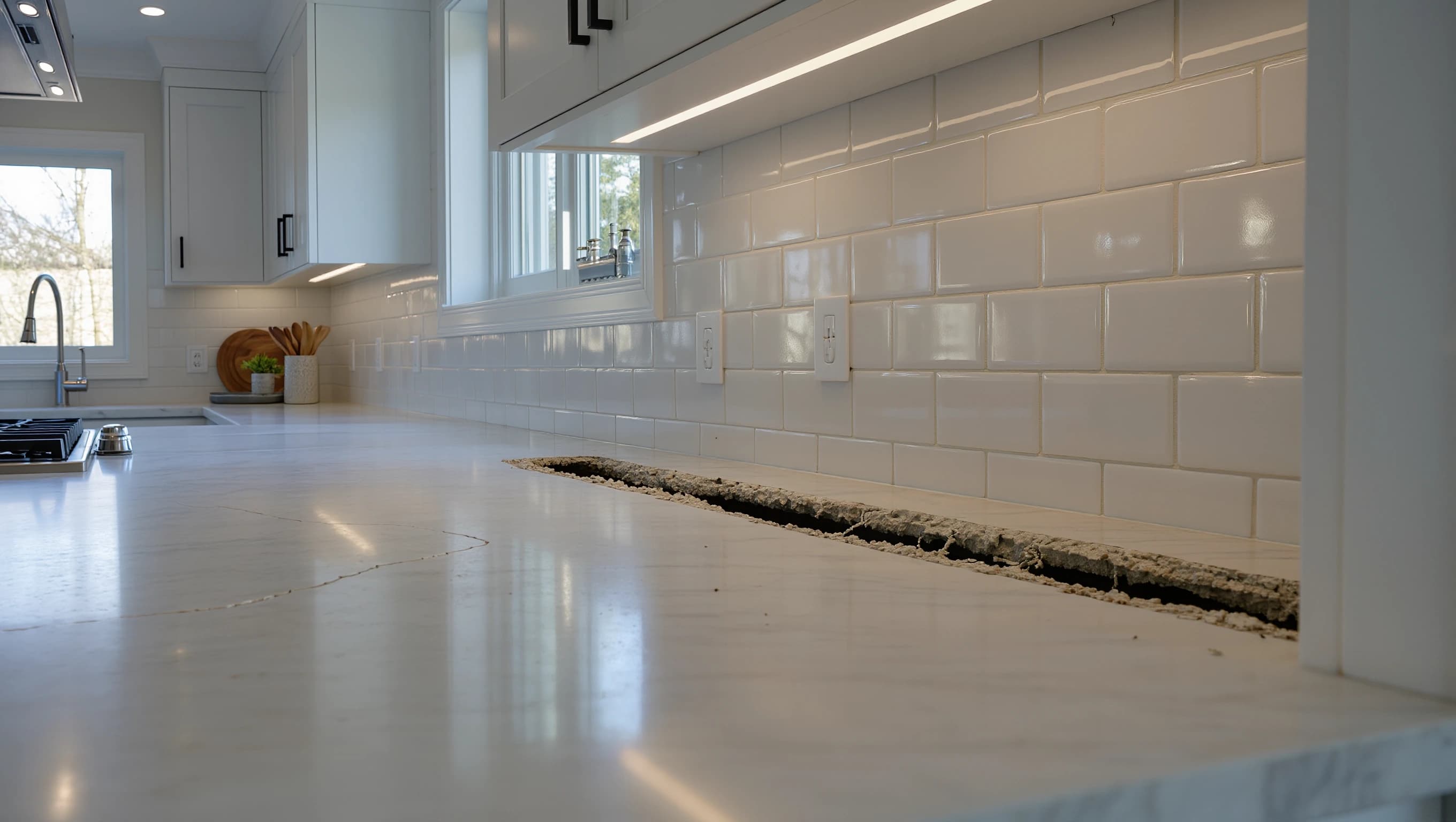
A small gap (under 3 mm) between the counter and the wall is common and usually harmless — walls are almost never perfectly straight. A wider gap, one that grows over time, or one that only shows up on one side is more likely a sign the counter was fitted poorly or that something has shifted underneath it. It's not dangerous on its own, but it lets water and grime through, and it's worth having it fixed soon.
What's Happening?
The walls in a house, even a new one, are almost never perfectly flat or perfectly straight. When a counter is installed, the installer has to "scribe" (custom-fit) the edge against the existing wall. If that work is rushed or done without exact measurements, a visible gap is left behind.
In other cases, the gap appears gradually after installation: the wood or cabinets under the counter settle, dry out, and shift slightly in the months following installation, especially if the room's humidity level has changed.
More rarely, a gap that keeps growing can mean the cabinets themselves are no longer firmly anchored to the wall or are sagging slightly.
Is It Dangerous?
No, this generally isn't a structural problem or a danger to the house. It's mostly an appearance and sealing issue: an open gap lets water, grease, and dirt seep in behind the counter, where it's hard to clean.
Take a closer look if:
- The gap keeps growing months after installation
- The counter itself seems to be moving or is no longer level
- Water or moisture is visible in the gap after cleaning the counter
- The cabinets under the counter also seem slightly pulled away from the wall
Most Common Causes
| Cause | Explanation |
|---|---|
| Wall not perfectly straight (common in older houses) | The counter was fitted to a wall that isn't flat along its whole length |
| Poor "scribing" during installation | The installer didn't take the time to cut the counter edge to match the wall's exact shape |
| Cabinet wood drying out and settling | New wood keeps moving slightly for months after installation, especially with seasonal humidity changes |
| Cabinets not firmly anchored to the wall | Too few or poorly anchored screws let the cabinets shift very slightly over time |
| Quartz or stone counter miscalibrated at the factory | An imprecisely cut edge from manufacturing can't be easily corrected on site |
| Minor floor settling under the cabinets | Rare, but a floor that shifts very slightly can throw off the whole counter-cabinet alignment |
Why This Happens in Quebec
Older Quebec houses (Montreal-style triplexes and duplexes, postwar bungalows) often have walls that have shifted slightly over the decades due to freeze-thaw cycles and normal foundation settling. A wall that looks straight to the eye can be off by several millimeters over the length of a kitchen counter.
The big humidity swings between Quebec summers and winters also move cabinet wood more than in milder climates, which explains why a gap that didn't exist at installation can show up after the first heating season.
How to Check It Yourself
You can safely assess the situation:
- Measure the gap's width at several points along the wall to see if it's even or widening on one side
- Run a finger or flashlight into the gap to check for moisture or mold
- Check whether the counter is still level with a spirit level
- Track whether the gap has changed size since installation by taking a dated photo to compare later
What you shouldn't do yourself: try to "force" the counter against the wall or move it without a professional's help, especially with a stone or quartz counter, which can crack under uneven pressure.
Can I Ignore It?
A stable gap of a few millimeters, with no moisture and no ongoing movement, can simply be sealed with kitchen caulk and left as-is. A gap that's growing or that shows moisture shouldn't be ignored.
If you ignore a widening gap, the water and dirt seeping in can eventually damage the underside of the counter or the top of the cabinets, which costs more to repair than a simple adjustment made early.
How Much Does It Cost?
| Work | Estimated Price |
|---|---|
| Professional caulking of the gap | $75 - $200 |
| Re-scribing of the existing counter | $200 - $500 |
| Cabinet tightening and realignment | $150 - $400 |
| Replacement of a poorly cut counter section | $500 - $2,000 depending on material |
If the issue reveals a broader installation defect, the fix may fall under a warranty claim tied to the original kitchen renovation (typically $15,000 to $50,000 for the full project).
When to Call a Professional
- If the gap is wider than 5 mm or keeps growing
- If you see moisture, mold, or an odor in the gap
- If the counter is no longer level or seems to have shifted
- If the cabinets under the counter also look misaligned
- If the work is still under warranty: contact the contractor before paying for a fix yourself
Related Questions
- Why Does My Renovated Kitchen Still Smell Weird Months Later?
- Why Won't My New Kitchen Cabinets Close Properly Anymore After a Few Months?
- Why Does My Floor Creak More Than Before Since the Renovation?
- Why Do Cracks Keep Coming Back In the Same Spot After the Renovation?
- My Contractor Disappeared In the Middle of the Job — What Do I Do?
- How Many Quotes Should I Really Get Before Choosing a Contractor?
Frequently asked questions
Can I fix the gap myself with caulk?+
Yes, if the gap is small (under 5 mm), stable, and dry. Use a silicone-based kitchen caulk designed to resist water. If the gap is wider or uneven, a professional adjustment will hold up better long-term.
Is it normal for the gap to only show up after a few months?+
Yes, that's common: cabinet wood keeps drying out and shifting slightly after installation, especially through the first season change. A small gap that appears this way generally isn't cause for concern.
Should I call a professional right away if I see moisture in the gap?+
Yes, as soon as you can. Moisture trapped behind a counter can promote mold and damage the cabinets underneath within just a few weeks.
How much does a counter adjustment cost under warranty?+
If the work is still covered by the contractor's warranty, the fix should be free. Outside of warranty, a re-adjustment typically costs between $200 and $500.
Get a free quote
More to know before your project.
By Catherine Lavoie — RBQ-licensed general contractor, residential renovation specialist
Updated on July 23, 2026