
Why Did My Renovation Quote Nearly Double Once the Work Started?
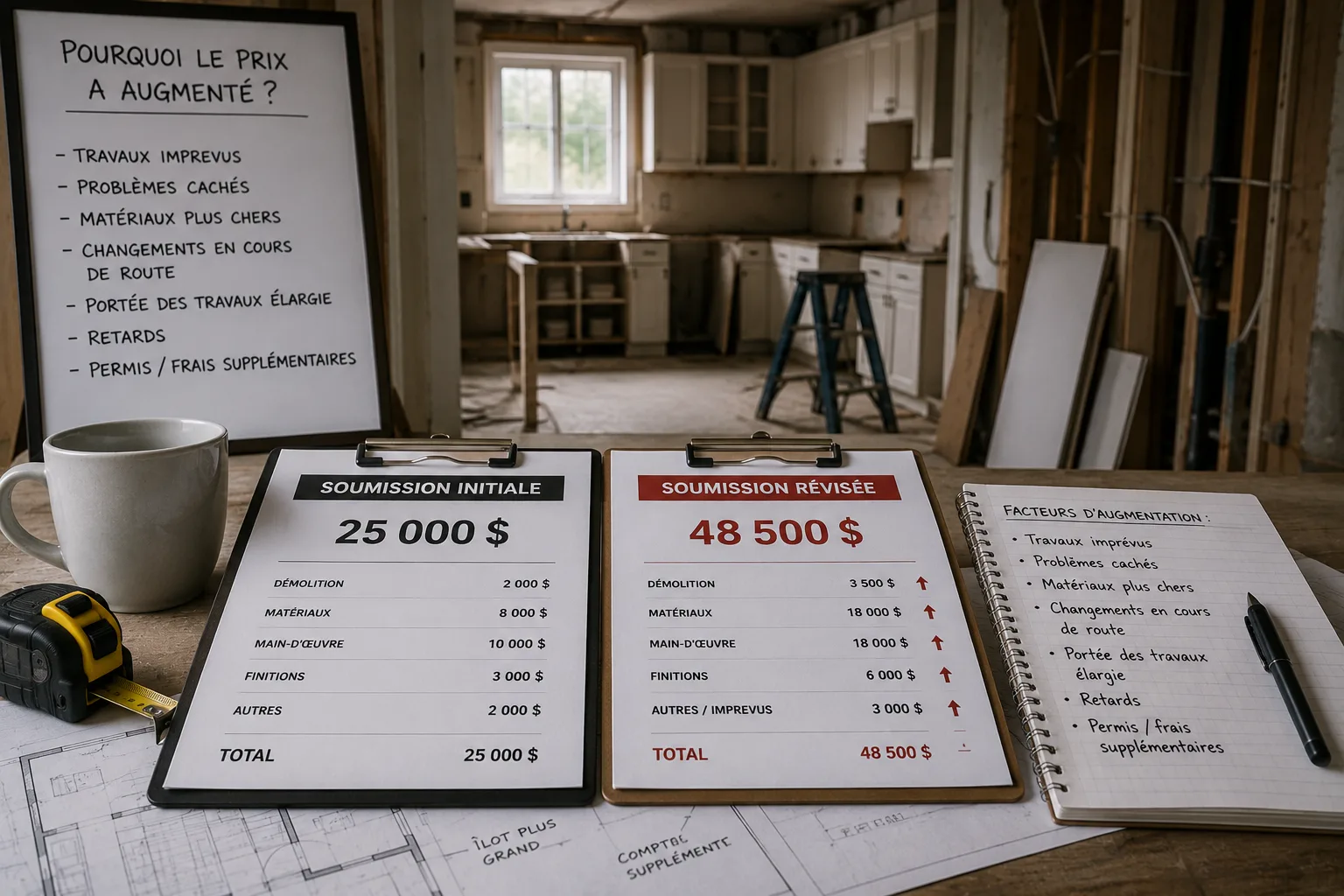
The signed quote listed a specific amount, but the project's final bill far exceeds that figure, sometimes nearly double. This unfortunately common scenario generally has identifiable causes rather than simply being bad luck.
Legitimate causes of a cost increase
| Legitimate cause | Why it's justifiable |
|---|---|
| Discovering a hidden problem once walls are opened | A genuine surprise even an experienced contractor couldn't have anticipated |
| Changes requested by the client along the way | Any modification to the original scope logically brings an added cost |
| Material price increase between the quote and the actual purchase | An external factor outside the contractor's control, though rarely enough to double the price on its own |
Causes that should have been avoided
An initial quote deliberately kept low to land the contract, with the intent of adding fees once the work has started and the client is less able to negotiate or switch contractors, is a problematic practice. A quote that didn't clearly detail what was included, leaving wide room for interpretation over what counts as a billable "extra," also frequently contributes to this kind of overrun.
How to protect yourself before even signing
Require a detailed quote that specifies exactly what's included (specific materials, finishes, quantities) rather than a vague lump sum. Explicitly ask how unforeseen issues and changes will be billed — an hourly rate agreed on in advance for extras avoids arbitrary surprises once the work has started.
What to do if the cost climbs along the way
Request a detailed written justification for any increase before agreeing to pay, and compare that justification against the original contract to check whether the increase genuinely matches a legitimate surprise or a change you requested. For a disagreement that can't be resolved amicably, a formal demand letter is the next step before considering legal action.
How to prevent this on a future project
A contract that sets a fixed price for the defined scope, with a clear clause on the procedure for any change (prior written approval, cost agreed in advance), protects against unjustified price increases far better than trust based solely on the contractor's presumed good faith.
Frequently asked questions
Is a 10-15% increase normal on a renovation project?+
A modest increase tied to a documented surprise is common, but an increase approaching or exceeding 50% deserves careful scrutiny of its justification.
Can I refuse to pay an increase I consider unjustified?+
You can dispute an increase not covered by the original contract, particularly if it was never approved in writing before being carried out.
How do I know if an initial quote was deliberately too low?+
It's hard to prove directly, but comparing the quote against other contractors' bids for the same scope helps spot an abnormally low outlier.
Does a written-approval clause for extras slow down the project?+
Slightly, since it adds a step before each change, but this protection is generally worth the minor delay it causes.
Get a free quote
More to know before your project.
By Catherine Lavoie — RBQ-licensed general contractor, residential renovation specialist
Updated on July 23, 2026