
Why Do Cracks Keep Coming Back In the Same Spot After the Renovation?
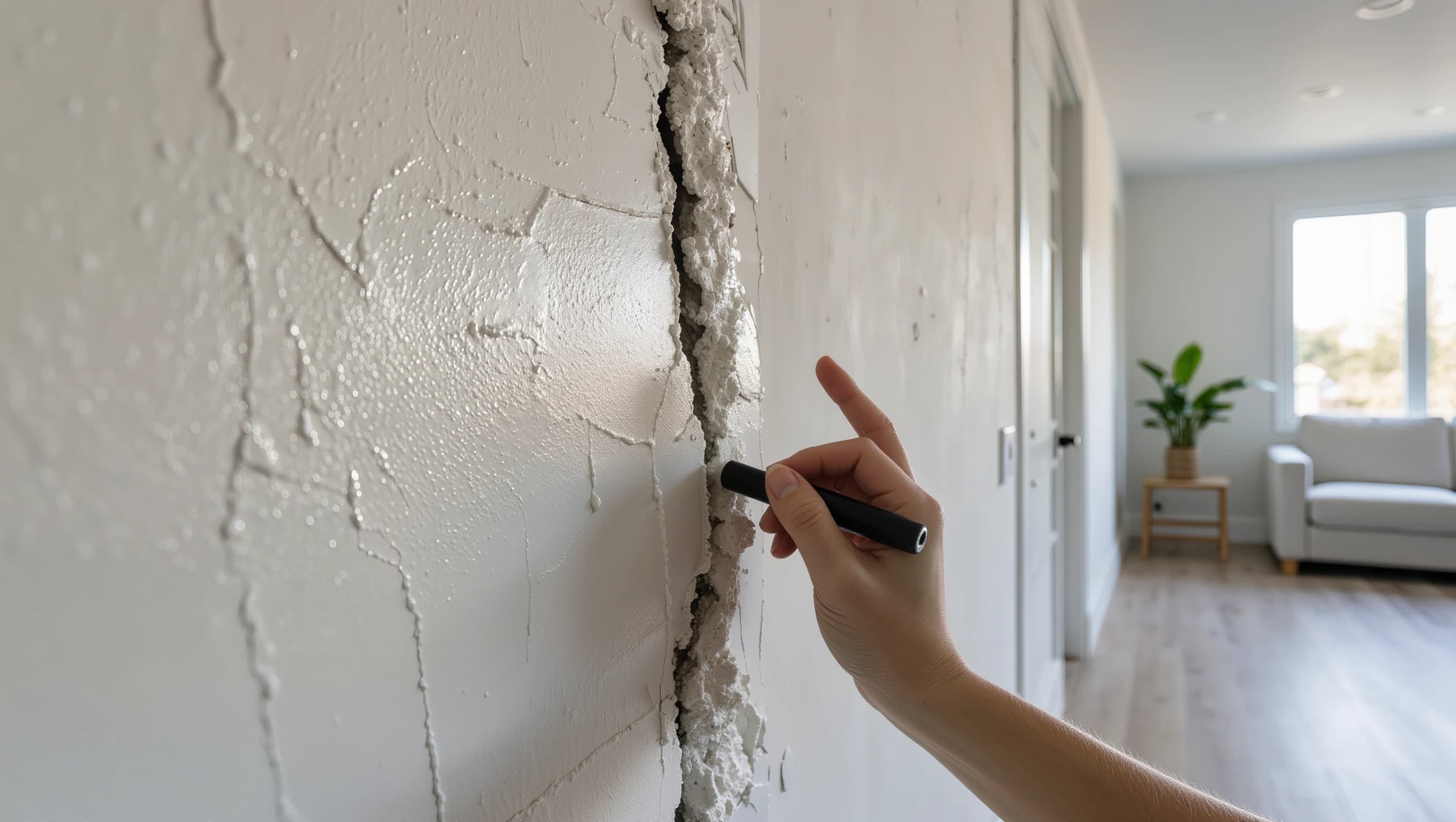
A crack that always comes back in the same spot means there's real movement happening right there — a poorly finished drywall joint, normal seasonal movement of the house, or in rare cases a genuine structural weak point. Most of the time it's not dangerous: it's a finishing crack that was patched instead of properly repaired. Worry if the crack is horizontal, wider than a pencil, or comes with a door that sticks.
What's Happening?
A crack that always reappears in exactly the same spot is almost never a coincidence: there's a movement point right there, and nothing has been done to absorb it. Filling a crack with plaster or joint compound without addressing the cause only hides the problem for a few months.
The most common case: a joint between two drywall panels that wasn't reinforced with mesh tape before being covered. This joint moves slightly with the seasons, and joint compound alone isn't flexible enough to follow that movement without splitting.
A less common but more serious case: real movement in the house's structure — a foundation that keeps settling, or a framing point under too much stress from a change made during the renovation.
Is It Dangerous?
Most of the time, no. A thin crack that keeps returning on a drywall joint is a finishing issue, not a structural one. It doesn't indicate any risk to the house.
Have it assessed by a professional if:
- the crack is wider than a pencil (about 3 mm) or keeps widening
- it's horizontal rather than vertical or diagonal
- it runs through a foundation wall, not just interior drywall
- a nearby door or window started sticking at the same time
- it appears right above a door or window frame and keeps growing
Most Common Causes
| Cause | Explanation |
|---|---|
| Poorly reinforced drywall joint | Mesh tape wasn't applied or was applied incorrectly before the joint compound, leaving the joint fragile |
| Incomplete previous repair | The crack was patched without addressing the movement that caused it, so it comes back |
| Normal seasonal movement of the house | The structure shifts slightly every winter and summer, reopening weak points |
| Continued foundation settling | The house keeps stabilizing after work, especially if the soil was disturbed |
| Structural stress point | A crack above a door, window, or beam under too much load |
| Wrong repair material | Joint compound used instead of a flexible compound designed for movement joints |
Why This Happens in Quebec
Clay soil and freeze-thaw cycles move Quebec foundations more than in most of Canada. Every winter, the soil around the foundation freezes and swells slightly, then thaws in spring — a small but repeated movement that reopens poorly repaired cracks year after year.
Masonry foundations on centuries-old homes and older Montreal triplexes have often already shifted over decades before your renovation, so a crack that seemed fixed may simply be following a seasonal cycle that existed long before the work.
How to Check It Yourself
- Draw a pencil mark on each side of the crack and note the date, to see if it widens over time
- Check whether the crack is vertical, diagonal, or horizontal — horizontal is the most concerning sign
- Go to the basement to see if a matching crack exists in the foundation, at the same spot
- Check whether a nearby door or window sticks more than before
Don't try to diagnose a foundation crack yourself by digging around the house or altering the drainage — leave that assessment to a professional.
Can I Ignore It?
It depends. A thin, recurring crack on a drywall joint, with no other symptom, can be ignored or simply repaired properly whenever it's convenient — it doesn't worsen dangerously.
If the crack is widening, becoming horizontal, or coming with a sticking door, no, don't wait. Untreated structural movement generally gets worse faster in winter, and a problem that would cost a few hundred dollars to fix early can become a foundation repair costing thousands if you wait too long.
How Much Does It Cost?
| Service | Estimated Price |
|---|---|
| Engineer assessment | $300 - $800 |
| Drywall joint repair (with proper mesh tape) | $150 - $400 per crack |
| Foundation crack sealing | $500 - $2,000 |
| Minor structural repair | $2,000 - $8,000 |
| Underpinning or major foundation repair | $8,000 - $20,000+ |
These prices are for a targeted repair. A full home addition ($40,000 to $150,000) often includes a complete foundation review, which is much broader than fixing an isolated crack.
When to Call a Professional
- The crack is wider than 3 mm or keeps growing month to month
- It's horizontal or runs through a foundation wall
- A nearby door or window sticks more than before
- The crack has come back three times or more in the same spot despite repairs
- It appeared shortly after an addition or structural change
An engineer or qualified contractor can determine whether the movement comes from a simple bad joint or a real foundation issue — a distinction that's impossible to make by eye, especially for a crack that looks minor on the surface.
Related Questions
- How Do I Know If a Wall Is Load-Bearing Before I Remove It?
- Why Does My Floor Creak More Than Before Since the Renovation?
- Is It Better to Add Onto My House or Move If It's Become Too Small?
- My Contractor Disappeared In the Middle of the Job — What Do I Do?
- Why Did My Renovation Quote Nearly Double Once the Work Started?
- Is It a Good Idea to Sell My House Without Fixing the Problems a Buyer Will Notice?
- Do I Need a Permit to Finish My Basement?
Frequently asked questions
Can I just repaint over the crack again?+
You can, but if the cause isn't addressed, the crack will come back. For a joint crack, use mesh tape and a flexible compound instead of ordinary joint compound so it doesn't return.
Is it normal to get cracks after a renovation or addition?+
Yes, some finishing cracks are normal in the first year after work, while the house adjusts. What's not normal is a crack that keeps widening or returning despite repeated repairs.
How much does it cost to fix a recurring crack?+
For a poorly done drywall joint, expect $150 to $400 for a proper repair. If the cause is a foundation crack, sealing typically costs between $500 and $2,000.
Do I need to call a professional right away?+
No, not for a thin finishing crack. Yes, promptly, if it's horizontal, wider than a pencil, or accompanied by a sticking door.
Does a crack that always returns in the same spot mean my foundation is moving?+
Not necessarily. It's often just a poorly repaired drywall joint. But if a matching crack also appears in the foundation in the basement, it's worth having a professional take a look.
Get a free quote
More to know before your project.
By Catherine Lavoie — RBQ-licensed general contractor, residential renovation specialist
Updated on July 23, 2026