
My House Feels Cold Even Though the Thermostat Says It's Warm: Why?
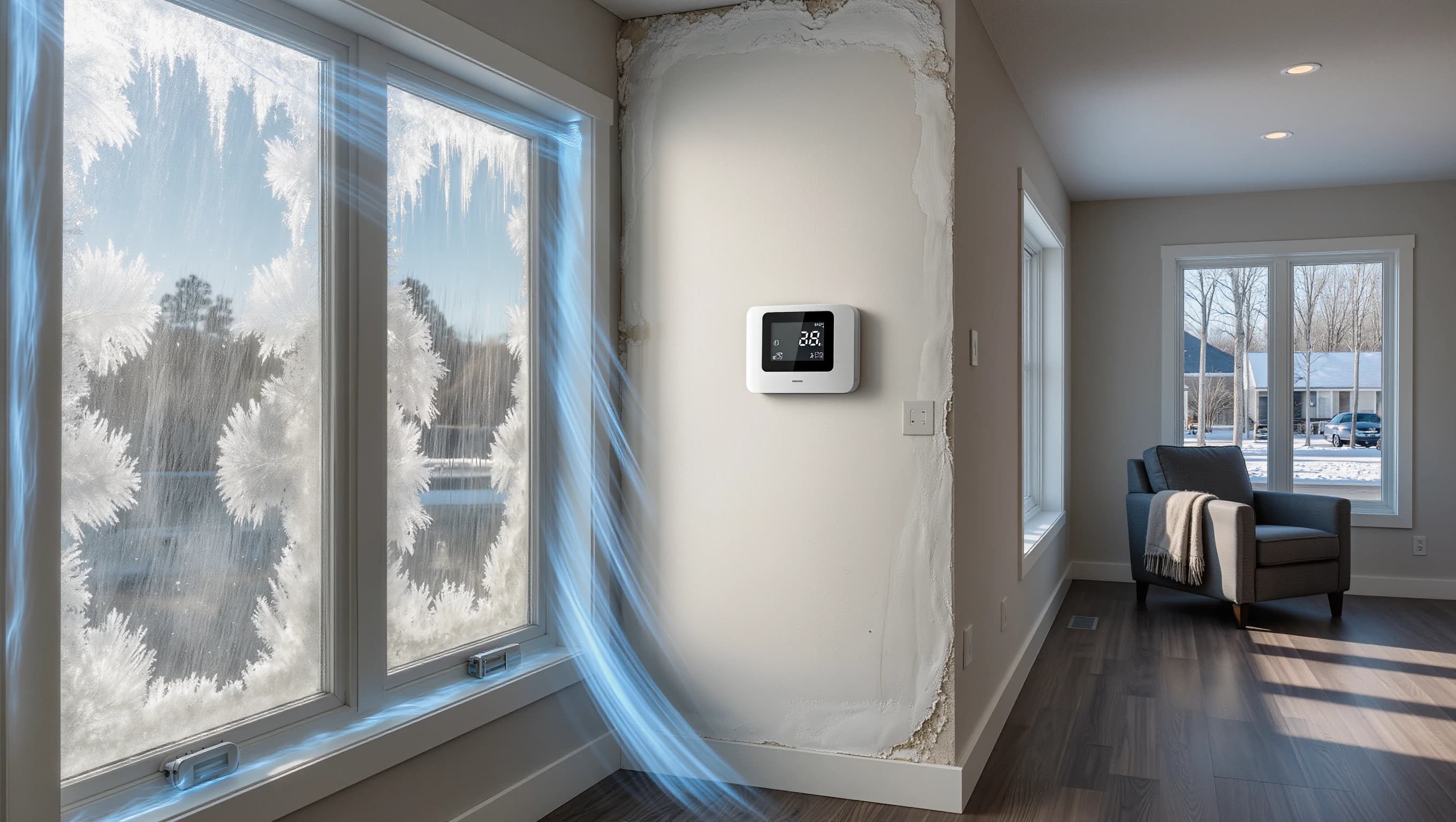
A gap between what the thermostat displays and what you actually feel is almost always caused by a heat distribution problem, not the thermostat itself: a clogged filter, poorly insulated ducts, a heat pump or furnace running below capacity, or cold drafts. It isn't dangerous by itself, except during prolonged extreme cold where a struggling system can lead to frozen pipes. Check the filter and vents first before calling a professional.
What's Happening?
The thermostat measures the air temperature right around it, not the whole house. If the warm air your system produces isn't reaching every room properly, you can have 21 C near the thermostat and 16 C in the living room.
A heating system that's running but has lost efficiency (dirty filter, frozen coil, low refrigerant) also produces less heat than before, even if it runs nonstop. The thermostat keeps calling for heat, but the system can't keep up.
Finally, cold air leaks around windows, doors, or in the basement can cool a room faster than the system can reheat it, creating a feeling of cold even if the overall indoor air reading is fine.
Is It Dangerous?
Generally no, it's mostly uncomfortable and costly in electricity or gas. But in certain situations it can become urgent.
Act quickly if:
- Indoor temperature keeps dropping despite the heating running at full blast
- You hear an unusual noise (grinding, loud banging) from the system
- You smell burning or gas near the furnace
- It's been below zero outside for several days and your system can't keep up: risk of frozen pipes
A house that stays below 15 C for several days straight during a Quebec winter raises the risk of frozen plumbing, especially in exterior walls or the basement.
Most Common Causes
| Cause | Explanation |
|---|---|
| Clogged air filter | Blocks warm air flow, reducing system efficiency |
| Poorly insulated or leaky heating ducts | Heat is lost in the attic, basement, or walls before reaching the room |
| Undersized heat pump or furnace | The system never had the capacity to heat the whole space |
| Vents closed or blocked by furniture | Cuts heat distribution to certain rooms |
| Heat pump in frequent defrost mode | Temporarily reduces available heating during extreme cold |
| Poorly sealed windows or doors | Cold air enters faster than the system can compensate |
| Poorly placed thermostat (near a window or draft) | Gives a reading that doesn't reflect the room's true temperature |
Why This Happens in Quebec
Extreme cold snaps at -20 C or -30 C push heating systems to their limit, especially heat pumps, which lose efficiency as outdoor temperature drops. Many heat pumps are paired with electric backup heat that kicks in automatically, but if that handoff isn't working well, the house cools down without a clear warning.
Quebec's housing stock, particularly homes built before the 1980s, often has insulation and duct sealing below current standards, which amplifies heat loss along the way.
How to Check It Yourself
Start by checking your central system's filter: a gray, dust-covered filter should be replaced, typically every 1 to 3 months. Then make sure no vent is blocked by furniture, curtains, or a rug, and that all of them are open.
Feel the air coming out of the vents: if it's lukewarm rather than hot, or outright cold, note it for the technician. Also check whether the thermostat is located near a window, an exterior door, or a draft, which can throw off its reading.
Never open the electrical panel of the furnace or heat pump yourself, and don't try to defrost a frozen outdoor unit with hot water or a sharp object, that can damage components or cause an electrical shock.
Can I Ignore It?
It depends on how big the gap is and the weather. A light 1 to 2 degree gap in a single room can wait for a routine check. But a significant gap, or a whole house colder than expected during prolonged sub-zero weather, shouldn't wait: the system keeps consuming energy without heating effectively, and the risk of frozen pipes rises with every day of delay.
How Much Does It Cost?
| Service | Estimated Cost |
|---|---|
| Heating system diagnostic | $100 - $175 |
| Common repair (filter, motor, sensor, valve) | $150 - $600 |
| Full maintenance and duct sealing | $300 - $800 |
| Heat pump or furnace replacement | $4,000 - $12,000 |
When to Call a Professional
- Indoor temperature keeps dropping despite the system running nonstop
- The filter is clean, vents are open, and the gap persists
- You hear unusual noises or smell something suspicious
- One specific room is always colder, even after checking the vents
- It's been below zero for several days and the system seems unable to keep up
A technician can measure the air temperature at the system's outlet, check a heat pump's refrigerant pressure, and inspect ducts for heat loss invisible to the naked eye.
Related Questions
- My Heat Pump Is Making a Clicking or Grinding Noise: Causes & Fixes
- My Heat Pump Is Covered in Frost or Ice in Winter: Is That Normal?
- Why Is It Colder Upstairs Than Downstairs In My House?
- When to Replace Your Heat Pump: 7 Signs to Watch For
- Are There Warning Signs That My Furnace Is About to Fail?
- Is My Furnace Too Small for My House?
- Why Is My House Too Dry In Winter?
Frequently asked questions
Can I just turn up the thermostat to compensate?+
It can help temporarily, but if the system isn't distributing heat well, turning up the thermostat wastes energy without really fixing the problem. It's better to identify the real cause: filter, ducts, or blocked vents.
How long before insufficient heating becomes a risk for my pipes?+
The freezing risk mainly rises when indoor temperature stays below 10-12 C for more than a day, especially in exterior walls or the basement. During prolonged extreme cold, act as soon as you notice a significant gap.
Can a smart thermostat fix this problem?+
A smart thermostat can better detect gaps and adjust the heating cycle, but it doesn't fix poor air distribution or an undersized system. It helps monitor the problem, not solve it on its own.
Is it worth having each room checked separately?+
Yes, if the gap varies from room to room. A technician can measure airflow at each vent and pinpoint ducts losing heat along the way, valuable information for targeting the repair.
Get a free quote
More to know before your project.
By Marc Tremblay — Certified HVAC technician, 12 years of experience in Quebec
Updated on July 23, 2026