
Why Is My House Too Dry In Winter?
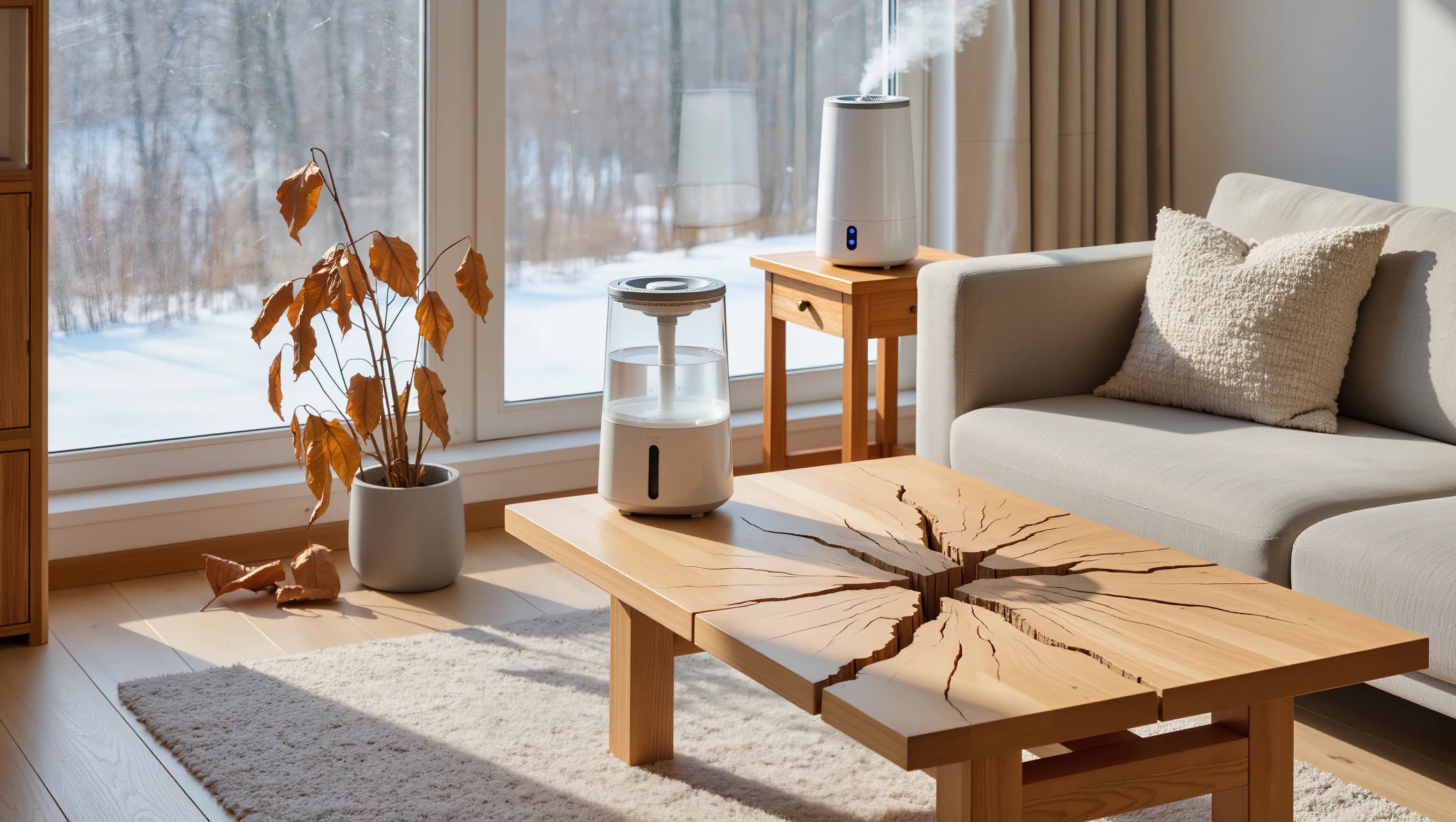
A humidity level that drops to 15-20% in winter when it should sit between 30 and 50% is almost never a sign something's broken — it's a normal side effect of heating cold outdoor air. It's not a short-term health danger, but it can damage wood (floors, furniture, musical instruments) and cause discomfort and static shocks. The most reliable fix is a central humidifier tied into the heating system, not just a small portable unit.
What's Happening?
Cold air holds very little moisture compared to warm air. When cold, dry outdoor air enters the house (through infiltration, ventilation, or the system's fresh-air intake) and then gets heated, its relative humidity drops sharply even if it held the same amount of water to begin with.
That's why a house can feel very dry in January even though humidity wasn't an issue in October: it's not that the indoor air is losing its water, it's that the incoming cold air simply can't hold much moisture once warmed up.
Typical signs: chapped skin and lips, frequent static shocks, dry throat on waking, struggling houseplants, and wood that cracks or splits (floors, doors, furniture).
Is It Dangerous?
No, it's not dangerous for most people's health, but it can cause real discomfort and worsen some existing conditions. Air that's too dry (below 30%) can:
- Dry out mucous membranes and increase sensitivity to respiratory irritation
- Worsen eczema or other dry skin conditions
- Damage wood: cracking floors, splitting furniture joints or musical instruments
- Increase static electricity shocks
See a healthcare professional if respiratory symptoms are significant, but for the house itself, it's not an emergency — it's a comfort and materials-preservation issue.
Most Common Causes
| Cause | Explanation |
|---|---|
| Heating cold outdoor air | The fundamental cause: heated cold air loses relative humidity even with nothing else wrong |
| No central humidifier | Without a system adding moisture, humidity naturally drops below 20% in extreme cold |
| Heat recovery ventilator (HRV) poorly tuned | An HRV that exhausts too much moist indoor air without compensation dries the house further |
| Uncontrolled air infiltration | The more cold outdoor air enters without passing through a ventilation system, the faster the drying |
| Well-sealed but poorly ventilated house | Counterintuitively, a very airtight house can also be dry if fresh air isn't managed properly |
| Electric baseboard heating with no humidity source | No natural humidifying mechanism, unlike some central systems |
Why This Happens in Quebec
Quebec winters combine very cold outdoor air (very dry in absolute terms) with long stretches of continuous heating, often 5 to 6 months a year. That's the perfect combination for indoor air to become much drier than what occupants are used to the rest of the year.
Many newer Quebec homes are also very airtight for energy-efficiency reasons, which reduces natural infiltration but doesn't solve the humidity problem — it requires active management (a well-tuned HRV, a humidifier) instead of relying on air leaks the way older houses did.
How to Check It Yourself
What you can easily measure and observe:
- Buy a hygrometer ($10-25) and place it in a main living area — aim for 30 to 45% in winter
- Note whether the level drops especially on the coldest days
- Check whether you already have a central humidifier and whether it's actually running (often forgotten after install)
- Look at the house's wood (floors, trim, furniture) for signs of cracking or shrinkage
Don't try to adjust the HRV or central ventilation settings yourself without understanding how it works — a bad adjustment can create the opposite humidity problem (too much moisture, condensation inside walls), which is more serious than air that's too dry.
Can I Ignore It?
Yes, to some extent — dry winter air doesn't damage the house's structure in the short term, and plenty of people live with it without major issues. But if you let it persist year after year uncorrected, the house's wood (hardwood floors, trim, furniture, doors) can develop permanent cracks from repeated cycles of shrinking and swelling.
If household members have respiratory or skin issues, or you own wooden musical instruments (piano, guitar) or expensive hardwood floors, it's worth fixing rather than waiting.
How Much Does It Cost?
| Service | Estimated Cost |
|---|---|
| Hygrometer to measure humidity | $10 - $40 |
| Portable humidifier (per room) | $50 - $200 |
| Adjusting or servicing an existing HRV | $150 - $350 |
| Installing a central humidifier tied to the heating system | $400 - $900 |
A central humidifier is by far the most effective whole-house solution, but a portable humidifier in the main bedroom is often enough to fix day-to-day discomfort at a lower cost.
When to Call a Professional
- You have an HRV or central ventilation system and don't know how to tune it for humidity
- The house's wood shows signs of progressive damage (widening cracks, lifting floorboards)
- You want a central humidifier installed and tied into your heating system
- Dry air comes with other unusual symptoms (odors, noises from the heating system)
- You suspect the problem is poor sealing rather than normal heating
A technician can assess whether your ventilation system is properly balanced and recommend the right fix for your house's size and airtightness, rather than adding moisture at random.
Related Questions
- Frost Forming Inside Windows in Winter: Normal or a Warning Sign?
- My House Feels Cold Even Though the Thermostat Says It's Warm: Why
- Why Is It Colder Upstairs Than Downstairs In My House?
- My Baby's Room Feels Humid Even With the AC On: Why & What to Do
- Should I Close the Heating Registers In Rooms I Don't Use?
- Is It Normal for My Furnace to Be 25 Years Old?
Frequently asked questions
Is it normal for my house to sit at 20% humidity in winter?+
It's common during extreme cold, but the ideal range is 30 to 45%. If the level stays consistently below 20%, a central humidifier or an HRV adjustment can make a real difference.
Is a portable humidifier enough, or do I need a central system?+
A portable humidifier is enough for a bedroom or small room. For the whole house, a central humidifier tied to the heating system ($400-$900) is much more effective and needs less day-to-day upkeep.
Can dry air damage my hardwood floors?+
Yes, over the long term. Wood contracts when the air is too dry, which can create gaps between boards or cracking. Keeping humidity between 30 and 45% helps prevent this damage.
Do I need to call a professional for a dry air problem?+
Not necessarily right away — a hygrometer and a portable humidifier often solve the problem. Call a professional if you have a poorly tuned HRV or want a central humidifier installed.
Get a free quote
More to know before your project.
By Marc Tremblay — Certified HVAC technician, 12 years of experience in Quebec
Updated on July 23, 2026