
Are There Warning Signs That My Furnace Is About to Fail?
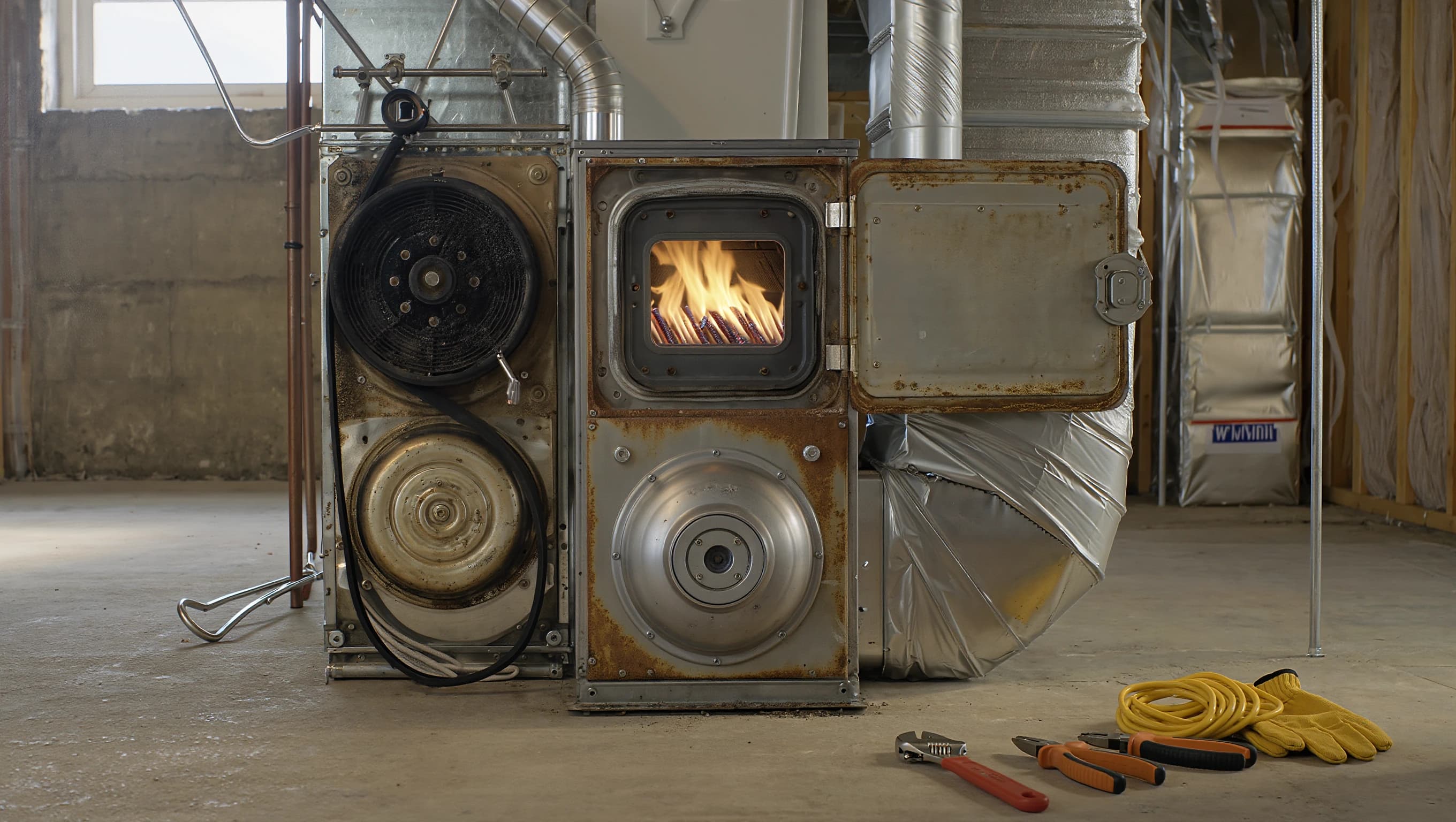
A furnace almost always gives warnings before it fails completely: shorter, more frequent cycles, lukewarm air, new noises (banging, whistling), rising heating bills, or an age of 15-20 years or more. It's usually not dangerous to keep using it short-term, unless you smell gas or burning, or your carbon monoxide detector goes off — in that case, shut it down and leave the house immediately. Otherwise, get it inspected as soon as possible to avoid a full breakdown in the middle of winter.
What's Happening?
A furnace is a mechanical system with parts that wear out: burners, heat exchanger, blower motor, igniter. Like any mechanical appliance, it sends wear signals well before failing completely — similar to a car making noises before the engine gives out.
The problem is these signals are often subtle at first: a slightly shorter cycle, a barely noticeable sound, a slightly higher bill. Many homeowners ignore them until the furnace fails outright, often during a cold snap — the worst possible timing, since that's also when HVAC companies are busiest.
Is It Dangerous?
It depends on the sign. An aging furnace isn't dangerous by itself, but some signals require you to act immediately:
- Gas smell (rotten eggs) — shut off the gas supply if you can do so safely, leave the house, and call Énergir or 911 from outside
- Carbon monoxide detector going off — leave immediately, don't go back in to "check"
- A yellow or flickering flame instead of a stable blue flame at the burner
- Soot or black marks around the unit or vents
- Burning electrical smell or visible smoke
Outside of these specific signs, an aging furnace that's still running isn't an immediate danger — it's a failure risk, not a safety risk.
Most Common Causes
| Cause | Explanation |
|---|---|
| Advanced age (15-20+ years) | Internal components naturally wear out and reliability drops over time |
| Air filter never changed | Reduces efficiency, overheats the system, and speeds up wear on parts |
| Cracked heat exchanger | An expensive part that wears out from repeated heating-cooling cycles |
| Faulty igniter or thermocouple | Prevents reliable startup, causes short cycling |
| No annual maintenance | Without burner cleaning and component checks, minor issues pile up |
| Worn blower or motor | Produces unusual noises and reduces warm air circulation |
Why This Happens in Quebec
A large share of Quebec's housing stock — postwar bungalows, homes from the 1970s-80s — still has its original furnace or a second-generation unit installed 15-20 years ago. With long winters where the furnace runs almost nonstop from November to April, wear accumulates faster than elsewhere in Canada. Breakdowns typically hit during the first deep cold snaps of December-January, when the unit is pushed hardest after months of moderate fall use.
How to Check It Yourself
You can safely:
- Check and replace the air filter (every 1-3 months)
- Listen for noises at startup and during the cycle (banging, squealing, clicking)
- Watch the flame color through the inspection window if your model has one (blue = normal, yellow/orange = problem)
- Note if heating cycles are shorter or more frequent than before
- Check that your carbon monoxide detector works and has fresh batteries
Never attempt to open the combustion chamber, handle the gas supply, or repair the heat exchanger yourself — these require certification, and a mistake can cause a gas or carbon monoxide leak.
Can I Ignore It?
It depends on the sign. An occasional light noise can wait for a routine inspection. But increasingly short cycles, noticeably weaker heat, or a furnace 18 years or older shouldn't be ignored: the risk isn't just a breakdown, it's a breakdown IN THE MIDDLE OF WINTER, often on a Friday night or during extreme cold, with longer response times and sometimes emergency fees.
How Much Does It Cost?
| Service | Estimated Price |
|---|---|
| Inspection / annual maintenance | $100 - $250 |
| Minor repair (igniter, thermocouple, filter) | $150 - $400 |
| Major repair (motor, control board) | $400 - $900 |
| Full furnace replacement | $4,000 - $8,000 |
When to Call a Professional
- You smell gas — call Énergir as an emergency, not just a technician
- Your CO detector goes off — leave and call 911
- The furnace is over 15 years old and has never had annual maintenance
- Cycles are clearly shorter or more frequent than a month ago
- A new, loud noise persists after replacing the filter
- The air coming out is noticeably less warm than before
A technician can measure carbon monoxide levels, inspect the heat exchanger for cracks invisible to the naked eye, and test combustion efficiency — checks no homeowner can safely do alone.
Related Questions
- My Furnace Smells Like Gas: What to Do Immediately
- Carbon Monoxide and Your Furnace: Warning Signs to Know
- Is It Normal for My Furnace to Be 25 Years Old?
- Is My Furnace Too Small for My House?
- My House Feels Cold Even Though the Thermostat Says It's Warm: Why
- Can I Install My Furnace Filter Backwards?
- When to Replace Your Heat Pump: 7 Signs to Watch For
Frequently asked questions
Can I keep using my furnace if it's making a slight noise?+
Yes for a light, occasional noise, but have it checked at your next maintenance visit. If the noise becomes loud, frequent, or metallic, stop using the unit and get it inspected soon.
How long does a furnace typically last?+
Between 15 and 20 years with regular maintenance, sometimes up to 25 years. Past 20 years, the risk of a complete breakdown increases noticeably each winter.
Is it normal for my furnace to heat less than it used to?+
No, a noticeable drop in heat output isn't normal and often points to a blocked filter, dirty burner, or a failing component. Get it checked before it gets worse.
Should I call a professional immediately if I smell gas?+
Yes, but first leave the house and call Énergir from outside, not a regular HVAC technician — this is a safety emergency, not a scheduled repair.
Can a 20-year-old furnace make it through one more winter without issues?+
Possibly, but risky. Have it inspected before the cold season — a technician can assess the actual condition of the heat exchanger and tell you if a preventive replacement is wiser than waiting for a breakdown.
Get a free quote
More to know before your project.
By Marc Tremblay — Certified HVAC technician, 12 years of experience in Quebec
Updated on July 23, 2026