
Is It Normal to See Daylight in My Attic?
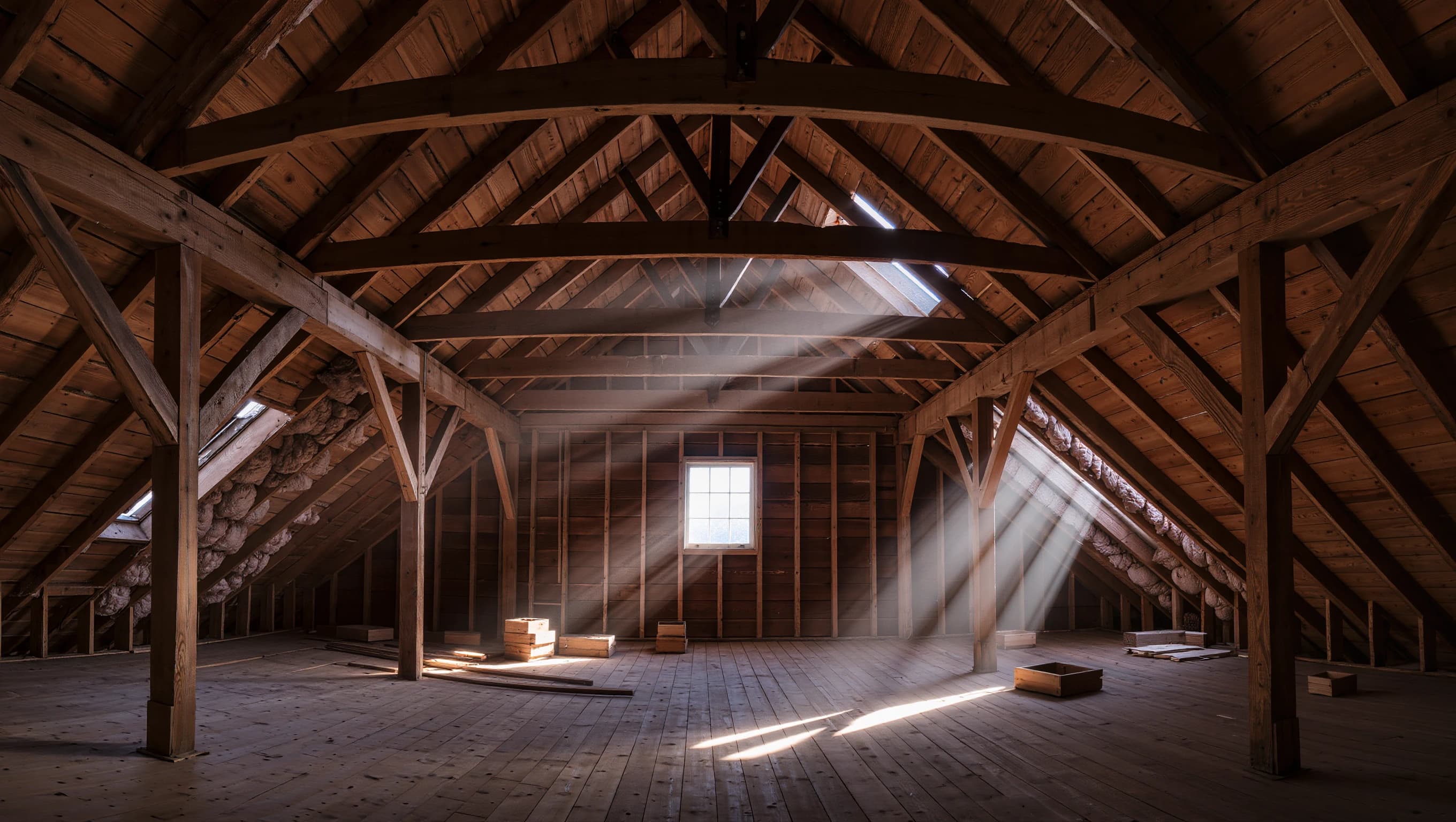
Seeing daylight in the attic is almost never normal: it means there's an open gap between the roof and the outside, most often caused by a missing shingle, a lifted flashing, or a damaged fascia board. It's not always dramatic — a tiny pinpoint of light around a vent may be harmless — but any hole that lets light through also lets in water, wind-driven snow, and sometimes small animals. Have the spot inspected promptly, especially before winter or an upcoming rain.
What's Happening?
Daylight always finds the shortest path between the outside and the inside of the attic. If you're seeing it, there's a gap — however small — in materials that should normally form a continuous barrier: shingles, underlayment, sheathing, flashing.
It's not necessarily a big hole. Sometimes it's a nail that punched through the sheathing and backed out, leaving a small round hole. Other times it's a wider gap caused by a wind-lifted shingle or a rotted fascia board that's pulled away from the roof.
The catch is that light is just the visible sign. Water, air, and sometimes insects or small rodents can take the same path — often before you even notice the light.
Is It Dangerous?
It depends on the size of the opening and where it is, but it's never something to fully ignore.
Inspect or act quickly if:
- You see multiple points of light, not just one
- The opening is large enough to let through a clean beam of light (not just a faint glow)
- You notice wet or stained insulation near the opening
- You hear whistling wind or feel a direct draft at the same spot
- You see signs of critters (droppings, nesting material) near the opening
A single isolated small hole usually isn't an immediate emergency, but multiple openings or a large one deserve a prompt inspection before the next rain or snowstorm.
Most Common Causes
| Cause | Explanation |
|---|---|
| Missing or lifted shingle | Wind or age lifts a shingle off, directly exposing the sheathing underneath |
| Damaged flashing around a penetration | The metal around a chimney, vent, or skylight shifts or corrodes |
| Rotted fascia or edge board | Wood along the roof's perimeter deteriorates and pulls slightly away from the structure |
| Old nail holes from a previous installation | Small round holes remain after old nails or roof fixtures were removed |
| Poorly sealed ventilation gap | Some roof or gable vents intentionally let a bit of light through around their frame without being a defect |
| Animal damage | Squirrels or raccoons widening a small existing opening to get in |
Why This Happens in Quebec
The wide swings between summer and winter temperatures in Quebec work roofing materials hard — repeated expansion and contraction that, over the years, loosens nails and opens up small gaps. Strong winds, common during fall and winter storms, also speed up wear on shingles and flashing.
On older homes, especially those with an original roof never thoroughly inspected, these small openings build up over time without the owner noticing, until they walk into the attic on a sunny day and spot the points of light.
How to Check It Yourself
The best time to check is in daylight, with the attic light off, letting your eyes adjust to the dark for a few minutes before scanning for points of light. Note how many there are and roughly where they line up with the roof structure.
Also check the insulation around each light source for signs of moisture or discoloration, and smell the air for any animal or musty odor.
Don't climb onto the roof to inspect from outside yourself, and if attic access requires an unstable ladder or a very tight space, leave the full inspection to a professional.
Can I Ignore It?
It depends on what you find. A single small, dry nail hole with no odor or moisture signs can wait for a routine inspection. But multiple points of light, a wide opening, or any sign of moisture around it shouldn't be ignored: water and air travel the same path as light, and a neglected small opening grows with every freeze-thaw cycle.
How Much Does It Cost?
| Service | Estimated Price |
|---|---|
| Roof and attic inspection | $150 - $300 |
| Sealing / caulking small holes | $150 - $400 |
| Spot shingle or flashing replacement | $300 - $900 |
| Damaged fascia board repair | $400 - $1,000 |
| Animal removal and opening repair | $300 - $800 |
These targeted repairs are significantly cheaper than a full roof replacement ($6,000 - $18,000), which is only needed if the entire covering is worn out.
When to Call a Professional
- You count more than one point of light in the attic
- The insulation around a light point is wet, stained, or moldy
- You hear animal noises or see droppings near the opening
- The hole looks large enough for a thin object to pass through easily
- The last full roof inspection was more than 5 years ago
A roofer can pinpoint the exact cause of each light point from the outside and properly seal or repair each opening, rather than just caulking over a visible symptom from the inside.
Related Questions
- A Water Stain on the Ceiling But No Visible Leak on the Roof: Where's It Coming From?
- Why Do I Hear Cracking Noises In the Attic When It's Windy?
- How Many Missing Shingles Before It Becomes a Serious Problem?
- My Shingles Look Like They're Curling at the Edges: Replace Now or Wait?
- My Roof Has Black Streaks — Is That Dangerous or Just Ugly?
- Are the Icicles Hanging From My Roof Actually Dangerous?
Frequently asked questions
Is a single small nail hole really a problem?+
Not urgent on its own, but worth sealing at your next inspection: a small hole still lets in a bit of air and moisture over time.
Can I seal the hole myself with caulking?+
For a very small, safely accessible hole, it's possible, but a roofer should first confirm the cause from outside to make sure there isn't a bigger underlying issue.
Does this mean my roof is at the end of its life?+
Not necessarily. An isolated point of light is often a localized, repairable defect, not a sign the whole roof needs replacing.
How do I know if an animal made the hole?+
Look for droppings, nesting material, or scratch marks around the opening, and listen for scratching sounds, especially early morning or evening.
Is it dangerous to stay in the attic a long time to inspect?+
Not on its own, but stay on the joists or a stable board, wear a mask if you suspect mold, and avoid very hot days when the attic can reach high temperatures.
Get a free quote
More to know before your project.
By Éric Gagné — RBQ-licensed roofer, roofing and roof snow removal specialist
Updated on July 23, 2026