
Why Do I Hear Cracking Noises In the Attic When It's Windy?
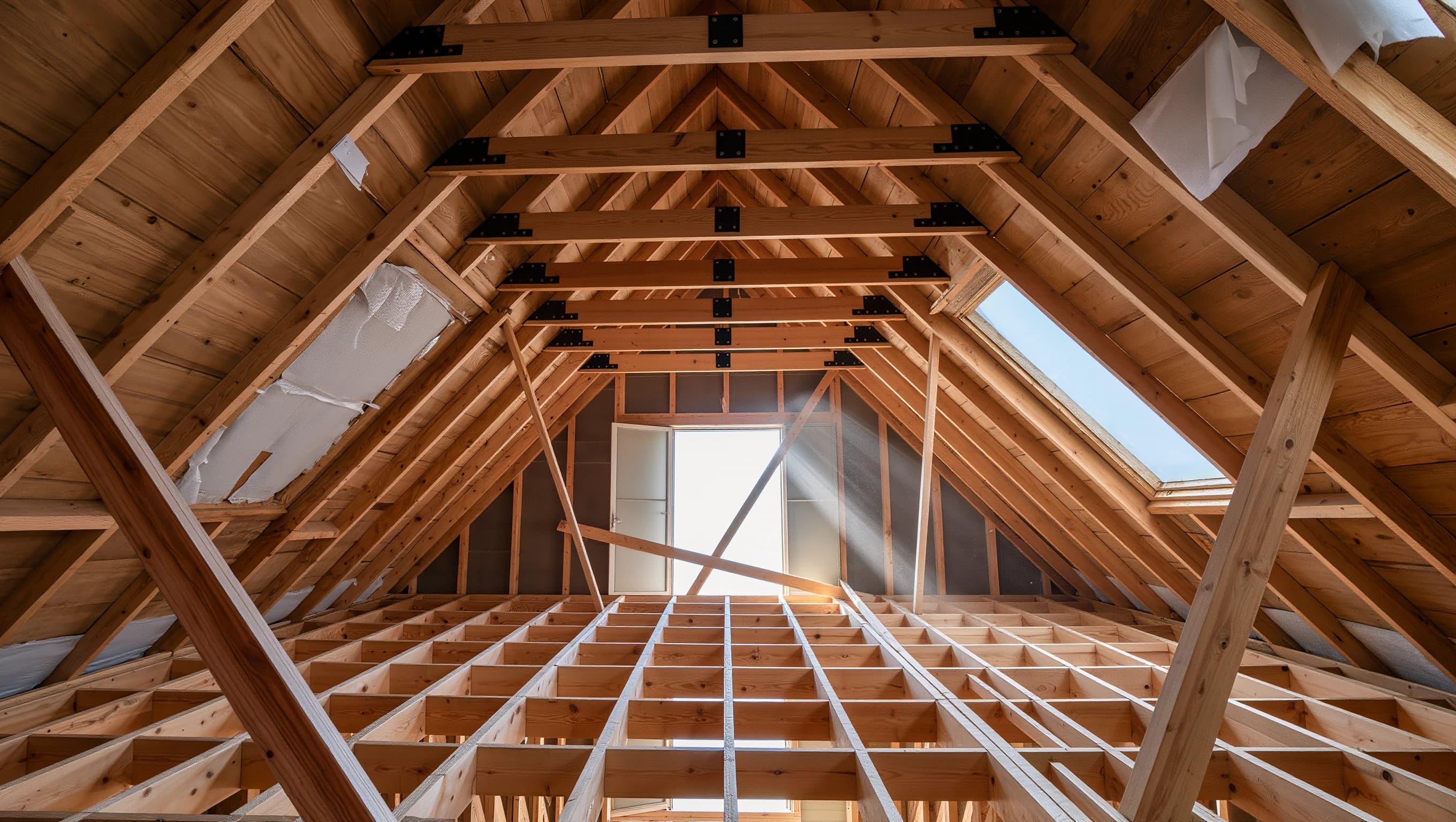
In the vast majority of cases, cracking sounds heard in the attic on windy days are caused by normal movement of the wood framing and roof structure, not a structural problem. It's generally not dangerous. You should worry only if the noise is new, gets worse over time, or comes with visible cracks in the ceiling or sagging.
What's Happening?
Wood used in roof framing constantly expands and contracts with temperature and humidity. When wind blows hard, it puts variable pressure on the roof and walls, which slightly shifts roof trusses, sheathing, and wood joints — producing those small cracking sounds.
Wind can also rattle or knock against looser elements: a poorly fastened roof vent, a flapping piece of flashing, or a slightly lifted piece of sheathing. Those sounds are often sharper or more repetitive than the dull crack of wood working under pressure.
Even a well-built house is never perfectly rigid — some movement is expected and normal in how a roof frame is designed.
Is It Dangerous?
Generally no. Wood cracking under wind pressure is a normal phenomenon present in most wood-frame homes, especially pitched roofs with prefabricated trusses.
You should have it inspected or act quickly if:
- The cracking comes with new cracks in the ceiling or top-floor walls
- You notice visible sagging in the roof or ceiling
- The noise appeared suddenly after a storm and wasn't there before
- You also hear sounds like wood tearing or breaking (different from a light crack)
- The roof recently carried a heavy snow load in addition to the wind
In these specific cases, it's no longer just a normal sound but possibly a sign of structural stress.
Most Common Causes
| Cause | Explanation |
|---|---|
| Wood expansion and contraction | Framing wood moves with temperature and humidity swings, amplified by wind |
| Roof sheathing flexing | Wind creates negative pressure that slightly bends the roof plywood |
| Loose vent or flashing | A loose metal piece vibrating or banging against the structure |
| Trusses working at their joints | Normal slight movement at the connection points of prefabricated trusses |
| Loose roofing materials | A partially detached shingle or edge strip flapping in the wind |
| Ice or snow buildup | Added weight combined with wind creates extra pressure on the structure |
Why This Happens in Quebec
Quebec sees frequent strong winds, especially in fall and winter, combined with extreme day-to-night temperature swings. This freeze-thaw cycle makes wood and metal fasteners work harder than in most other parts of the country.
Most Quebec homes, especially postwar bungalows and newer builds with prefabricated roof trusses, are designed to absorb this movement without issue — it's expected behavior, not a construction defect.
How to Check It Yourself
Note whether the noise happens only in strong wind or also on calm days — a sound tied only to wind is almost always harmless. Go into the attic during daylight (with the light off) to check whether daylight is coming through the roof, a sign of a crack or hole.
Visually inspect the top-floor ceiling for new cracks. Never climb onto the roof during or after a storm to inspect — wait for a calm, safe day, or leave it to a professional.
Can I Ignore It?
Yes, in most cases, if the noise is consistent, tied only to wind, and there's no visual sign of damage. It's part of the normal behavior of a wood frame.
No, if the noise changes character, gets louder over time, or comes with visual signs like cracks or sagging. In that case, waiting can let a minor structural issue get worse, especially once winter adds extra snow load.
How Much Does It Cost?
| Service | Approximate Price |
|---|---|
| Roof and framing inspection | $150 - $300 |
| Loose vent or flashing repair | $200 - $600 |
| Truss reinforcement or repair | $500 - $1,500 |
| Emergency post-storm repair | $300 - $1,500 |
A preventive inspection costs little compared to the risk of letting a loose element get worse and cause water intrusion during the next storm.
When to Call a Professional
- The cracking is new and wasn't there in previous winters
- You see new cracks in the ceiling or even slight sagging
- The noise gets louder from one storm to the next
- You hear a repetitive metallic sound (a vent or flashing banging)
- There was heavy snow or ice buildup in addition to the wind
Related Questions
- Why Does My Roof Make a Drumming or Wave-Like Sound When It's Very Windy?
- Why Can I See Daylight Coming Through My Attic?
- How Many Missing Shingles Before It Becomes a Serious Problem?
- Are the Icicles Hanging From My Roof Actually Dangerous?
- Why Are Giant Icicles Hanging From My Roof?
- Can I Wait Through One More Winter Before Replacing My Roof?
Frequently asked questions
Is it normal to hear this only in winter?+
Yes, it's very common in winter because wood contracts more in the cold and winds tend to be stronger during that season. The contrast between the cold outside and warmth in the attic amplifies wood movement.
Can I sleep soundly if I hear this at night?+
In the vast majority of cases yes, especially if it's a familiar sound that returns whenever it's windy. Keep an eye out for any sudden change in intensity or type of sound.
How much does an inspection cost to make sure everything's fine?+
A roof and framing inspection typically costs between $150 and $300, and gives you clear peace of mind about the condition of your attic.
Should I call a professional right away if I hear one loud crack just once?+
Not necessarily right away, but note the date and watch for it recurring. A single isolated crack with no other sign (cracking, sagging) is rarely an emergency.
Get a free quote
More to know before your project.
By Éric Gagné — RBQ-licensed roofer, roofing and roof snow removal specialist
Updated on July 23, 2026